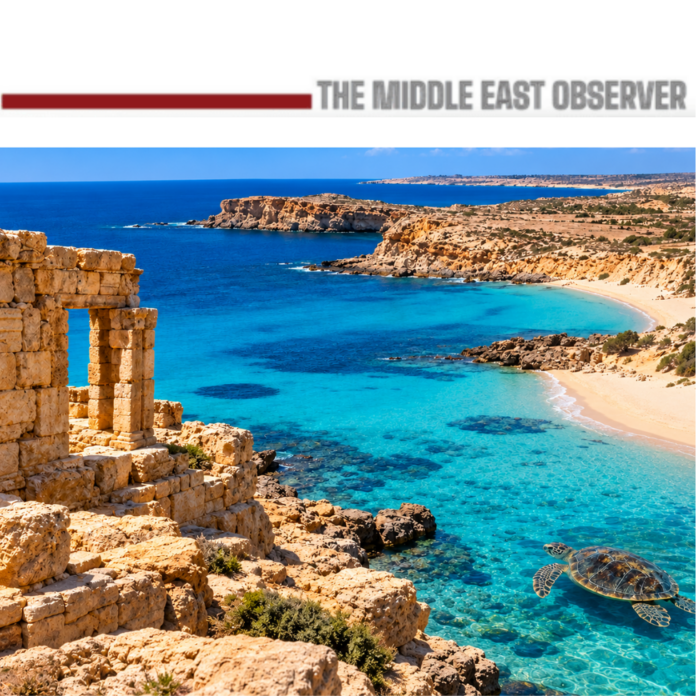
From Port Said to Rafah, Egypt is exploring the tourism potential of a coastline rich in sandy beaches, ancient civilizations, internationally significant wetlands and distinctive natural landscapes.
Egypt is advancing plans to transform its northeastern Mediterranean coastline into a tourism destination combining beach resorts, ancient heritage and ecotourism. The initiative gained momentum on April 22, 2026, when Prime Minister Mostafa Madbouly directed the Housing Ministry to engage a specialist consultancy to plan North Sinai’s coastal development. On July 8, the government outlined preparations for identifying new tourism areas. By September 1, the Tourism Development Authority had presented proposals covering West Al-Arish, Al-Arish city and Zaranik Nature Reserve. On October 17, Al-Shorouk reported, citing informed sources, that a consultancy had been appointed to prepare a broader development strategy extending from Port Said to Rafah.
Unlike Egypt’s western North Coast, where large residential and resort developments dominate investment, the northeastern coastline offers a different proposition: Mediterranean beaches interspersed with historic settlements, fishing communities, protected wetlands and desert landscapes. Their complementary attractions could support a diversified tourism economy appealing to beach holidaymakers, heritage enthusiasts, wildlife observers and visitors seeking distinctive natural experiences.
Port Said and Pelusium: Maritime and Ancient Heritage
At the western entrance to the proposed development corridor, Port Said combines Mediterranean waterfront attractions with the maritime history of the Suez Canal.
Its seafront, historic buildings and views of international shipping provide a setting for cultural excursions and short coastal breaks. The city’s Military Museum commemorates its resistance during the 1956 Suez Crisis, while its waterfront and architectural heritage reflect more than a century of international trade.
Further east, ancient Pelusium, known today as Tell el-Farma, was once an important gateway between Egypt and the eastern Mediterranean. Its archaeological remains span the Pharaonic, Greco-Roman, Byzantine and early Islamic periods.
In April 2026, the Supreme Council of Antiquities announced the discovery of a religious complex dedicated to the local deity Pelousios, adding to the site’s historical significance.
Together, Port Said and Pelusium provide the foundations for a cultural tourism circuit linking maritime history, archaeological exploration and Egypt’s ancient connections with the eastern Mediterranean.
Lake Bardawil: Lagoon Landscapes and Fishing Heritage
Lake Bardawil is among the region’s most remarkable natural assets.
Stretching along North Sinai’s Mediterranean coast, the shallow, highly saline lagoon is separated from the sea by narrow sandy barriers, creating an extensive landscape of islands, sand dunes and wetlands.
Recognised under the Ramsar Convention as a Wetland of International Importance since 1988, Bardawil supports valuable fish populations and an established fishing economy.
The lagoon’s open waters, traditional fishing boats and natural shorelines offer a contrasting experience to conventional Mediterranean beach resorts.
Its tourism potential includes landscape photography, guided nature interpretation and experiences introducing visitors to the area’s fishing heritage and local traditions.
The lagoon’s ecological importance makes low-impact tourism particularly relevant, allowing economic activity to complement conservation and existing livelihoods.
Zaranik: A Mediterranean Gateway for Migratory Birds
At the eastern end of Lake Bardawil, Zaranik Nature Reserve provides one of Egypt’s strongest opportunities for specialised ecotourism.
Established in 1985, the reserve encompasses wetlands, salt marshes, coastal dunes and shallow lagoons that form an important resting and feeding area for migratory birds travelling between Europe, Asia and Africa.
Egypt’s Environmental Affairs Agency has recorded more than 270 bird species in the reserve, including flamingos, pelicans, herons, storks, falcons and numerous migratory waterbirds.
During autumn migration, the wetlands become an important stopover for birds travelling south towards Africa, giving the area particular appeal to birdwatchers, wildlife photographers and ornithological researchers.
Professionally managed observation points, guided trails and environmental interpretation programmes could establish Zaranik as a specialised nature-tourism destination.
Its migratory seasons also provide opportunities to attract visitors beyond the traditional Mediterranean summer holiday period.
West Al-Arish: A New Coastal Tourism Investment Hub
West Al-Arish represents one of the government’s principal proposed tourism development areas.
In September, the Tourism Development Authority presented a development concept covering approximately 9,000 feddans, strategically connected to Al-Arish city, regional roads, Mediterranean beaches and surrounding natural landscapes.
The area’s coastal setting provides scope for planned hospitality developments, including beachfront hotels, family resorts, wellness retreats and recreational facilities.
Carefully integrated landscaping, pedestrian waterfronts, public beach facilities and smaller nature-oriented accommodation could distinguish the area from the predominantly residential resort developments of the western North Coast.
Its proximity to Al-Arish also offers investors access to an existing urban centre, creating opportunities for hospitality services, local suppliers, restaurants and recreational businesses.
The proposed master plan will determine how these commercial possibilities are translated into designated development zones and investable projects.
Al-Arish: Palm-Fringed Beaches and Mediterranean Life
Al-Arish, North Sinai’s capital, is the region’s principal urban coastal destination and a potential anchor for the wider tourism economy.
Its most recognisable attraction is Palm Beach, an approximately 10-kilometre stretch of Mediterranean shoreline distinguished by palm trees, sandy beaches and a waterfront corniche.
The beach’s natural character gives Al-Arish an identity distinct from the more intensively developed Mediterranean resorts further west.
Beyond its shoreline, the city offers local markets, traditional handicrafts, regional cuisine and historical landmarks, including the remains of its Ottoman-era fortress.
Al-Arish’s fishing traditions, cultural heritage and surrounding natural attractions provide opportunities to develop a visitor experience extending beyond seaside accommodation.
The city also possesses an airport, seaport, road connections and established urban services, providing a foundation for future hospitality investment.
An expanded range of waterfront hotels, restaurants, cultural venues and recreational activities could position Al-Arish as the principal accommodation and services centre for the northeastern coastline.
Eastern Sinai: Sand Dunes and Natural Heritage
East of Al-Arish, the coastline towards Sheikh Zuweid and Rafah displays another distinctive Mediterranean landscape, where sandy shores meet desert vegetation and extensive dunes.
Al-Ahrash Protected Area, established near Rafah in 1985, is particularly notable for its coastal dunes, some rising approximately 60 metres above sea level.
Its vegetation includes acacia, tamarisk and other species adapted to the sandy environment, creating habitats for native wildlife and helping stabilise the dunes.
These landscapes offer longer-term potential for environmental education, specialized nature interpretation and photography, complementing the beach and wetland attractions further west.
Their principal value lies in the preservation of natural environments that remain comparatively uncommon in Egypt’s established Mediterranean tourism markets.
Building a Distinctive Mediterranean Tourism Economy
The northeastern coastline offers Egypt an opportunity to diversify its Mediterranean tourism industry beyond conventional beach resorts and holiday-home developments.
Its combination of maritime heritage, archaeological sites, fishing traditions, wetlands, bird migration routes and sandy beaches creates the basis for several complementary visitor markets.
Port Said and Pelusium could anchor historical and cultural tourism; Bardawil and Zaranik could support nature-based experiences; West Al-Arish could attract new hospitality investment; and Al-Arish could provide the urban services and cultural activities necessary for longer stays.
Connecting these attractions into coordinated tourism experiences would encourage spending across hotels, restaurants, transport services, local markets, cultural activities and small businesses. Heritage and wildlife tourism could also extend economic activity beyond the peak summer season.
Success will depend on translating the government’s strategic plan into commercially viable destinations supported by transport connectivity, appropriate accommodation, reliable infrastructure, environmental protection and local business participation.
Egypt’s northeastern Mediterranean is not simply another stretch of coastline awaiting resort construction. Its greater attraction is the opportunity to develop a recognizable tourism identity built around the natural landscapes and cultural heritage that distinguish it from the rest of the country’s Mediterranean shore.
Related News:
Egypt’s North Coast Gold Rush: Tourism Booms as Al-Jafira Joins the Investment Map
From Resort to City: Can Egypt Build Year-Round Tourism Economies?
Red also:
Beyond Hotel Rooms: MENA’s Tourism Race Shifts to Visitor Value
Tourism Receipts Hit $18.4bn as Egypt Faces Competitiveness Test