

AI-powered preservation program seeks to modernize Maspero, unlock decades of audiovisual heritage and expand Egypt’s digital media ecosystem
Egypt is accelerating one of the Middle East’s most ambitious digital preservation program as President Abdel Fattah El-Sisi reviewed progress on a national initiative to digitize nearly one million radio and television recordings, part of a broader strategy to modernize state media, preserve the country’s cultural legacy and expand digital content distribution in an increasingly streaming-driven media landscape.
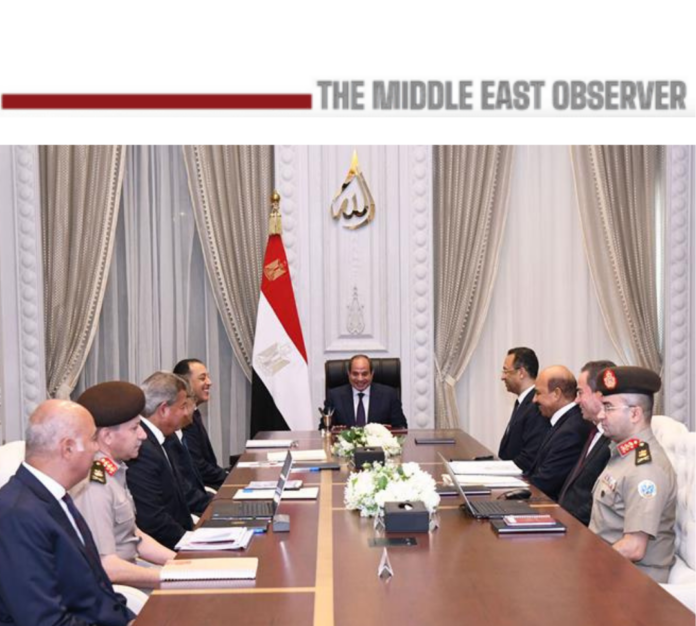
During a high-level meeting in El Alamein City, attended by Prime Minister Mostafa Madbouly, senior ministers, National Media Authority (NMA) officials and Armed Forces representatives responsible for communications and information systems, the President reviewed implementation of the project to archive and digitize Egypt’s radio and television heritage while also assessing plans to modernize the historic Maspero broadcasting complex. The initiative forms part of the government’s wider “Digital First“ strategy, which seeks to reposition national media for the digital era through advanced technology and online content delivery.
According to the National Media Authority, the archive represents the largest audiovisual media collection in the Arab world, containing approximately one million analogue audio and video tapes comprising around 800,000 hours of historical recordings documenting Egypt’s political, social, cultural and artistic development over several decades. The collection spans television dramas, news broadcasts, historical speeches, documentaries, concerts, educational programming and radio productions dating back to the establishment of Egyptian Radio in 1934 and Egyptian Television in 1960.
Officials said the project will create comprehensive, indexed digital databases capable of cataloguing every recording while converting fragile analogue formats into high-resolution digital files before further physical deterioration occurs. The archive will be organised within a secure electronic platform designed for rapid retrieval, long-term preservation and institutional access.
The program will also incorporate artificial intelligence applications to automate parts of the archiving process. Although authorities have not identified technology providers, AI is expected to support speech-to-text transcription, metadata generation, facial and voice recognition, semantic content searches, duplicate detection and restoration of ageing recordings—technologies increasingly used by leading audiovisual archives worldwide to improve accessibility while reducing the time required to process vast historical collections.
Cultural preservation becomes a digital economic asset
Beyond safeguarding national heritage, the initiative reflects the growing economic importance of digital archives. International broadcasters and cultural institutions, including the BBC, France’s Institut National de l’Audiovisuel (INA), Italy’s RAI Teche and the Library of Congress in the United States, have invested heavily in digitizing legacy collections to preserve intellectual property, support research and education, license historical footage and create new commercial opportunities across streaming platforms and documentary production.
For Egypt, digitization could similarly transform decades of archived programming into reusable digital assets that support the country’s expanding creative economy. Properly catalogued archives can generate licensing revenues, facilitate academic research, supply historical footage for film and television production, and strengthen Arabic-language digital content available to regional and international audiences. The programme also supports the preservation of intellectual property that might otherwise be permanently lost as analogue media deteriorates.
Media preservation specialists have long warned that magnetic tapes and other analogue recording formats deteriorate over time through chemical degradation and equipment obsolescence, making large-scale digitization increasingly urgent. UNESCO has similarly emphasized that audiovisual archives constitute an essential component of global documentary heritage and require sustained investment to ensure long-term accessibility.
Modernizing Maspero for a digital broadcasting era
Alongside the archiving initiative, President El-Sisi reviewed ongoing modernization of the Maspero broadcasting complex, the historic headquarters of Egyptian state television and radio.
The program extends beyond infrastructure upgrades to encompass the transformation of Maspero into a digitally integrated multimedia production center. Planned improvements include modern television studios, upgraded broadcasting equipment, enhanced production facilities and expanded digital distribution capabilities designed to support television, streaming and on-demand platforms.
Officials also reviewed progress on the planned Maspero Platform, which is expected to become a central digital gateway for distributing national media content. While detailed operational plans have yet to be announced, the platform reflects the broader shift among public broadcasters worldwide toward direct-to-consumer digital services as audiences increasingly migrate from traditional linear broadcasting to online viewing.
Preserving religious and cultural heritage
The meeting also examined efforts to preserve recordings of renowned Quran reciters and religious chanters, together with the extensive archive of Holy Quran Radio, established in 1964 and regarded as one of the Arab world’s most influential religious broadcasting services.
Digitizing these recordings is intended to protect rare recitations from physical degradation while expanding digital access for future generations, reinforcing the project’s broader objective of preserving Egypt’s cultural and religious heritage through modern technologies.
Governance, rights and future opportunities
As digitization progresses, the initiative is also expected to require continued development of governance frameworks covering digital rights management, licensing, archival access and the commercial reuse of historical content. Such frameworks have become central to comparable international projects as broadcasters seek to balance public access with intellectual property protection and sustainable revenue generation.
President El-Sisi directed that the progress achieved in digitizing Egypt’s broadcasting heritage be presented publicly to demonstrate the scale of the national preservation effort. He further instructed that modernization of Maspero proceed in parallel with infrastructure upgrades, technological development and archive digitization, while calling for closer coordination between public and private media institutions and greater engagement with specialized professionals to ensure Egyptian media keeps pace with rapid changes in global broadcasting.
The initiative ultimately represents more than a cultural preservation project. By combining large-scale digitization, artificial intelligence and modern content distribution infrastructure, Egypt is seeking to transform one of the region’s most valuable audiovisual collections into a strategic national asset that supports cultural diplomacy, strengthens the creative economy and preserves the country’s media legacy for future generations.
Related news:
Reviving the “Paris of the East”: Khedivial Cairo’s Renaissance as a Global Tourist Hub
Australia’s Social Media Law Could Rewrite the Rules of the Digital Economy
Read also:
Al-Tiyatro: When Theatre Becomes a Stage for Egypt’s Creative Economy Revival
Egypt’s State Hotel Group Targets EGP50bn Expansion to Add 3,500 Rooms