
Farid Seeks a Global Debt-to-Investment Framework
CAIRO — Egypt is seeking to turn its position as Africa’s largest recipient of foreign direct investment into a broader program of regulatory reform, digital administration, state-asset sales and internationally backed development finance.
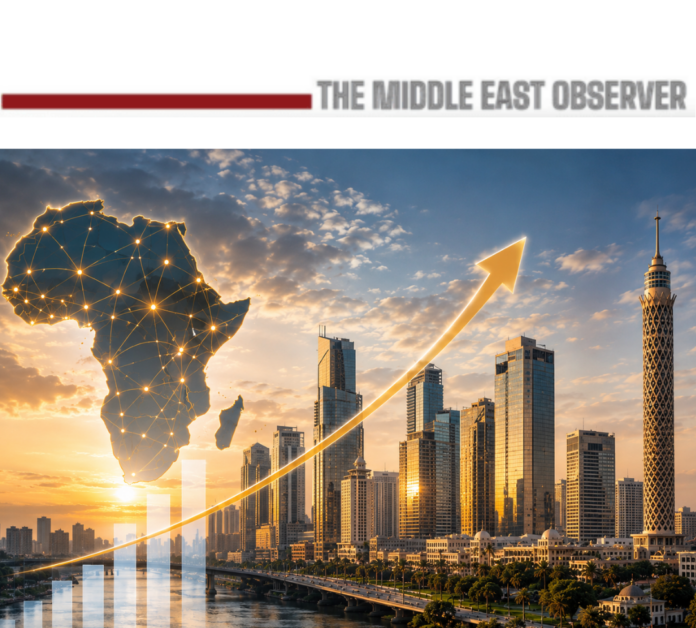
The country attracted about $15.5bn in FDI in 2025, retaining first place in Africa and ranking second among Arab economies, according to the United Nations Conference on Trade and Development’s World Investment Report 2026. It was Egypt’s fourth consecutive year at the top of the African ranking.
Mohamed Farid, Egypt’s minister of investment and foreign trade, used the report’s launch in Cairo to outline measures intended to simplify licensing, accelerate corporate transactions, improve investor data and prepare state-owned companies for public offerings. He also called for an international mechanism through which developing economies could convert part of their sovereign debt into productive investment.
The proposals reflect an effort to move Egypt’s investment policy beyond the pursuit of headline inflows towards capital that expands industrial capacity, creates employment, transfers technology and supports exports.
Egypt Maintains Its African Lead
Egypt’s FDI inflows were almost double those of Guinea, which ranked second in Africa with about $7.8bn. Mozambique attracted $5.7bn and Nigeria $4bn, while Ethiopia, Uganda, Morocco and Kenya were also among the continent’s leading destinations.
Africa received roughly $70bn in FDI in 2025. Although lower than the exceptional level recorded a year earlier, UNCTAD said the total was the continent’s third highest since 1990 and about one-third above its long-term average.
Egypt’s own decline from 2024 largely reflected the unusually high comparison created by the $35bn Ras El-Hekma agreement with Abu Dhabi’s ADQ. That transaction produced a one-off increase in recorded investment and foreign-currency inflows.
The 2025 figure therefore represents a return from an exceptional base rather than a comparable deterioration in Egypt’s underlying investment position. Inflows were also supported by the $3.5bn Alam El-Roum development agreement on the Mediterranean coast.
Globally, FDI rose 6 per cent to about $1.6tn in 2025, but UNCTAD described the recovery as fragile and uneven. Developed economies received $723bn, while inflows to developing economies reached about $901bn.
Supply-Chain Changes Offer an Industrial Opening
UNCTAD identified Egypt among the economies that could benefit as companies reconsider production networks in response to geopolitical tensions, trade barriers and supply-chain disruption.
Egypt’s location, ports, industrial zones, trade agreements and large domestic market give it the potential to serve as a manufacturing and processing base linking African, Arab and European markets.
The opportunity is broader than the large property and infrastructure transactions that have dominated recent investment figures. Manufacturing, renewable energy, pharmaceuticals, automotive production, logistics and digital infrastructure could provide more durable sources of employment, exports and technology transfer.
But location and market size alone will not secure those investments. Egypt’s competitiveness will also depend on macroeconomic stability, predictable regulation, access to foreign currency, skilled labour and the speed with which companies can obtain land, licences and operating approvals.
Digital Reform Extends Beyond Company Formation
Farid said the Investment Ministry was preparing procedures to allow capital increases, mergers and acquisitions to be processed through an integrated digital system.
The planned platform would serve non-listed companies completing acquisitions, ownership restructurings or changes to their capital. The aim is to shorten processing times and reduce the administrative burden surrounding transactions after a business has already been established.
This is significant because investors judge an operating environment not only by how quickly a company can be incorporated, but also by the ease with which it can raise capital, acquire competitors or reorganise ownership.
A more efficient system could improve transaction certainty for strategic investors and private-equity groups. Its effectiveness, however, will depend on whether it eliminates duplicated requirements rather than simply transferring existing procedures online.
Unified Gateway to Cover 468 Activities
The government is also advancing its Cabinet-approved Economic Entities Platform, intended to become a single digital gateway for establishing companies and obtaining operating licences.
The platform will cover 468 economic activities and bring together licences administered by 82 government bodies. It is designed to connect public databases, reduce repeated document submissions and allow investors to deal with several regulatory authorities through one interface.
The project addresses one of the most persistent complaints about Egypt’s business environment: the fragmentation of licences and approvals across multiple institutions.
A public portal alone will not resolve that problem. Participating agencies will need interoperable databases, common documentation standards and enforceable processing deadlines. Without such integration, investors could encounter the same delays through a new electronic channel.
Farid has separately formed an executive committee to accelerate digital transformation across entities affiliated with the ministry. The committee is reviewing and cleaning investor records to establish a common data framework.
Accurate databases would allow the government to identify approval bottlenecks, measure sector demand and assess whether incentives are producing additional investment, exports and jobs.
FDI Strategy Divides Sectors by Readiness
Egypt is completing a National Foreign Direct Investment Strategy covering 12 priority sectors.
According to Farid, eight are considered ready for immediate investment promotion, while four require further legislative or regulatory changes. The targeted industries include manufacturing, renewable energy, information technology, artificial intelligence, tourism, healthcare, agriculture, logistics, financial services, textiles, automotive production and pharmaceuticals.
The distinction between investment-ready and reform-dependent sectors could make the government’s promotional efforts more focused.
Industries with established regulations, available land and supporting infrastructure could be marketed to investors immediately. Sectors facing unresolved constraints would instead be tied to specific reform programmes and implementation timetables.
Such an approach would mark a shift from broad national promotion towards sector-based investment pipelines supported by market information, project preparation and clearer regulatory conditions.
State Offerings Return to the Investment Agenda
The reform programme also includes efforts to revive Egypt’s delayed state-asset offering programme and deepen the Egyptian Exchange.
The Ministry of Investment, Financial Regulatory Authority and EGX are working on a readiness programme for state-owned companies that have been provisionally listed but have not yet completed public offerings.
Around 20 state companies are being prepared for possible transactions.
A provisional listing does not amount to an initial public offering. It gives a company a transitional period to complete audited accounts, valuations, governance reforms and regulatory documentation before shares can be sold to investors.
Misr Life Insurance is among the most advanced candidates. The government is seeking to complete its valuation, investor consultations and technical preparations in time for a listing before the end of 2026.
Misr Insurance Holding has approved the proposed sale of up to 20 percent of the company’s share capital, with EFG Hermes appointed to manage the transaction.
A successful offering could broaden participation in the Egyptian market and improve disclosure in the insurance sector. It would also provide a test of the government’s ability to convert announced privatization plans into completed transactions.
Previous IPO schedules have repeatedly slipped because of market conditions, valuation disputes and incomplete corporate preparation. Execution will therefore matter more than the size of the current pipeline.
Farid Proposes Debt-to-Investment Mechanism
Farid also called for an international framework allowing developing countries to convert part of their sovereign debt into productive investment.
The proposal reflects concern that many lower-income economies receive only a small share of international capital while a large part of their fiscal resources is absorbed by debt servicing.
Under a possible debt-to-investment structure, creditors could cancel, restructure or convert part of a sovereign claim in return for commitments to finance agreed projects. Potential areas could include industry, renewable energy, agriculture, logistics, water, digital infrastructure and export production.
The concept is broader than established debt-for-nature or debt-for-climate swaps, which generally link debt relief to environmental commitments.
No creditors, transaction values or detailed financial arrangements have been identified. The proposal therefore remains a policy initiative rather than an agreed Egyptian debt-conversion programme.
Any workable structure would require creditor consent, transparent valuations and clear rules covering ownership, expected returns and the accounting treatment of converted liabilities.
Participating countries would also need to offer investable projects rather than general development priorities. That would require feasibility studies, implementation schedules, risk-sharing arrangements and measurable targets for employment, exports, productivity and foreign-currency earnings.
For creditors, the attraction would be the possibility of replacing part of a difficult sovereign exposure with a stake in productive assets. Debtor countries could gain fiscal space and new infrastructure without relying entirely on additional borrowing.
The risks are equally clear. Poorly designed conversions could shift public liabilities into opaque or commercially weak projects. Independent oversight, competitive procurement and public disclosure would therefore be necessary to protect both creditors and host economies.
UNCTAD Emphasizes Investment Quality
UNCTAD said global investment was becoming increasingly concentrated in strategic industries, including artificial intelligence, semiconductors, data centers, clean energy and critical minerals.
Investment in those sectors has increased more than five fold since 2020 to about $580bn, according to officials presenting the report in Cairo.
Nan Li Collins, director of UNCTAD’s Investment and Enterprise Division, said the policy debate was moving beyond the volume of capital attracted towards its economic impact. The focus is increasingly on whether FDI builds productive assets, strengthens domestic companies, creates higher-value employment and transfers technology.
That distinction is particularly relevant to Egypt.
Large property transactions can provide substantial foreign currency and support short-term macroeconomic stability. Their economic effect, however, differs from investment that builds factories, develops suppliers, improves productivity or creates sustained export capacity.
Egypt’s FDI ranking therefore gives the government useful momentum, but it does not by itself demonstrate that the investment environment has been transformed.
Delivery Will Define the Reform Program
Taken together, the digital corporate platform, unified licensing gateway, sector-based FDI strategy, state IPO pipeline and debt-to-investment proposal represent an attempt to modernist Egypt’s domestic investment regime and its relationship with international capital.
The measures address longstanding concerns over fragmented licensing, lengthy administrative procedures, inconsistent investor data, limited corporate disclosure and a shortage of prepared projects.
Their success will ultimately be judged through measurable outcomes: shorter approval periods, completed public offerings, higher private-sector participation and a more diversified flow of investment into manufacturing, technology and exports.
If implemented successfully, the reforms could mark a shift from an investment model driven by episodic mega deals towards one anchored in diversified private capital, industrial competitiveness and export-led growth.
Related news:
Kuwait Launches 15-Year Residency Program to Attract Foreign Investment
ADB’s Asia Outlook Shows Why Middle East Stability Has Become a Global Economic Variable
Read also:
Egypt, Uzbekistan Explore Industrial Investment Zones to Boost Trade