FIFA is seeking to reshape the commercial structure of the world’s most valuable sporting event by inviting private investors into a new company that would manage the commercial rights of the FIFA World Cup and other flagship competitions, a proposal that has opened one of the deepest governance divisions in international football in decades.
While FIFA argues the initiative could unlock billions of dollars for football development without surrendering sporting control, critics warn it could fundamentally alter the balance between commercial interests and the governance of the global game. The proposal has exposed a clear divide between Europe, where opposition has been strongest, and many other football confederations that have adopted a more cautious approach while awaiting further details.
At the centre of the proposal is the creation of FIFA Forward Enterprise (FFE), a commercial subsidiary that would manage the business operations of FIFA competitions, including broadcasting, sponsorship, licensing, ticketing and commercial partnerships. FIFA would retain majority ownership and exclusive authority over football governance, tournament regulations and competition formats while offering a minority equity stake to long-term institutional investors, valuing the new enterprise at approximately US$20 billion.
The proposal concerns one of the world’s most valuable sports commercial portfolios. The FIFA World Cup generates billions of dollars in broadcasting, sponsorship, licensing, hospitality and ticketing revenues during each four-year cycle and accounts for the overwhelming majority of FIFA’s income. Any restructuring of these commercial rights is therefore significant not only for international football but also for the global sports investment market, where institutional investors have increasingly sought exposure to premium sports assets.
FIFA: Unlocking Capital for Global Football
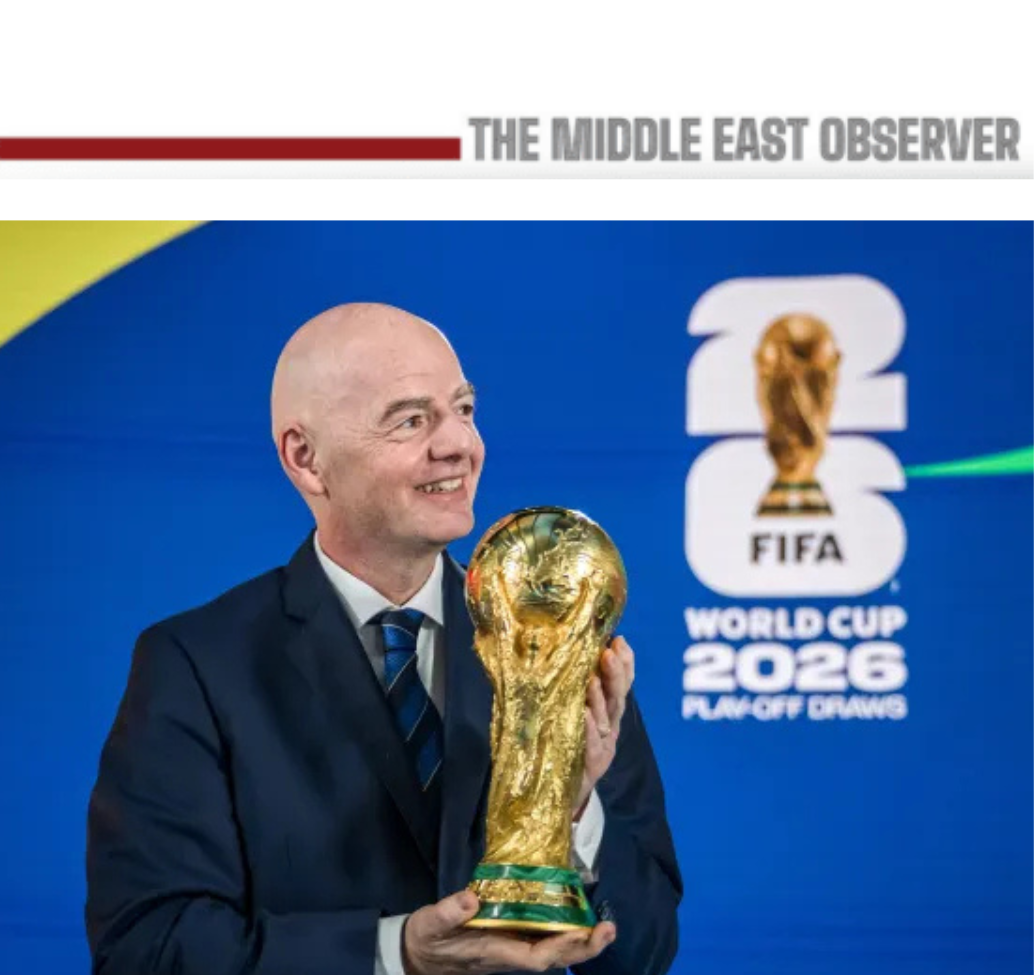
According to FIFA President Gianni Infantino, the initiative is intended to unlock additional commercial value while preserving FIFA’s regulatory authority. The organisation says proceeds from the investment would allow it to expand football development funding beyond US$10 billion over future funding cycles, providing greater support for infrastructure, grassroots programmes, women’s football, youth academies and capacity building across its 211 member associations.
FIFA maintains that the proposal represents a commercial restructuring rather than a transfer of governance. Investors would acquire an economic interest in FIFA’s commercial revenues but would have no authority over the Laws of the Game, tournament formats, disciplinary matters or the international football calendar.
The governing body also argues that the proposal reflects broader trends across international sport, where dedicated commercial entities have increasingly been established to maximise media rights, sponsorship revenues and operational efficiency while leaving sporting governance with the parent organisation.
Why Investors Are Interested
Global institutional investors have increasingly sought exposure to premium sports assets as broadcasting rights, sponsorship revenues and digital media have transformed sport into a resilient long-term investment class. Private equity firms have already acquired interests in commercial rights businesses across several major European football leagues, rugby competitions, Formula One and other international sporting properties.
FIFA’s proposal would represent a significant extension of that trend by allowing external investors to participate in the commercial operations of the FIFA World Cup—widely regarded as one of the most valuable and globally recognised brands in sport.
Europe Leads Opposition
The proposal has nevertheless prompted one of the strongest institutional backlashes of Gianni Infantino’s presidency.
UEFA condemned the initiative, declaring that “the soul and governance of football are not assets to trade,” while questioning the lack of transparency and consultation surrounding the proposal. The organisation subsequently convened an emergency meeting of its member associations to coordinate a common response.
National associations including the Football Association of England, the German Football Association (DFB) and the French Football Federation voiced similar concerns. England’s FA said it had received no advance notification of the proposal, Germany’s DFB argued that “a line has been crossed,” while France called for coordinated discussions among Europe’s leading football authorities before any decision is taken.
Criticism also extended to domestic leagues and player representatives. La Liga President Javier Tebas accused FIFA of combining politics, finance and governance without sufficient transparency, while European Leagues and player representatives warned that introducing private investors could gradually increase pressure to expand competitions and prioritise commercial returns over sporting integrity, competitive balance and player welfare.
Most Confederations Seek Clarification Rather Than Rejection
Outside Europe, however, reactions have been notably more measured.
Neither the Confederation of African Football (CAF) nor the Asian Football Confederation (AFC) has rejected the proposal outright. Instead, both have called for greater transparency and fuller consultation before reaching a formal position. CAF has indicated it will review the proposal through its Executive Committee, while the AFC has acknowledged that innovative financing models could strengthen global football provided they are accompanied by appropriate governance safeguards.
Similarly, CONCACAF, representing North and Central America and the Caribbean, questioned the consultation process but stopped short of opposing private investment. South America’s CONMEBOL has likewise refrained from issuing a formal rejection, while the Oceania Football Confederation (OFC) has yet to announce a substantive public position.
The differing responses largely reflect football’s unequal financial landscape. While Europe generates the largest share of global football revenues through its domestic leagues, UEFA competitions and broadcasting markets, many associations across Africa, Asia, Oceania and parts of the Americas remain more dependent on FIFA funding to finance infrastructure, grassroots football, women’s football and youth development. Consequently, many federations are weighing the prospect of significantly increased investment alongside governance concerns rather than viewing the two issues as mutually exclusive.
The differing reactions also illustrate a broader shift in football’s political landscape. Under Gianni Infantino, FIFA has increasingly prioritised investment in Africa, Asia, the Middle East and emerging football markets, strengthening its relationships with member associations outside Europe and gradually reshaping the balance of influence within world football.
Governance Questions Remain Central
Critics argue that the principal issue is not whether private investment should enter football, but whether sufficient safeguards exist to prevent commercial interests from influencing future decisions. Although FIFA insists investors would hold no authority over sporting regulations, opponents contend that shareholders seeking long-term financial returns could indirectly favour tournament expansion, additional competitions or commercial scheduling decisions designed to maximise revenues.
Particular attention has also focused on FIFA’s proposal to increase financial distributions to member associations alongside the restructuring. Supporters view the additional funding as a long-term investment in global football development, while critics argue that linking significant financial incentives to institutional approval risks creating perceptions that governance decisions could be influenced by financial considerations.
Former FIFA President Sepp Blatter questioned the initiative, while European Commissioner for Sport Glenn Micallef publicly declared, “Hands off our game,” highlighting the growing political interest surrounding the governance of international football.
Congress Approval Remains the Next Hurdle
The proposal has not yet been adopted and remains subject to approval through FIFA’s governance process. Representing 211 national football associations, FIFA Congress is expected to examine the proposal following further consultation before any final decision is taken.
The current debate therefore concerns not only the principle of introducing private investment but also the governance safeguards, investor rights and institutional protections that would accompany any eventual implementation.
History Suggests Proposals Can Evolve
History indicates that FIFA’s major strategic initiatives have often evolved during consultation. The governing body has previously modified or abandoned significant proposals—including plans to expand the 2022 FIFA World Cup to 48 teams and its long-standing opposition to goal-line technology—following sustained institutional opposition, operational challenges or changing commercial and political circumstances.
While FIFA has consistently defended major reforms at their launch, precedent suggests that proposals of this scale frequently undergo refinement before implementation.
A Defining Moment for Global Football Governance
The debate surrounding FIFA Forward Enterprise extends well beyond the proposed sale of a minority commercial stake. It reflects a broader question confronting international sport: how governing bodies can finance future growth while preserving institutional independence, transparency and public trust.
Supporters argue that separating commercial operations from regulatory functions represents a modern governance model capable of unlocking billions of dollars for football development without compromising FIFA’s authority. Opponents counter that once private investors acquire an economic interest in the sport’s premier competitions, commercial expectations may gradually influence decisions on tournament expansion, scheduling and the strategic direction of international football, regardless of where formal governance ultimately resides.
The emerging divide is therefore less about private investment itself than about the safeguards surrounding it. Europe has largely framed the proposal as a governance issue, whereas many associations across Africa, Asia, Latin America and Oceania are balancing governance concerns against the prospect of substantially greater investment in football development.
History suggests FIFA has shown a willingness to modify major initiatives when faced with sustained institutional resistance or practical implementation challenges. Consequently, the current proposal is unlikely to represent the final shape of FIFA Forward Enterprise. Rather, the coming months will determine whether FIFA can build sufficient global consensus around a governance framework that satisfies both commercial ambitions and the institutional independence upon which the credibility of world football ultimately depends.
Ultimately, the debate extends beyond football itself. It may establish one of the most important precedents for how globally governed sporting institutions attract private capital while preserving the independence, transparency and legitimacy upon which international sport is built.
Related news:
Beyond 2026: Can FIFA Restore Trust Before the Historic 2030 World Cup?
Read also:
Egypt Leads Arab World, Ranks Second Globally in CAF Charitable Giving Index
Egypt Launches Digital Licensing Service for Commercial Premises