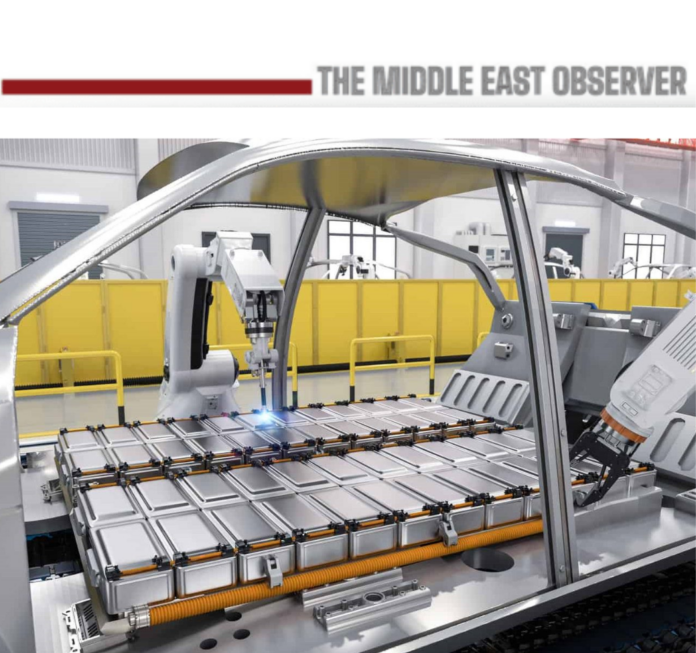
The African Development Bank (AfDB) has approved a €100 million (US$114 million) loan to support the development of Africa’s first integrated lithium iron phosphate (LFP) electric vehicle battery gigafactory in Morocco, reinforcing the country’s ambition to become a regional hub for electric mobility, advanced manufacturing and clean-energy supply chains. The financing will support Gotion Power Morocco, a subsidiary of China’s Gotion High-Tech, in developing the manufacturing complex within the Rabat-Salé-Kénitra Free Trade Zone, one of Morocco’s principal industrial and export hubs. The investment forms part of the AfDB’s broader strategy to accelerate industrialisation, regional value addition and the development of strategic manufacturing industries across Africa.
The project’s first phase represents an investment of approximately US$1.3 billion and will establish an integrated battery manufacturing ecosystem producing cathode materials, battery cells and battery packs at a single site. Initial production capacity is expected to reach 10 gigawatt-hours (GWh) annually, with long-term expansion planned to 100 GWh, creating one of Africa’s largest battery manufacturing facilities and positioning Morocco to supply battery components to European and international electric vehicle manufacturers.
Beyond the approved financing, the AfDB intends to mobilise up to €141 million in additional capital from development finance partners under its New African Financial Architecture for Development (NAFAD) initiative, reflecting the project’s strategic importance to Africa’s industrial transformation. The initial phase is expected to create more than 600 direct skilled jobs while achieving an estimated 70% local industrial integration, strengthening domestic value addition and supporting the development of a regional battery supply chain.
The investment builds on Morocco’s rapidly expanding automotive industry, which has become Africa’s largest passenger vehicle manufacturing and export base, hosting major production facilities for Renault Group and Stellantis that supply European and international markets. Combined with competitive logistics, preferential trade agreements with the European Union and other key markets, expanding renewable electricity capacity and proximity to Europe, these advantages have positioned Morocco among the continent’s leading destinations for electric vehicle and battery manufacturing investment.
The project also reflects broader changes within the global automotive industry as manufacturers seek to diversify battery supply chains beyond Asia, strengthen supply-chain resilience and expand production closer to European assembly plants. Growing European industrial policies aimed at securing access to critical battery materials and reducing strategic dependencies have further increased interest in nearby manufacturing locations, with Morocco emerging as one of the principal beneficiaries of this shift.
Successful implementation would position Morocco among the few countries outside Asia with an integrated electric vehicle battery manufacturing ecosystem, strengthening Africa’s participation in global automotive value chains while supporting Europe’s efforts to diversify battery sourcing. More broadly, the project represents a significant step towards expanding advanced manufacturing across the continent, increasing local value addition to critical minerals and accelerating Africa’s transition towards higher-value, low-carbon industrial production.
Related news:
Morocco Eyes Growth Above 5.3% as Tourism, Industry and Diaspora Transfers Drive Economic Expansion
Himile Group to Invest $100m in Egypt’s Automotive Feeder Industry
Read also:
India Shifts Up to 25% of LPG Imports to U.S. in 2027
Egypt’s €690mn Grid Upgrade Lays Groundwork for European Power Exports