
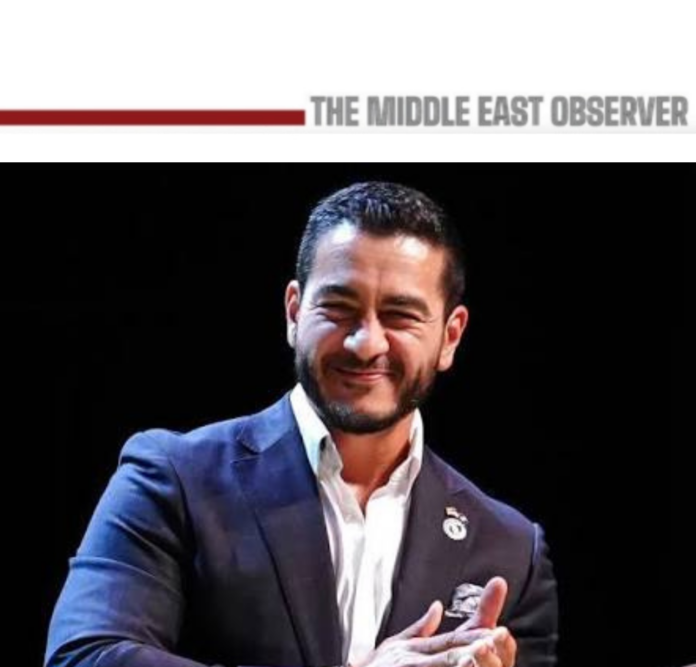
Progressive physician secures a surprise victory over establishment-backed Haley Stevens, setting up a November Senate contest with national implications for both control of Congress and the Democratic Party’s future direction.
Michigan physician and progressive Democrat Abdul El-Sayed has secured a surprise victory over establishment-backed Congresswoman Haley Stevens, delivering the Democratic Party‘s progressive wing one of its most significant electoral successes in recent years while setting up a high-stakes November Senate contest against Republican Mike Rogers.
The result marks one of the most consequential Democratic primary outcomes of the 2026 election cycle. Michigan’s open Senate seat is widely regarded as one of a handful of races likely to influence the balance of power in Congress during President Donald Trump’s second term, placing both national parties under pressure to secure victory in one of America’s most competitive political battlegrounds.
A Victory Beyond Michigan
The Democratic primary evolved into a national proxy battle over the party’s future direction, highlighting the contest between its grassroots progressive movement and its traditional establishment leadership.
Stevens entered the race with endorsements from senior Democratic figures, including Senate Minority Leader Chuck Schumer, while outside organisations—including pro-Israel political action committees—spent tens of millions of dollars supporting her campaign. El-Sayed, meanwhile, relied primarily on grassroots organisation, small-dollar fundraising and endorsements from leading left-leaning Democrats, including Senators Bernie Sanders and Elizabeth Warren.
Despite entering the race with a significant fundraising disadvantage, El-Sayed secured a narrow victory, reinforcing the ability of grassroots campaigns to compete successfully against well-financed political organisations and underscoring the continued influence of the Democratic Party’s progressive wing in competitive statewide elections.
Foreign policy also emerged as a defining issue during the campaign. El-Sayed adopted a more critical stance on Israel’s military campaign in Gaza than many establishment Democrats, reflecting broader debates within the party over U.S. Middle East policy alongside disagreements over healthcare, campaign finance and economic priorities.
Following the result, both candidates moved swiftly to reinforce party unity. Stevens pledged her support for El-Sayed’s campaign against Republicans in November, while El-Sayed thanked his former rival and stressed that the party’s shared priorities outweighed internal divisions.
From Public Health to National Politics
Born in Michigan in 1984 to an Egyptian immigrant father and an American mother, El-Sayed built his career in medicine, epidemiology and public health before entering electoral politics.
After graduating from the University of Michigan, earning a medical degree from Columbia University and completing a doctorate in public health at the University of Oxford as a Rhodes Scholar, he served as Executive Director of the Detroit Health Department before leading Wayne County’s Department of Health, Human and Veterans Services. His public health expertise later earned him a place on President Joe Biden’s Healthcare Policy Unity Task Force, where he contributed to national healthcare policy discussions.
El-Sayed first attracted national political attention during Michigan’s 2018 gubernatorial race. Although unsuccessful, that campaign established him as a prominent figure within the Democratic Party’s reform-minded wing and laid the foundations for his successful Senate bid eight years later.
Affordability at the Centre of the Campaign
Throughout the campaign, El-Sayed focused on the economic pressures facing American households, arguing that rising healthcare costs, housing prices and everyday living expenses have increasingly outpaced income growth.
His platform advocates expanding healthcare access through Medicare for All, reducing prescription drug costs, strengthening workers’ rights, reforming campaign finance, expanding affordable housing and increasing investment in public healthcare and education. The campaign consistently framed these proposals as measures to reduce the financial burden on working families while limiting the influence of wealthy donors and corporate interests over public policy.
The message proved particularly effective among younger voters, organised labour and progressive activists, who formed the backbone of his statewide campaign.
November Contest Carries National Stakes
Attention now turns to the general election, where El-Sayed will face Republican nominee Mike Rogers, a former FBI special agent, former congressman and former Chairman of the House Intelligence Committee.
Rogers narrowly lost Michigan’s Senate race in 2024 and enters this year’s campaign with strong Republican backing. His campaign is expected to focus on inflation, border security, economic management and national security, while Republicans view Michigan’s open Senate seat as one of their strongest opportunities to expand their representation in Congress.
Democrats, meanwhile, regard retaining the seat as strategically important to limiting Republican gains during President Donald Trump’s second administration. With both national parties expected to invest heavily, the Michigan contest is likely to become one of the country’s most expensive and closely contested Senate races.
A Test for the Democratic Coalition
Beyond the immediate electoral contest, El-Sayed’s victory carries broader implications for the Democratic Party’s future.
His nomination demonstrates that grassroots-backed candidates remain capable of defeating establishment-supported rivals despite substantial fundraising disadvantages, reinforcing the growing importance of volunteer mobilisation and small-dollar donations in Democratic politics.
Should he prevail in November, El-Sayed would become the first Muslim elected to the U.S. Senate, marking a historic milestone in American politics and reflecting the increasing diversity of the country’s political leadership.
More broadly, the general election will test whether the coalition that propelled El-Sayed through a divisive Democratic primary can broaden its appeal beyond the party’s progressive base in one of America’s most competitive swing states. The result will determine who succeeds retiring Senator Gary Peters, while also offering an early indication of the Democratic Party’s electoral strategy and ideological direction ahead of the 2028 presidential election. More fundamentally, the contest may come to be viewed not simply as a Michigan Senate race, but as an early measure of the coalition Democrats believe offers their strongest path back to sustained national electoral competitiveness following Donald Trump’s return to the White House.
Related news:
The Iranian War: Between Subduing China and American Lobby Agendas
The Harborne-Farage Gift vs Immigration: Which Debate Will Shape the West’s Future?
Read also:
UN Warns Global Defense Spending Could Reach $6.6 Trillion by 2035 as Security Costs Surge
Egypt Builds a New Investment Architecture as Africa’s Top FDI Destination