Europe’s unusual diesel premium is exposing a weakness in global fuel supply — and strengthening the investment case for refining, storage and route-diversified export infrastructure across the Middle East and North Africa.
Diesel cargoes in Europe have overtaken jet fuel prices for the first time in more than a year, as disruptions to Russian and Middle Eastern supplies leave the continent struggling to secure enough of the fuel that powers freight, agriculture and industry.
The shift points to an investment case for MENA refiners capable of converting crude into high-value middle distillates and delivering them reliably when established supply routes are disrupted.
Europe’s diesel imports fell to about 1.56mn barrels a day in July from 1.97mn b/d in January, according to Kpler data cited by Reuters. Jet-fuel imports moved in the opposite direction, reaching about 750,000 b/d in June and remaining near that level in July, as Europe attracted replacement cargoes from the US, Nigeria and elsewhere.
The divergence has pushed diesel higher even as jet fuel has retreated from the extreme premiums reached earlier in the Iran conflict. By August 13, diesel was only 14 per cent below its April peak, compared with jet fuel at 25 per cent below its March record.
The Scarcity Has Moved Downstream
The squeeze highlights an increasingly important distinction in oil markets: having crude is not the same as having the refining capacity and logistics required to supply the products markets actually need.
Russia has intensified that imbalance by banning diesel exports as Ukrainian attacks disrupt its refining system. Russian refinery crude processing fell to about 3.9mn b/d in July, close to a 20-year low, according to the International Energy Agency.
For MENA producers, the opportunity is therefore not simply to build more refining capacity. Returns may increasingly favour assets combining three capabilities: conversion, storage and routing — refineries able to adjust yields between diesel, jet fuel and other products; terminals capable of storing and blending them; and logistics networks able to redirect supplies towards markets offering the strongest margins.
Saudi Arabia Shows the Value of Optionality
Saudi Arabia has already demonstrated the commercial value of such capabilities.
Following disruption through the Strait of Hormuz, Saudi jet-fuel exports from the Red Sea port of Yanbu reached roughly 118,000-140,000 b/d in early June, compared with a previous 2026 high of 77,000 b/d, helping Europe replace lost Gulf supplies.
The episode illustrates why export optionality matters: refining capacity has greater strategic value when products can reach international markets without relying on a single chokepoint.
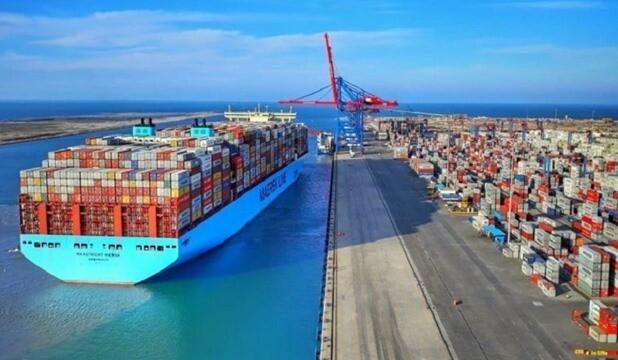
Saudi Arabia has separately redirected more crude north through Egypt as Red Sea security risks intensified, using the Suez Canal and SUMED pipeline. Crude and condensate loadings at Egypt’s Mediterranean terminal of Sidi Kerir reached a record 2.17mn b/d in early August, according to Vortexa data cited by Reuters, with Saudi barrels accounting for about 90 percent of the total.
The distinction is important: Yanbu demonstrates the ability to redirect refined products, while Suez and SUMED demonstrate the value of alternative crude logistics.
Egypt’s Advantage Starts With Logistics
For Egypt, the immediate opportunity lies in logistics as much as refining.
Its position between the Red Sea and Mediterranean, reinforced by the Suez Canal and SUMED pipeline, gives it strategic relevance when Gulf exporters need alternatives to disrupted maritime routes. The surge in Saudi crude movements through Sidi Kerir demonstrates that role in practice.
The downstream opportunity is more conditional. Targeted investment in storage, blending, pipeline connectivity and refinery upgrades could improve Egypt’s ability to process or redirect energy flows towards Mediterranean and African markets.
The investment test should therefore be market access and adaptability, rather than additional capacity for its own sake.
A Window, Not a Permanent Shortage
Today’s scarcity should not be mistaken for a permanent structural deficit.
The IEA expects global oil demand to contract by 1.6mn b/d in 2026 — a considerably weaker outlook than OPEC’s — and, assuming geopolitical tensions ease, sees supply exceeding demand by 4.61mn b/d in 2027.
The danger for investors is extrapolating wartime refining margins into assets that must operate for decades.
Projects dependent on permanently elevated diesel margins therefore carry greater risk than assets capable of switching products and markets as trade patterns normalise.
For MENA, the stronger proposition is therefore conversion, storage and diversified export routes rather than refining scale alone.
Europe’s diesel squeeze is the immediate price signal. The broader lesson is that in a fragmented energy market, value increasingly lies not in the crude barrel alone, but in the ability to refine the product in shortage and deliver it through more than one route.
Related news:
Who Fuels Asia and Europe in a Prolonged Iran War?
How MENA Can Turn Trade Corridors Into the Industrial Platform Connecting Global Blocs
Read also:
Houthi Threat Opens Second Front in Regional Shipping Crisis
AfDB Approves €100mn Loan for Morocco’s First EV Battery Gigafactory