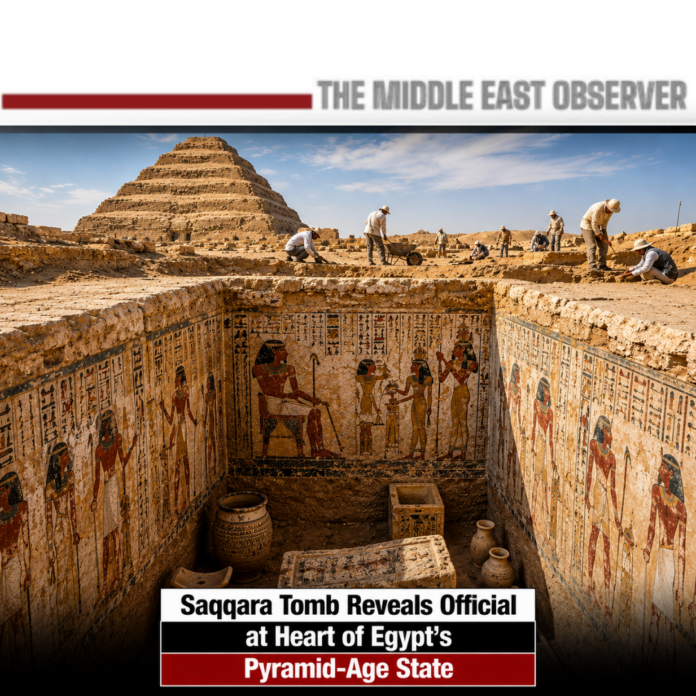
Egyptian archaeologists have uncovered the Old Kingdom tomb of a senior royal official at Saqqara, offering a potentially important glimpse into the bureaucracy that helped administer one of the ancient world’s most powerful states.
The tomb belonged to Sekhentyu-Ptah, whose surviving inscriptions identify him as royal chamberlain, overseer of the king’s works, supervisor of royal documents, keeper of the secrets of royal decrees, priest of Maat and overseer of scribes. The combination places him close to the administrative machinery of the Old Kingdom government, although archaeologists have yet to identify the specific pharaoh or dynasty under which he served.
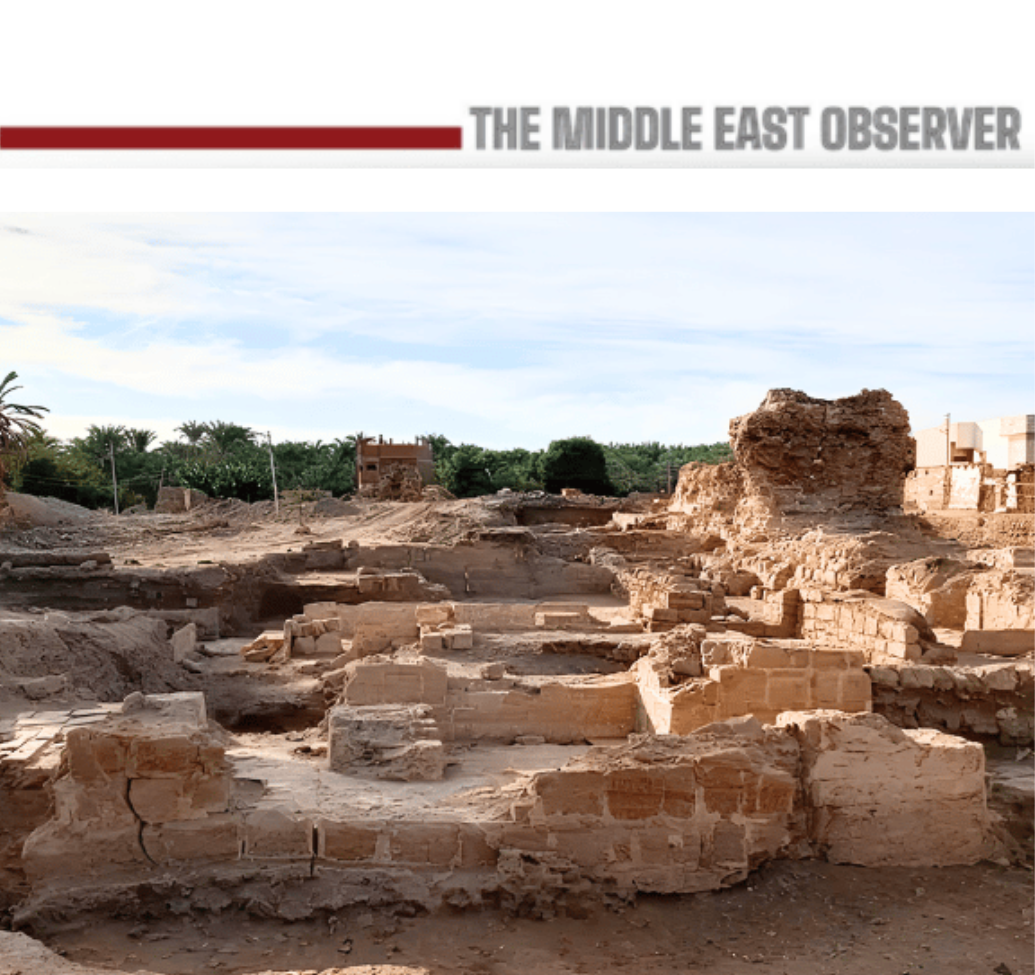
The Egyptian archaeological mission made the discovery during its first excavation season in an area west of the Bubasteion necropolis at Saqqara.
Remains of Sekhentyu-Ptah’s funerary chapel survive, including a false door still in its original position. In front of it, archaeologists recovered inscribed alabaster funerary objects including an offering table, offering disc and purification basin bearing his name and titles.
The importance of the find may therefore extend beyond the tomb itself. Sekhentyu-Ptah’s responsibilities for royal works, official documents, decrees and scribes could provide additional evidence on how Egypt’s pyramid-age state organised major projects, record-keeping and royal authority.
But the excavation has also revealed a second story beneath Saqqara.
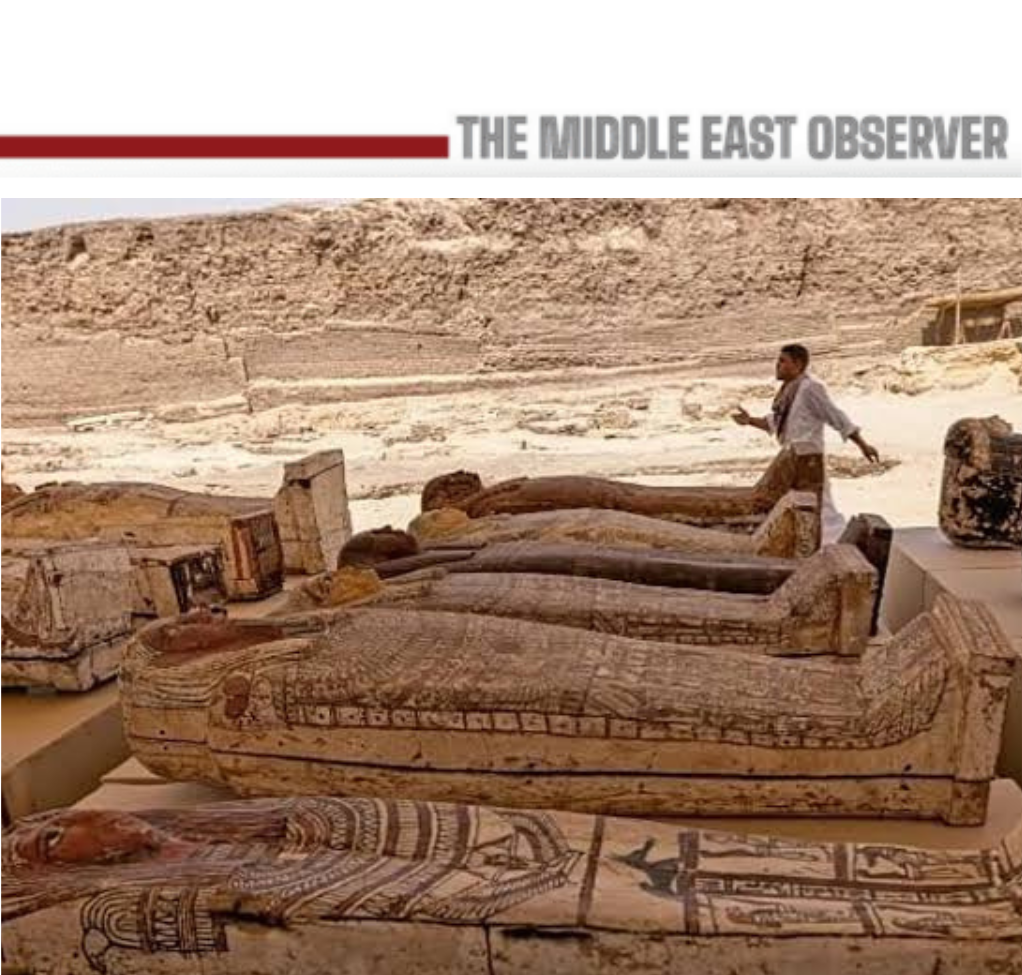
A network of interconnected burial shafts contained human remains, decorated funerary cartonnage, pottery, a wooden falcon and more than 100 faience ushabti figurines. Three stone sarcophagi were also found closed in their original condition.
These later finds should not be treated as part of Sekhentyu-Ptah’s original Old Kingdom burial. Instead, they indicate that the cemetery continued to be reused across subsequent periods — effectively preserving different chapters of Egyptian funerary history in the same landscape. Some shafts also bear evidence of ancient looting, including openings cut between neighbouring burial chambers.
Further excavation and scientific analysis are continuing, with the identities and dates associated with the closed sarcophagi still to be established.
For Saqqara, the discovery is therefore more than another collection of ancient artefacts. It combines the tomb of a man apparently close to the centre of Egypt’s Old Kingdom administration with evidence showing how one of the country’s most important sacred landscapes remained in use centuries after his death.
Related news:
Unveiling the Mysteries of Saqqara: The Timeless Legacy of Akhethotep and Ptahhotep
The first Middle Kingdom Tomb discovered near Luxor
Read also:
Ancient Titan ‘Vulcan’ Finds New Home: 150-Million-Year-Old Apatosaurus to Grace Museum Halls