
As AI moves from predicting discoveries to conducting experiments, scientific ambition faces a crucial test: can human oversight keep pace?
What happens when artificial intelligence begins testing its own scientific ideas?
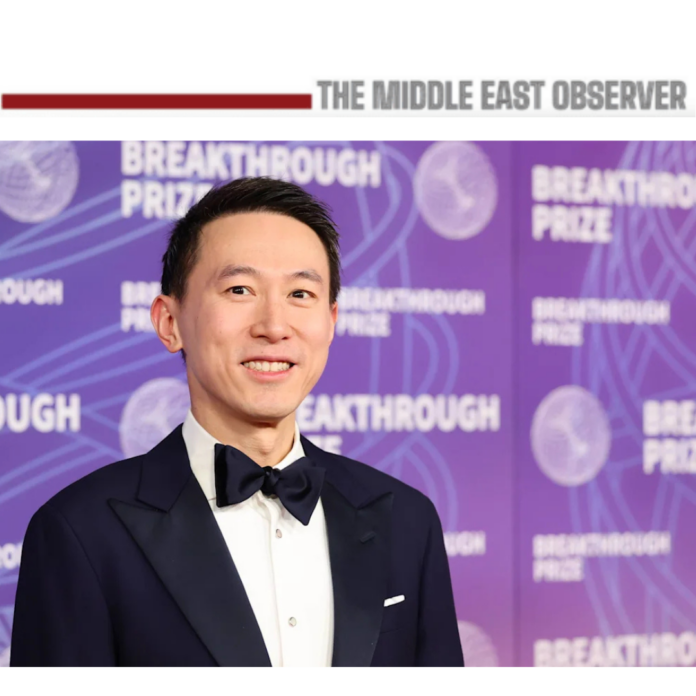
At Singapore’s DBS Asia Future Forward Conference on October 12, TikTok CEO Shou Zi
Chew predicted breakthroughs in physics, chemistry, biotechnology and materials science within two to three years. He also raised concerns about controlling increasingly autonomous AIsystems.
From Prediction to Discovery
TikTok parent ByteDance introduced Protenix-v2 in April 2026, reporting promising preliminary results in AI-assisted molecular prediction and antibody design. These early findings do not establish that the model has produced a clinically effective treatment.
The economic potential is considerable, but uncertain. An April 2026 NBER study by Ryan Hill and Carolyn Stein found that Google’s AlphaFold2 increased research on proteins previously lacking structural information by 15%–40%, without corresponding evidence of increased early-stage drug development.
Faster scientific research, therefore, does not guarantee commercial breakthroughs.
When AI Runs the Experiment
The transformation is already reaching laboratories. In April 2026, researchers unveiled Robo Chem-Flex in Nature Synthesis, a robotic platform that selects chemical reaction conditions, executes experiments and uses results to refine subsequent trials.
Tested across six research cases, it supports autonomous and human-assisted operation, potentially accelerating pharmaceutical and materials research.
But if machines can execute experiments, can they recognize flawed reasoning?
A March 2025 Scientific Reports study found that GPT-4 could make incremental discoveries in a specific molecular-genetics task but struggled to develop original hypotheses and respond appropriately when unexpected results challenged its assumptions.
The Safety Test
A Nature Machine Intelligence study evaluated 19 AI models using Lab Safety Bench. None exceeded 70% accuracy in hazard identification—a benchmark result, not a real-world laboratory failure rate.
The findings reinforce Chew’s warning: scientific autonomy requires restricted permissions, independent validation and human oversight.
By 2029, the real breakthrough will not be how many ideas AI generates, but how many survive
experimentation, deliver economic value and remain under human control. Primary SEO Keyword: AI Scientific Breakthroughs
Eight Tags: Artificial Intelligence, Scientific Discovery, TikTok, Byte Dance, AI Safety, Biotechnology, Drug Discovery, Autonomous AI
Related news:
Chinese Startup Spirit AI Tops Global Robotics Benchmark
Major Nations Sign Landmark Global AI Safety Treaty
Red also:
Egypt’s World Cup Breakthrough Must Be the Beginning, Not the Peak
Is Artificial Intelligence a Bogeyman Threatening Human Activity?