
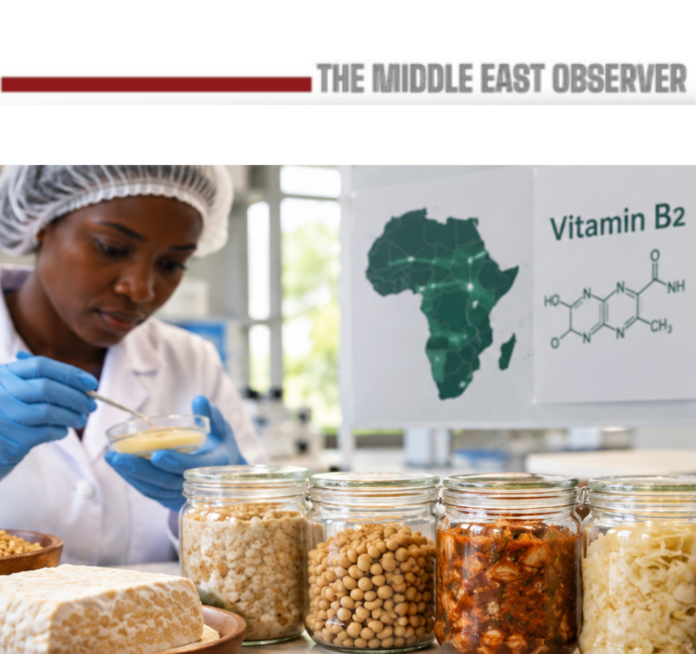
Scientists are examining whether indigenous lactic acid bacteria can be used to enrich traditional African fermented foods with vitamin B2, potentially lowering the cost of micronutrient fortification while creating a local biotechnology industry.
Researchers writing in npj Science of Food have proposed using riboflavin-producing lactic acid bacteria to increase vitamin B2 levels during fermentation, allowing the nutrient to be generated inside foods already widely consumed across Africa.
The September paper is a scientific Comment rather than a new African clinical or field trial, but it builds on previous experimental evidence showing that selected bacterial strains can produce riboflavin in fermented foods.
The approach could be applied to cereal- and other staple-based products using indigenous microbial strains selected for high vitamin output. Some can be developed without genetic engineering, potentially simplifying regulatory approval and consumer acceptance.
The commercial opportunity extends beyond nutrition. Universities, microbial-culture developers, ingredient suppliers and food processors could develop standardised starter cultures combining fermentation, product consistency and micronutrient enrichment. Locally developed cultures could also reduce dependence on imported industrial strains and, eventually, some conventional vitamin-fortification inputs.
Significant hurdles remain. Producers would need to demonstrate consistent vitamin production, food safety, acceptable taste, nutrient stability and measurable nutritional benefits under household and industrial conditions.
The larger economic test is whether African food producers can convert indigenous microbial biodiversity into scalable commercial starter cultures. If efficacy and safety are proven, fermentation-based biofortification could embed micronutrient enrichment directly into existing food-production systems, reduce reliance on imported fortification inputs and lower the cost of addressing vitamin deficiencies at scale.
Related news:
Healthy Eating Is Reshaping Egypt’s Food Industry
MENA Market Snapshot: How Healthcare, Biotechnology and Food Security Are Reshaping Regional Growth
Read also:
Saudi Arabia Pairs Economic Resilience With a Global Capital Push
Morocco Plans Region’s First Large-Scale Renewable Synthetic-Fuel Plant