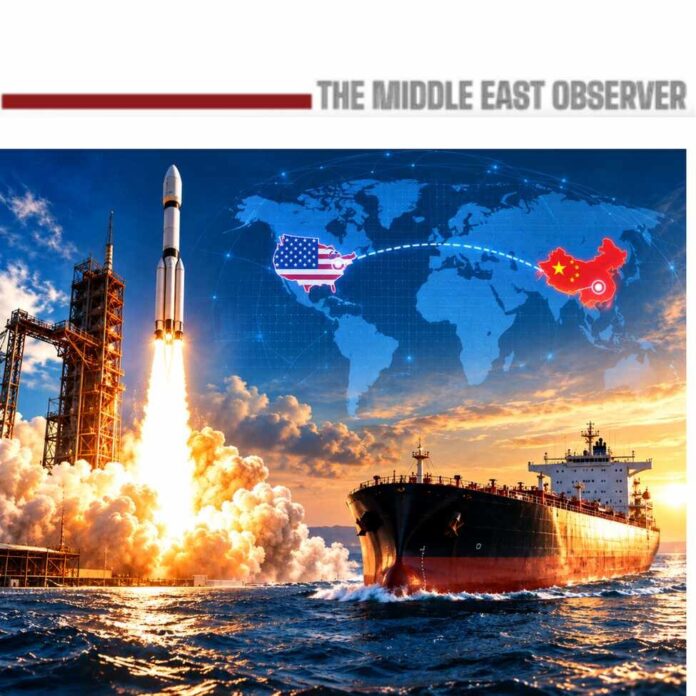
Chartering a supertanker to transport crude oil from the United States to China now costs approximately $80 million, exceeding the $74 million published price of a standard SpaceX Falcon 9 rocket launch, as disruptions around the Strait of Hormuz drive global tanker freight rates to historic highs and threaten the economics of international oil trade.
The extraordinary comparison was reported by Bloomberg, citing shipbroker Gibson, during the week ending October 9. Reuters separately reported on October 9 that chartering a very large crude carrier (VLCC) to transport two million barrels from the US Gulf Coast to China for November loading had reached $80 million, citing shipping data from Simpson Spence Young (SSY) available through LSEG.
At approximately $40 per barrel, freight alone represents a substantial addition to the delivered cost of crude, potentially making otherwise competitive American oil uneconomic for Asian refiners.
Freight Rates Surpass Historical Extremes
The shipping crisis has reached levels rarely witnessed in modern maritime trade. According to SSY, as cited by Bloomberg, inflation-adjusted supertanker freight rates have exceeded those recorded during the Iran–Iraq Tanker War of the 1980s, reaching their highest levels since supertankers emerged in the 1960s.
The escalation has been exceptionally rapid. Reuters reported on October 9 that tanker rates on major routes connecting the US Gulf and Middle East with Asia had increased by more than 300% since mid-August.
The $80 million charter quotation also illustrates how radically shipping economics have changed. Bloomberg, citing Gibson, reported that a comparable tanker could have been purchased for approximately the same amount earlier in 2026.
Hormuz Disruptions Create a Global Vessel Shortage
The surge reflects a shortage of commercially available tankers rather than simply stronger demand for crude oil.
Military confrontation involving Iran and disruptions around the Strait of Hormuz have forced traders to reorganise cargo movements through longer routes, vessel repositioning and ship-to-ship transfers.
These arrangements absorb shipping capacity and reduce the number of available vessels, even when oil production and export volumes recover.
Russell Hardy, chief executive of Vitol, the world’s largest independent oil trader, warned at an industry conference that there were insufficient vessels to meet shipping requirements, with freight rates increasing at exceptional speed, according to Bloomberg.
The resulting bottleneck has spread beyond the Gulf, affecting Atlantic-to-Asia shipments and intensifying competition for tankers across major producing regions.
Reuters reported on October 5 that Middle Eastern crude exports through Hormuz had recovered substantially, yet transportation costs remained exceptionally elevated. The disruption has consequently evolved from an immediate supply-security problem into a broader logistical constraint.
Asian Refiners Reconsider American Crude
The commercial consequences are becoming increasingly evident.
Asian refiners are reassessing purchases of US crude as record freight rates undermine the price advantage of American supplies. According to Reuters, traders indicated that the US–China arbitrage window — the opportunity to profit from purchasing crude in one market and delivering it to another — had effectively closed at prevailing shipping costs.
Alternative grades from the Middle East and Latin America are attracting renewed interest. Reuters also reported strengthening demand for the UAE’s Murban crude, with its premium exceeding $11 per barrel over Dubai benchmark quotations.
Some trading companies are exploring smaller tankers and alternative shipping arrangements, although such adjustments cannot immediately resolve the capacity shortage.
An Energy Shock Beyond Oil Prices
For refiners and oil-importing economies, the implications extend beyond higher shipping bills.
Expensive freight raises the delivered cost of crude, compresses refining margins and increases foreign-currency requirements. It can also alter established trade relationships, favouring suppliers located closer to major consuming markets.
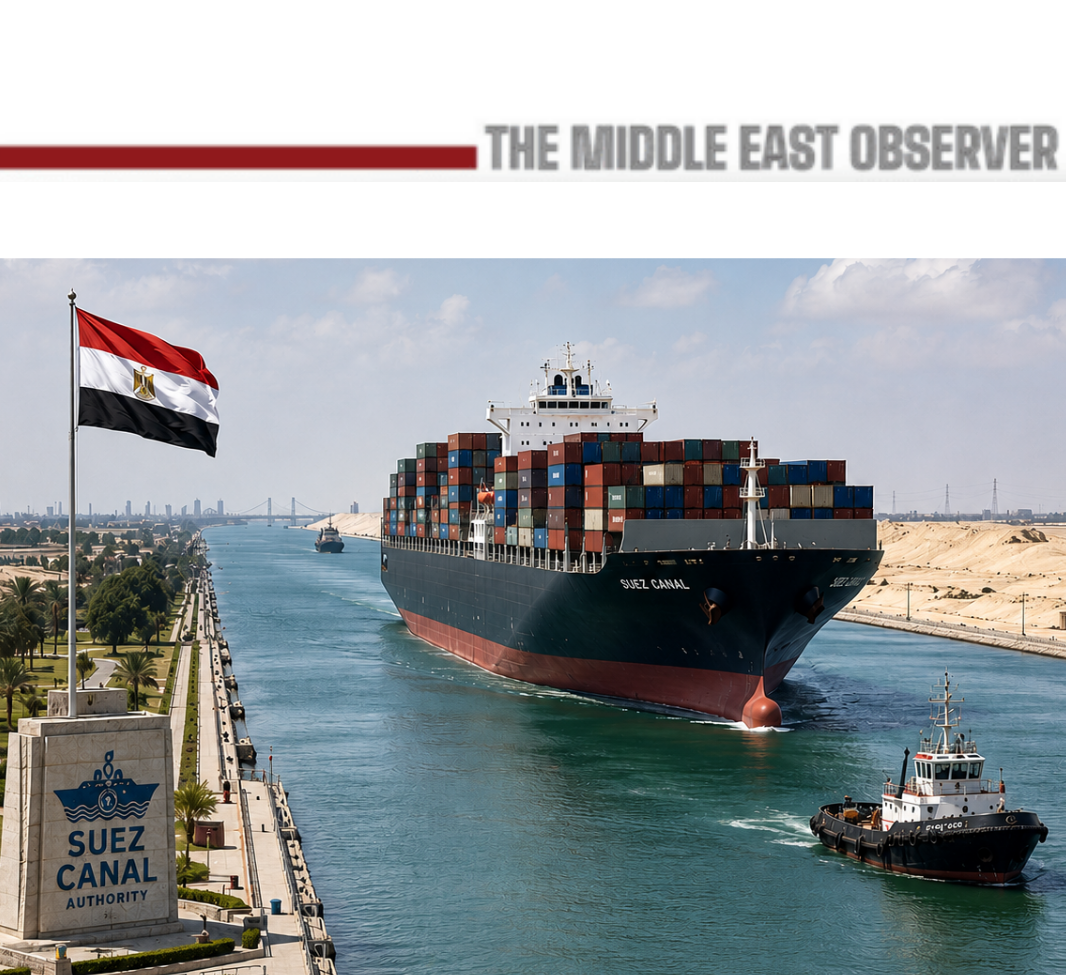
For Egypt and other energy-importing economies, sustained high freight costs could increase petroleum import expenditure and intensify pressure on external accounts. Changes in shipping routes could also affect traffic patterns through the Suez Canal, although the net impact remains uncertain.
Tanker owners stand to benefit from exceptional charter earnings, potentially encouraging investment in additional vessels. However, the lengthy construction cycle for new ships offers little immediate relief to a market already constrained by security risks and inefficient routing.
The deeper threat is that oil may become increasingly expensive to deliver even when sufficient supplies are available.
The $80 million tanker voyage is therefore more than an extraordinary comparison with space travel. It signals a fundamental shift in global energy economics: the availability and cost of maritime transport are becoming as decisive as crude oil prices themselves. Unless tanker capacity and shipping efficiency recover, restoring oil production alone may prove insufficient to stabilize energy markets, leaving refiners, importing economies and ultimately consumers exposed to a prolonged transportation-driven energy shock.
Related news:
UNGA81: The World Has Solutions. What It Lacks Is Execution
UK Faces Calls for Remote Work Measures as Energy Pressures Mount