Plant will produce 250,000 tonnes a year in its first phase, with most output earmarked for export as Egypt seeks greater value from its phosphate reserves
Egypt has started construction of a $658mn phosphoric acid plant at Abu Tartour in the New Valley, advancing a long-delayed investment as Cairo seeks to shift its mining industry from raw-material exports towards higher-value processing.
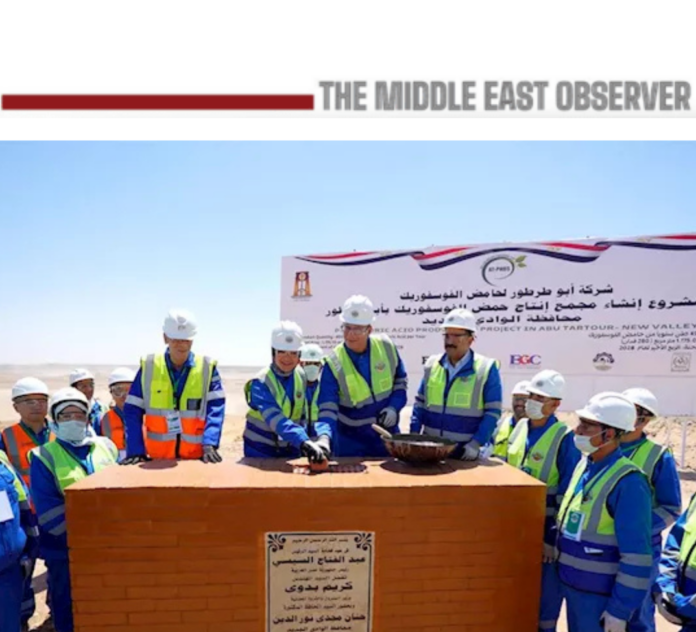
Petroleum and Mineral Resources Minister Karim Badawi and New Valley Governor Hanan Megally laid the foundation stone for the project, which is being developed by Abu Tartour Phosphoric Acid Company.
The plant will produce 250,000 tonnes a year of high-concentration commercial phosphoric acid in its first phase, using locally mined phosphate. Construction is expected to take 30 months, while most production is planned for export through Safaga Port on the Red Sea. The project is expected to generate more than 3,000 direct and indirect jobs.
The groundbreaking moves the project into physical construction after years of delays. Final implementation agreements were signed in June 2025, including a general contractor agreement with a Chinese consortium comprising China State Construction Engineering Corporation (CSCEC) and East China Engineering Science and Technology Co (ECEC).
The investment is part of Egypt’s push to capture more value from its mineral resources by processing phosphate domestically rather than relying on exports of raw ore. Phosphoric acid is a key intermediate used in the production of phosphate fertilisers and other chemical products.
Badawi said obstacles that had delayed the project for several years had been resolved through coordination between the ministry, the Mineral Resources and Mining Industries Authority and project shareholders.
State-owned Phosphate Misr, Egypt’s largest phosphate producer, holds a 25 per cent stake in the project and has annual production capacity of about 7mn tonnes from its Abu Tartour, El-Sebaiya and Red Sea mines, providing an established domestic feedstock base for downstream processing.
The project comes as Egypt restructures its mining sector to attract investment and develop processing industries capable of generating higher-value exports. The government recently converted the Mineral Resources and Mining Industries Authority into an economic authority, intended to streamline procedures and reduce investment risks.
For Abu Tartour, the immediate test will be execution. Completing the $658mn plant within its 30-month timetable and establishing export operations through Safaga would mark a significant step in Egypt’s effort to retain more of the value generated by its phosphate resources at home.
Related news:
Andy Burnham begins UK premiership with activist agenda and immediate cost-of-living push
Nasr Mining and Egyptian Ferroalloys Outline Expansion Plans Ahead of Planned EGX Listings
Read also:
US-Jordan Trade Deal Unlocks Strategic Mining and Energy Investment