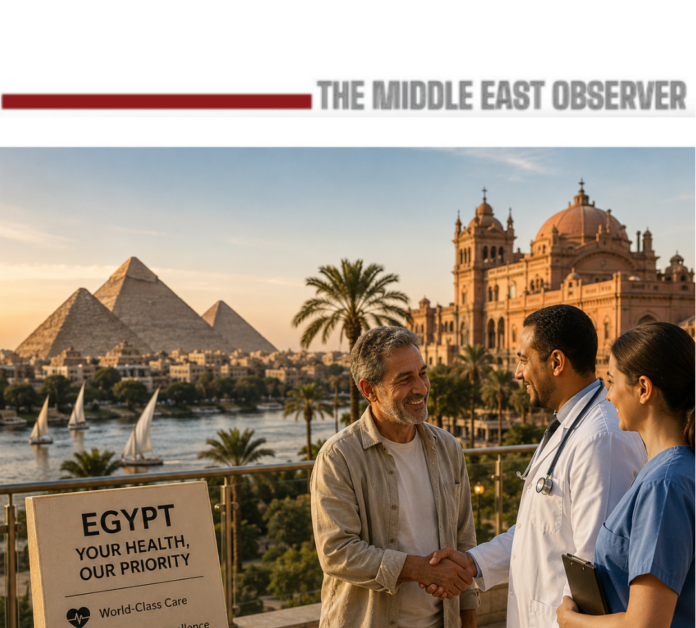
Egypt’s General Authority for Healthcare (GAH) said medical-tourism revenues exceeded $10mn, up 37% year on year, as it seeks to expand higher-value healthcare services for international patients. Nearly 42,000 international patients have received treatment at GAH hospitals, according to the authority.
GAH is targeting specialties including cosmetic procedures, in-vitro fertilisation (IVF), obesity treatment and advanced dentistry, while developing integrated treatment packages tailored to overseas markets and contracting partners.
The authority is also strengthening integration with Tour4Cure, Egypt’s national medical-tourism platform, to streamline referrals, coordination and patient reception. Dedicated contact points and service areas for international patients are being established at GAH hospitals to centralise reception and treatment coordination.
GAH also plans to explore cooperation with specialised medical-tourism centres in Turkey on service development, marketing and international patient acquisition.
Beyond Treatment: Egypt’s Wider Medical-Tourism Advantage
Egypt’s potential extends beyond hospital care. The country combines comparatively low treatment costs with an established tourism industry and resort infrastructure across the Mediterranean and Red Sea coasts, creating scope to package medical procedures with accommodation and recuperation. The Red Sea has a more established wellness offering, including spa and thalassotherapy facilities at destinations such as Soma Bay, while Mediterranean resorts provide substantial hospitality capacity. Egypt’s warm, dry climate in several tourism regions also supports the potential for recuperation stays outside the peak Mediterranean summer season.
The country has a separate wellness and therapeutic-tourism tradition that could complement — rather than substitute for — clinical care. Siwa Oasis is known for its salt lakes, hot and sulphuric springs and traditional sand-bathing practices, while destinations including Safaga, Aswan and the Western Desert oases have long been marketed for wellness and traditional therapeutic tourism. Such practices should be distinguished from evidence-based medical treatment, but they broaden the range of experiences that can accompany longer recovery and wellness stays.
Cost is potentially one of Egypt’s strongest competitive advantages. Private treatment for procedures ranging from dentistry and fertility treatment to bariatric and orthopaedic surgery is generally marketed at substantially lower prices than equivalent private care in western Europe and the US, although costs vary significantly by hospital, physician and procedure. Egyptian government material estimates some medical and therapeutic treatment costs at roughly one-quarter to one-third of comparable European and US levels, although the estimate is not a comprehensive independent price benchmark.
That price advantage is increasingly being combined with more formal infrastructure for international patients. GAH is expanding specialised hospital services and international-patient facilities, while national initiatives are developing electronic booking, remote consultations, accredited-provider listings and greater pricing transparency. Egypt’s government has also been working with healthcare providers and insurers on indicative pricing and digital systems intended to make treatment costs clearer before patients travel.
Together, those assets could allow Egypt to compete not only on procedure costs but on integrated packages combining treatment, accommodation and recuperation. Its geographic position between Africa, the Middle East and Europe, established tourism infrastructure and range of coastal, cultural and wellness destinations provide an additional advantage over medical-tourism markets that compete principally on healthcare costs.
For GAH, the commercial test will be whether rising international patient numbers can translate into higher revenues through specialised procedures and packaged treatment services. For Egypt more broadly, the opportunity lies in connecting increasingly organised international healthcare services with a tourism industry already equipped to receive overseas visitors.
Related news:
Egypt Moves Towards $5.3bn Healthcare Investment With Two Medical Cities Plan
Artificial Intelligence Is Reshaping Healthcare Across Egypt and the Middle East
Read also:
Tatweer Medical Plans $100m Investment to Expand Egypt’s Medical Technology Manufacturing