Government targets higher domestic fuel production as upstream output recovers and Cypriot gas exports through Egypt prepare for a 2028 launch.
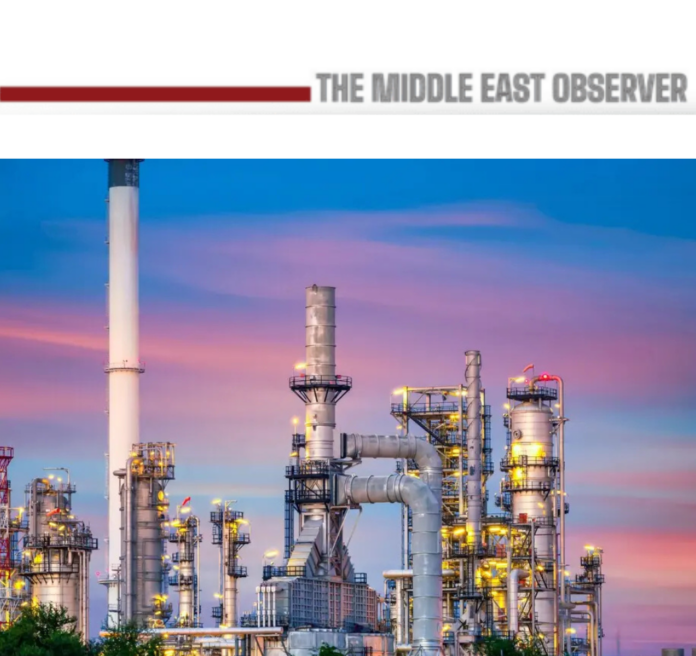
Egypt is advancing a refinery investment programme valued at about $4.5bn as it seeks to reduce petroleum-product imports, revive domestic oil and gas production and make greater use of its energy infrastructure.
Petroleum and Mineral Resources Minister Karim Badawi and Planning and Economic Development Minister Ahmed Rostom reviewed the sector’s priorities under the FY2026/27 development plan, placing higher production, investment and energy security at the centre of the government’s strategy.
Refining Targets the Import Bill
The programme forms part of Egypt’s wider downstream investment drive, aimed at producing more of the higher-value fuels required by the domestic economy, particularly diesel, gasoline components and liquefied petroleum gas.
Major projects under development include the Assiut National Oil Processing Company hydrocracking complex and upgrades at the Suez Petroleum Manufacturing Company.
The Assiut complex is central to the import-substitution strategy. Designed to convert lower-value fuel oil into higher-value products, it is expected to strengthen diesel supplies to Upper Egypt and reduce requirements for imported fuel.
Higher domestic output of transport fuels could reduce both petroleum imports and the associated demand for foreign currency.
Production Recovery Strengthens the Strategy
The effectiveness of the refinery programme will partly depend on whether Egypt can sustain the recent recovery in domestic hydrocarbon production.
The petroleum sector grew 0.7 per cent in the third quarter of FY 2025/26, its first positive growth rate since the first quarter of FY 2023/24, supported by higher production of crude oil, condensates and LPG.
Crude oil production had risen above 540,000 barrels per day by mid-June, according to figures cited by Badawi.
The government is seeking to reinforce the recovery by attracting additional exploration and development investment. Rostom also highlighted regular payments to international petroleum partners as important to maintaining investor confidence and encouraging further upstream expenditure.
Cypriot Gas Exports Through Egypt Set for 2028
Cyprus expects to begin exporting natural gas through Egypt in the first half of 2028, creating additional feedstock for Egyptian processing and LNG infrastructure while establishing a new Eastern Mediterranean export route to Europe.
The first major source will be the Cronos field offshore Cyprus, being developed by Eni and TotalEnergies. The companies approved the development in July, with production expected to reach about 500mn cubic feet per day, equivalent to roughly 2.8mn tonnes of LNG annually at plateau.
Cronos gas will be transported by subsea pipeline to Egypt, processed through infrastructure linked to the Zohr field, and sent to the Damietta LNG plant for liquefaction before being shipped primarily to European markets.
The development is significant beyond its production volumes. Cronos is set to become Cyprus’s first commercial offshore gas development while demonstrating Egypt’s ability to process and export gas produced elsewhere in the Eastern Mediterranean.
The Execution Test
Together, the projects link Egypt’s upstream recovery with downstream import substitution and a regional strategy built around processing and exporting Eastern Mediterranean gas.
The economics will depend on whether domestic production continues to recover, refinery projects enter service on schedule and Cypriot gas begins flowing through Egyptian infrastructure as planned in 2028.
For Cairo, the potential gains extend beyond lower fuel imports. Greater refinery output could ease pressure on foreign-currency requirements, while additional regional gas volumes could improve utilisation of infrastructure already built around Egypt’s domestic discoveries.
Success would leave Egypt less exposed to imported refined fuels while allowing it to extract greater value from infrastructure connecting Eastern Mediterranean gas producers with international markets.
Related news:
Refining, Not Crude, Becomes the New Fault Line in Global Energy Markets
Egypt and Algeria Sign Crude Oil Agreement to Strengthen Energy Security
Read also:
Orange Raises 2026 Outlook as Africa & Middle East Adds 10 Million Data Users
Egypt Genome Project Uncovers Millions of New Genetic Variants