China is turning a growing surplus of contracted liquefied natural gas into a global trading business, transforming the world’s largest LNG importer into an increasingly important reseller competing for customers across Asia and beyond.
Chinese companies resold an estimated 17–19 million tonnes of LNG in 2025, according to the Institute for Energy Economics and Financial Analysis, while generating about $4.6 billion in estimated profits from resales of US- and Australian-origin LNG between 2021 and mid-2026.
The shift reflects a widening gap between China’s contracted supply and its domestic requirements.
Chinese companies signed nearly 60 million tonnes a year of new LNG agreements between 2021 and 2023, largely during the energy-security shock that followed the global gas crisis. China’s contracted LNG portfolio is projected to approach 114 million tonnes annually by 2028.
Domestic demand, however, has weakened. LNG imports fell to roughly 68 million tonnes in 2025, from about 79 million tonnes a year earlier, as domestic gas production increased, Russian pipeline deliveries expanded and renewable power reduced some dependence on imported gas.
That divergence is giving companies including PetroChina and CNOOC increasing scope to operate as international portfolio traders rather than conventional importers.
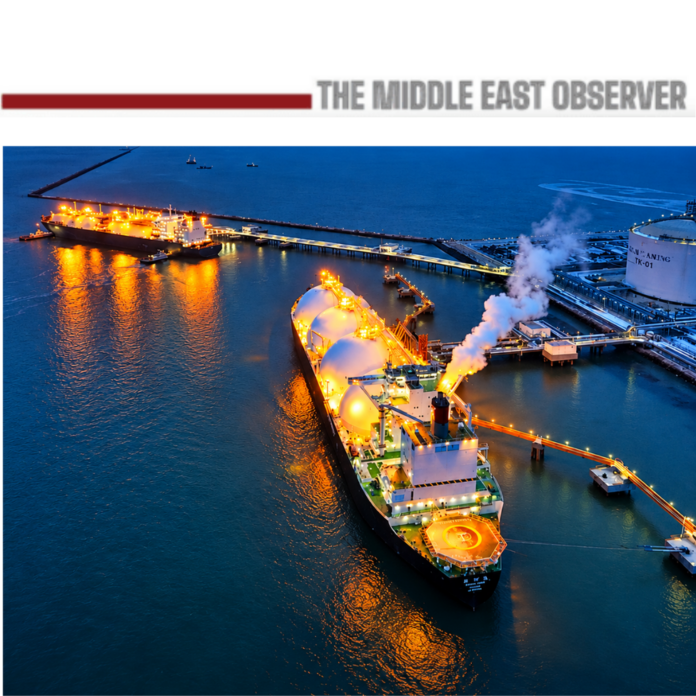
Flexible US contracts are central to the model. LNG can be loaded at American export terminals and redirected directly to buyers in Europe or Asia without first entering China, allowing Chinese companies to capture price differences between markets.
IEEFA estimates that in the first half of 2026, around 47% of LNG cargoes handled within Chinese companies’ trading portfolios were redirected to customers outside China. The figure refers to commercially controlled cargoes, not LNG imported into China and subsequently re-exported.
The transformation could become more important as a large wave of new global liquefaction capacity enters service later this decade.
For years, LNG producers assumed China would absorb a substantial share of future supply growth. But if Chinese demand expands more slowly than its contracted volumes, part of that supply could instead return to the international market through Chinese trading books.
That would make China valuable during both tight and oversupplied markets: redirecting cargoes toward shortages when prices rise and reselling excess volumes when domestic economics weaken.
The strategic change is therefore larger than a temporary surplus.
China is no longer simply absorbing global LNG supply. It is increasingly helping determine where that supply goes.
For exporters in the US, Qatar and Australia, that creates an unusual commercial relationship: China is simultaneously becoming a customer, contract holder, portfolio optimiser and competing seller.
The world’s biggest LNG buyer is evolving into one of the market’s most consequential traders.
Related news:
Saudi Aramco Q1 Earnings Climb 25.5% on Higher Oil Prices and Export Volumes
India’s BRICS 2026 Set the Commitments; China Must Deliver in 2027
Read also:
Iran War Redraws Global Energy Trade Around Strategic Choke Points