
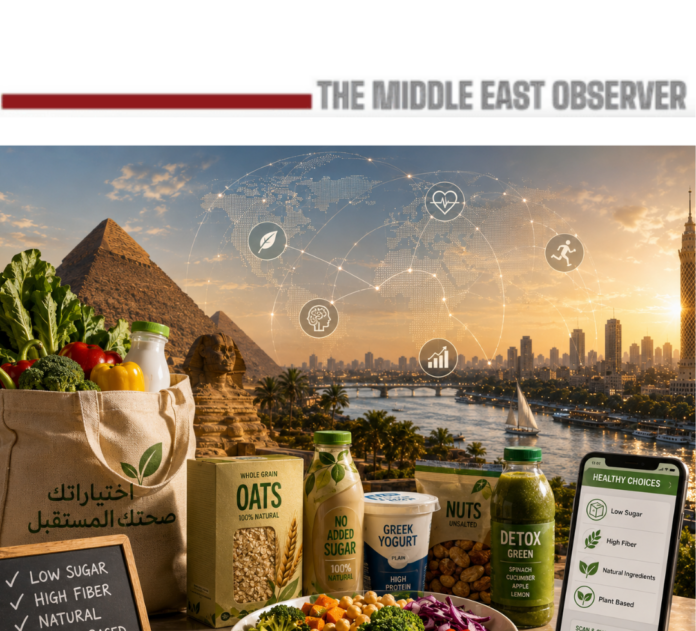
For years, sugar-free products in Egypt were largely associated with people living with diabetes. Today, supermarket shelves tell a different story. Stevia-sweetened beverages, reduced-sugar dairy products, sugar-free snacks and a growing range of alternative sweeteners have become increasingly common, reflecting a broader shift in consumer preferences. The trend raises an important question: is Egypt witnessing a genuine transformation in dietary habits driven by health awareness, or simply another consumer fad?
Growing health awareness and rising concern over obesity, diabetes and other non-communicable diseases (NCDs) are gradually reshaping purchasing decisions. At the same time, food manufacturers are reformulating products and expanding healthier product lines as consumers pay closer attention to ingredients and nutritional value. What was once a niche market aimed primarily at diabetics is steadily becoming part of the mainstream food industry.
The shift comes as Egypt seeks to curb one of the region’s highest burdens of obesity and diet-related diseases. According to the World Health Organization (WHO), obesity has become a major public health challenge in Egypt, contributing to rising rates of diabetes and cardiovascular disease while increasing healthcare expenditure and reducing workforce productivity. These trends have reinforced the government’s emphasis on preventive healthcare.
Reflecting this priority, Egypt’s National Health Strategy 2024–2030 places greater emphasis on healthier diets through nutrition awareness campaigns, improved food environments and wider access to healthier food choices. The strategy also proposes stronger nutrition labelling, including clearer front-of-pack information highlighting sugar content on selected products, enabling consumers to make more informed purchasing decisions while encouraging manufacturers to improve product formulations.
Egypt’s changing food market mirrors a wider global transformation. The global sugar substitute market is projected to expand steadily over the coming decade, supported by rising health awareness, regulatory initiatives and product innovation. Consumers are increasingly seeking foods perceived as healthier, less processed and lower in added sugar, prompting manufacturers worldwide to reformulate beverages, dairy products, cereals and snacks. Although comprehensive Egypt-specific market data remain limited, multinational and domestic producers alike have responded by expanding reduced-sugar and no-added-sugar product portfolios.
Among the most popular alternatives is stevia, which provides sweetness with virtually no calories and has minimal impact on blood glucose levels. Honey and blackstrap molasses remain popular natural sweeteners, although WHO classifies their sugars as free sugars that should still be consumed in moderation. Products marketed locally as “bamboo sugar” have also gained visibility despite limited scientific evidence demonstrating additional nutritional benefits.
WHO recommends limiting free sugars to less than 10% of daily calorie intake—and preferably below 5%, or around 25 grams (six teaspoons) per day for an adult consuming 2,000 calories. The organisation’s 2023 guidance also concludes that non-sugar sweeteners should not be relied upon as a long-term strategy for weight management or reducing the risk of chronic diseases. Instead, improving overall dietary quality and gradually reducing preferences for overly sweet foods remain the most effective long-term approach.
Dr Wafaa Sayed, a sports nutrition specialist and lecturer at the Egyptian Chinese University, attributes the of sugar alternatives to both increasing health awareness and sophisticated marketing strategies. She advises against relying heavily on artificial sweeteners while scientific debate over their long-term health effects continues. Instead, she recommends gradually reducing sugar consumption and, where appropriate, choosing natural dried stevia leaves over heavily processed alternatives.
The food industry’s response extends well beyond sugar substitutes. Global companies such as Coca-Cola, PepsiCo and Nestlé, alongside Egyptian producers including Juhayna Food Industries and Edita Food Industries, have introduced reduced-sugar or no-added-sugar products while reformulating existing brands to meet evolving consumer expectations. Meanwhile, supermarkets, pharmacies and online retailers have expanded dedicated wellness and sugar-free product ranges, reflecting growing demand among health-conscious consumers.
Nevertheless, nutrition specialists caution that product innovation alone will not solve Egypt’s dietary challenges. Recent assessments continue to show that many packaged foods sold in the country remain high in added sugar, salt and saturated fat, underlining the need for stronger nutrition labelling, improved consumer education and continued reformulation across the food industry.
Ultimately, Egypt’s growing market for lower-sugar products reflects more than changing consumer tastes; it signals a broader shift towards preventive healthcare and healthier lifestyles. Lasting progress, however, will depend less on replacing one sweetener with another than on improving food literacy, encouraging balanced diets and reducing overall sugar consumption. As public policy, scientific guidance, industry innovation and consumer awareness increasingly converge, healthier eating habits could help reduce the long-term economic burden of obesity and chronic disease while creating new opportunities for food manufacturers investing in nutrition-focused innovation.
Related news:
WHO Warns of Mounting Health Crisis Across Conflict-Affected Middle East
Intensive Efforts Are Making Significant Strides in Addressing the Challenges of Aging
Read also: