Foreign arrivals are surging and Gulf investors are returning, but damaged utilities and limited capacity could constrain Syria’s attempt to turn its tourism rebound into sustainable growth.
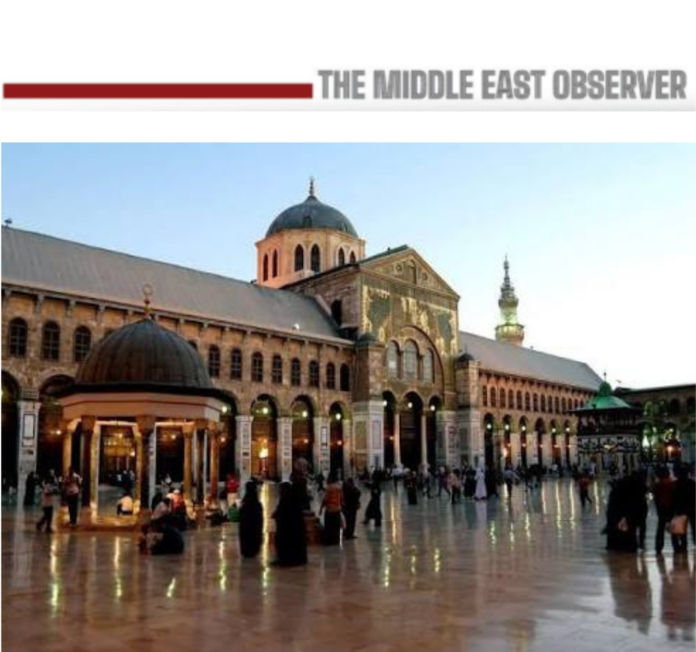
Syria’s tourism sector is recovering faster than the infrastructure needed to support it, as sharply rising visitor arrivals collide with damaged utilities and limited hospitality capacity.
The country recorded 3.52 million visitors in the first half of 2026, up 111% from 1.67 million during the same period of 2025, according to Syria’s Ministry of Tourism. The total includes about 2.13 million Syrian expatriates, 664,000 Arab visitors and 719,000 foreign tourists. Foreign arrivals recorded the sharpest increase, rising 448% from 131,000 a year earlier.
For investors, that distinction matters. Syrian expatriates still account for the majority of arrivals, but the sharp increase in foreign visitors provides an early indication that international demand is returning. Converting that demand into sustained tourism revenue will depend on whether Syria can rebuild the infrastructure behind the visitor experience.
Tourism Minister Mazen Al-Salhani has estimated that Syria could require as much as $100 billion of investment over seven years to revive the sector, encompassing hotels, resorts and entertainment destinations as well as heritage restoration and supporting infrastructure.
That puts infrastructure at the centre of the tourism recovery — and exposes a gap between the speed at which demand is returning and the pace at which capacity can be rebuilt.
Investment Returns, but Capacity Must Catch Up
Investment is beginning to return to Syria’s hospitality market.
A government programme is targeting 332 one- and two-star hotels for upgrading as part of the National Tourism Plan 2026–2030, signalling an effort to rebuild capacity beyond the luxury segment.
At the premium end, The Beaumont in Damascus is planned as a $250 million-$300 million mixed-use development covering about 77,000 square metres. The project is expected to include a five-star hotel, residences, restaurants, retail and business facilities and create 1,500-2,500 direct jobs and 3,000-3,500 indirect jobs.
The investment pipeline extends beyond individual developments. The Syrian Investment Authority had 113 tourism projects available for investment as of May 5, 2026, spread across several governorates.
Syria also said it had signed tourism investment contracts and memoranda worth about $1.5 billion in 2025, covering hotels, resorts, entertainment facilities and the rehabilitation of historic areas.
The announcements point to renewed investor interest in Syria’s tourism potential. But even if fully realised, the $1.5 billion of agreements would cover only a small portion of the investment the government says the sector needs.
The Bottleneck Is Bigger Than Hotel Rooms
The constraint is not simply how many hotel rooms Syria can provide.
Tourism depends on the systems beneath every hotel, restaurant and attraction: electricity, water and wastewater networks, airports, roads and telecommunications.
Saudi Arabia has begun moving into several of these areas. In February, the Saudi-backed Elaf Fund committed $2 billion to develop two airports in Aleppo. Separately, flynas agreed with Syria’s civil aviation authority to establish flynas Syria, while Saudi Telecom Company committed about $800 million to expand Syria’s fibre-optic network by more than 4,500 kilometres.
Improved aviation and digital connectivity could unlock additional tourism demand. But faster arrivals would also place greater pressure on already strained public infrastructure.
Water illustrates the problem. The World Bank estimates that more than half of Syria’s water-supply infrastructure and about 70% of wastewater treatment plants were severely damaged during the conflict, while water supply has fallen roughly 40% from pre-conflict levels. In April 2026, the Bank approved $225 million in grants for water and health projects expected to benefit about 4.5 million Syrians.
Electricity presents a similar constraint. In June 2025, the World Bank approved a $146 million grant to rehabilitate transmission lines and substations and support broader electricity-sector recovery. At the time, it said years of conflict had left electricity supply at only two to four hours a day in many areas.
For tourism investors, these are not separate reconstruction problems. A hotel can add rooms, but its ability to operate competitively depends on reliable power, water, sanitation, transport and communications.
Despite substantial sanctions relief, investors still face financing constraints, regulatory and security risks, and uncertainty over how quickly announced agreements can translate into executable projects.
Gulf Investors Reassess Syria’s Tourism Potential
The return of Gulf investors is adding another dimension to Syria’s tourism ambitions.
Mohamed Alabbar, founder of Emaar Properties, said in May that Syria could potentially attract 8 million tourists annually within five years. He has also been assessing multibillion-dollar investments in the country, including opportunities in Damascus and along the coast.
The 8 million figure is an investor ambition rather than an official forecast. But it would broadly restore Syria to its pre-war tourism scale: the country recorded about 8.5 million visitors in 2010.
Reapproaching that level would require a corresponding expansion in accommodation, aviation, transport, utilities and visitor services.
Tourism as a Reconstruction Engine
Tourism has the potential to transmit investment across several parts of Syria’s recovering economy. Hotels generate demand for construction and real estate; expanding aviation supports transport and logistics; better telecommunications underpin digital services; and rehabilitating historic sites can combine economic development with cultural preservation.
The test will be whether investment in utilities, hospitality capacity and connectivity can keep pace with visitor demand.
Tourism could become an important conduit for reconstruction capital, transmitting investment into construction, aviation, utilities, telecommunications and heritage assets. But Syria risks recovering visitor demand faster than its capacity to monetise it.
Related news:
Egypt and Syria Prepare to Restore Cairo–Damascus Air Link
Syria Rejoins Global Payment Networks After 15 Years of Isolation
Read also:
Egypt Advances $4.5bn Refinery Push to Cut Fuel Imports
The $10 iPhone Question: What China’s Manufacturing Model Really Teaches Us