
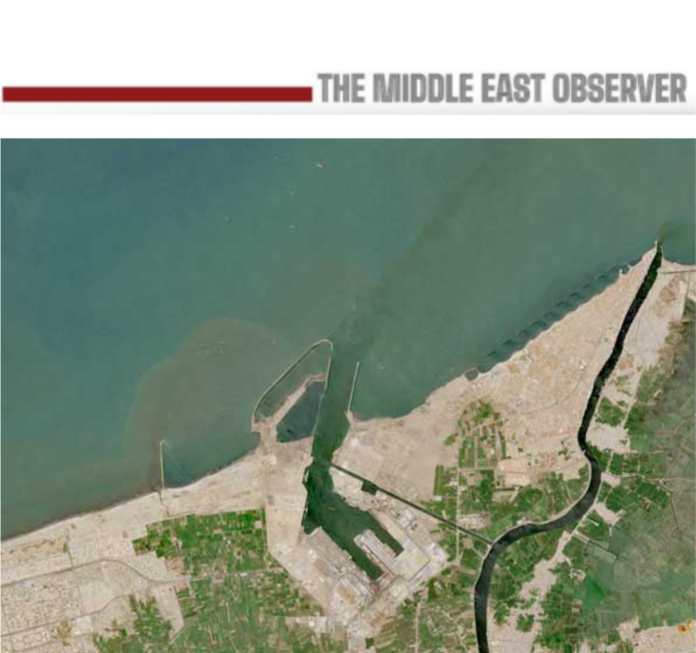
Within minutes of a drone striking a U.S.-linked gas carrier at Egypt’s Damietta Port, U.S. President Donald Trump stated that Iran was responsible for the attack. On the same day, The New York Times, citing anonymous Iranian sources, and The Wall Street Journal, quoting anonymous Egyptian sources, both reported similar allegations pointing toward Tehran. In return, Egypt’s State Information Service (SIS) issued a statement urging journalists to rely on verified Egyptian sources and exercise accuracy in reporting. It also called on the public to avoid drawing premature conclusions while investigations remain underway.
The Egyptian statement, which appeared to challenge the credibility of the anonymous circulating reports, raises an important question: Was this a genuine attack, or could it have been a false flag operation carried out by an intelligence service seeking to attribute responsibility to Iran and potentially draw Egypt into a wider regional confrontation?
The measured response from Egypt’s security institutions and the cautious tone adopted by official statements should not necessarily be interpreted as a lack of information. Rather, such restraint may reflect several strategic considerations.
The first is the need to complete the technical and criminal investigation, including analysing the drone’s flight path, examining recovered debris and identifying its launch point. These forensic procedures require time before reliable conclusions can be reached.
Second, any official attribution carries significant diplomatic consequences. Once a government publicly accuses another state, the political and legal implications are difficult to reverse without compelling evidence.
Third, Egypt has consistently pursued a policy of strategic restraint aimed at avoiding direct involvement in regional military confrontations that do not serve its national interests.
Finally, the incident’s geographic sensitivity and current regional chaos in the Gulf and settlement in progress in Gaza cannot be overlooked. On the other hand, Any premature or inaccurate statement could immediately affect maritime insurance premiums and disrupt shipping traffic in the eastern Mediterranean, particularly given Damietta’s proximity to the Suez Canal, one of the world’s most critical trade corridors.
Why the False Flag Hypothesis Cannot Be Entirely Dismissed
Several factors make the false flag scenario theoretically conceivable.
The first is the speed with which responsibility was attributed to Iran. Washington’s immediate accusation reflects what communications specialists often describe as “framing”—the effort to establish the dominant public narrative before competing explanations emerge.
A second consideration concerns Iran’s established doctrine of public deterrence. When Tehran or its regional allies have conducted military operations in the past—such as the missile strike on Ain al-Asad Air Base or attacks linked to shipping in the Red Sea—they have generally acknowledged, or at least strongly implied, their involvement. The strategic objective has been to send an unmistakable deterrent message. Conducting a covert strike inside the sovereign territory of a neutral country that maintains diplomatic relations with Iran would expose Tehran to considerable political costs while providing little strategic deterrent value against Washington.
I recall a historical precedent: the 1954 Lavon Affair, known in Israel as Operation Susannah. During that operation, Israeli intelligence agents planted bombs at American and British civilian facilities and Egyptian cinemas in Cairo and Alexandria in an unsuccessful attempt to blame Egyptian actors and damage Egypt’s relations with Western governments. Israel officially acknowledged the operation decades later, in 2005. This episode demonstrates that attacks on Western interests inside Egypt for broader political objectives have historical precedent and should not be dismissed as merely conspiratorial speculation.
Determining What Actually Happened
Whether the Damietta incident proves to be a false flag operation or a genuine attack can only be determined through comprehensive forensic investigation rather than political assumptions.
Security agencies typically rely on three complementary categories of evidence.
The first consists of physical and forensic evidence, including examination of drone wreckage, engine components, serial numbers and the chemical composition of any explosives used. Such analysis may help identify the manufacturer and estimate the launch location based on range calculations and fuel consumption.
The second involves digital and electronic evidence, including guidance frequencies, onboard flight data recovered from the drone’s memory and radar records capable of tracing its trajectory and determining whether it originated from land or sea.
The third is maritime and logistical intelligence. Investigators would examine vessel movements in the area at the time of the attack, identify ships that may have disabled their automatic identification systems—commonly referred to as “ghost ships”—and review intercepted communications potentially connected to the operation.
If these three categories of evidence converge on conclusions that differ from the prevailing public narrative, the false flag hypothesis would inevitably gain greater analytical weight. At that point, policymakers would face a strategic choice: disclose the evidence publicly or retain it as leverage within diplomatic channels.
A Case for Patience
Ultimately, Egypt’s cautious handling of the crisis reflects an effort to avoid being drawn into rapidly evolving accusations while preventing its territory and ports from becoming arenas for broader regional confrontation.
Historical precedents, including the Lavon Affair, together with the strategic interests of regional actors, may make the false flag scenario worthy of analytical consideration. Nevertheless, theory alone cannot substitute for evidence.
The final assessment must rest on the outcome of the ongoing technical investigation. Whether those findings are ultimately made public—or remain confidential in accordance with Egypt’s national security considerations—will determine the credibility of competing narratives surrounding the Damietta incident.
Related news:
Trump Between Gulf Protection and the Iranian “Taklif” Doctrine in Light of Israeli Lurking
The Iranian War: Between Subduing China and American Lobby Agendas
Read also:
Egypt’s €690mn Grid Upgrade Lays Groundwork for European Power Exports
Health 2035: Can Egypt Become the Middle East’s Next Healthcare and Food Production Hub?