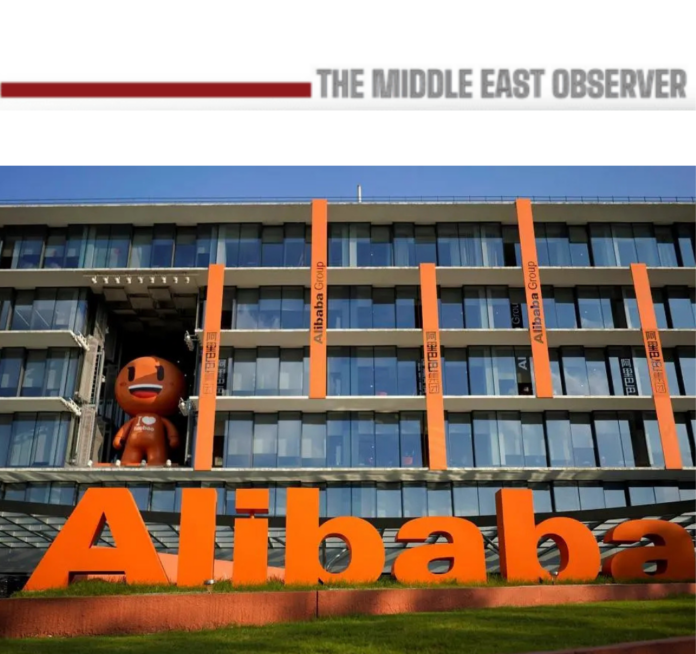
Alibaba plans to raise HK$80bn ($10.2bn) through a Hong Kong share placement as the Chinese technology group steps up investment in artificial intelligence infrastructure.
The transaction would be the largest primary follow-on share sale by a Hong Kong-listed company and the third-largest globally this year, behind offerings from Alphabet and Intel.
Alibaba said it would use all net proceeds to expand its “full-stack AI capabilities”, spanning chips and computing infrastructure as well as the development and deployment of artificial intelligence models.
According to a term sheet reviewed by Reuters, the company plans to issue about 710mn ordinary shares at HK$112.70 each, a 3.6 per cent discount to its previous closing price. Strong demand, including interest from sovereign wealth funds, prompted Alibaba to increase the size of the offering.
The fundraising comes as Alibaba accelerates an investment programme that is reshaping its financial profile. The Hangzhou-based group has committed at least Rmb380bn over three years to cloud and AI infrastructure and had deployed roughly half of that amount by the end of June. Chief executive Eddie Wu has indicated that spending could ultimately exceed the original commitment as demand for AI computing capacity increases.
Alibaba reported Rmb268.95bn ($39.6bn) in revenue for the quarter ended June 30, up 9 per cent from a year earlier. Revenue from its AI Cloud and Compute Services business rose 45 per cent to Rmb48.44bn, driven partly by increasing adoption of AI-related products.
The division’s adjusted earnings before interest, taxes and amortisation more than doubled to Rmb5.63bn, indicating that stronger cloud demand is beginning to translate into improved operating performance. AI-related product revenue recorded triple-digit year-on-year growth for the 12th consecutive quarter, according to the company.
The expansion has come alongside sharply higher investment. Quarterly capital expenditure rose 75 per cent to Rmb67.68bn, reflecting increased spending on AI infrastructure, computing capacity and more expensive chip components.
Alibaba’s reported net profit fell about 75 per cent to Rmb10.5bn, while adjusted net income declined 38 per cent. Operating profit fell 57 per cent, reflecting technology investment as well as other factors, including a goodwill impairment and a provision related to an EU regulatory fine.
Free cash flow was a Rmb44.7bn ($6.6bn) outflow, compared with an outflow of Rmb18.8bn in the same period a year earlier, highlighting the cash demands of Alibaba’s investment cycle.
The placement gives Alibaba additional capacity to finance that expansion while diluting existing shareholders.
Alibaba’s strategy extends beyond its Qwen family of large language models. The company is seeking to build capabilities across much of the AI technology stack, from semiconductors and data-centre infrastructure to cloud computing, foundation models and applications.
The fundraising also comes as Alibaba sheds non-core assets and concentrates capital on AI, cloud and its main ecommerce operations.
Alibaba’s investment forms part of a global AI infrastructure race in which Microsoft, Amazon, Alphabet and Meta are expected to spend about $725bn in capital expenditure this year, much of it linked to artificial intelligence infrastructure. Chinese technology groups are simultaneously increasing investment in models, chips and computing capacity.
For shareholders, the question is increasingly whether faster AI and cloud revenues can translate into earnings and cash generation sufficient to justify the scale of the investment and additional equity issuance.
Alibaba’s accelerating cloud revenues provide evidence that AI demand is beginning to translate into commercial growth. Its HK$80bn equity raising also illustrates the increasingly heavy capital requirements of competing for that growth.
Related news:
EU Hits AliExpress with Record €550m Fine in Digital Services Crackdown
Pentagon Expands Military-Linked List to Include Alibaba, Baidu and BYD
Read also:
EGX Sell-Off Deepens as Small Caps Lead Retreat
Beyond More Factories: Egypt’s Investment Challenge Shifts From Quantity to Quality