
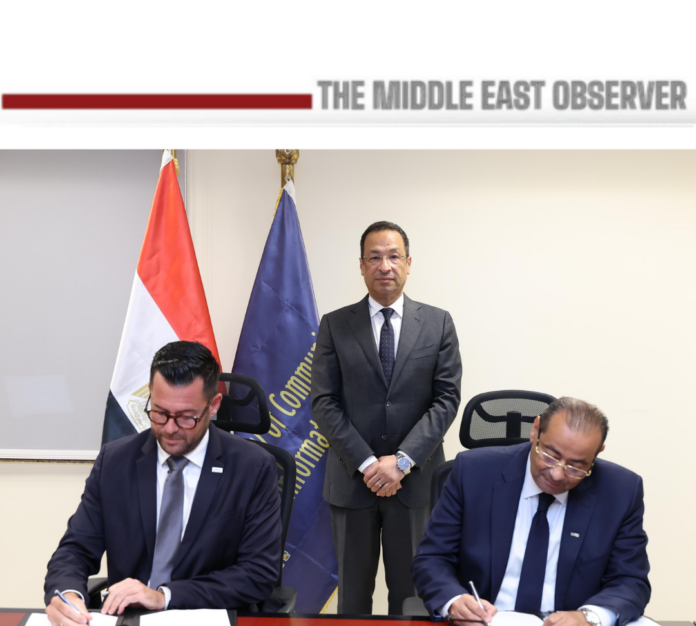
Telecom Egypt has signed an agreement with Greek marine-engineering group Power Sub Link S.A. to build a high-capacity subsea cable between Sharm El-Sheikh and Taba, advancing an eastern digital corridor through Sinai designed to diversify Egypt’s international data routes.
The approximately 200-km cable will have a design capacity of about 5 petabits and is expected to enter service in the fourth quarter of 2027, according to Telecom Egypt. Power Sub Link, or PSL, will undertake implementation of the project.
The cable will extend Telecom Egypt’s Red Sea Piston system towards Taba, linking it with landing points at Suez, Zafarana, Ras Ghareb and Sharm El-Sheikh. It will also connect with the Egyptian Internet Corridor, known as the Al-Morshedeen route, helping complete an additional Red Sea-to-Mediterranean axis through Sinai.
That route diversification is the project’s principal strategic value. Egypt already occupies a critical geographic position on data flows between Asia, Africa and Europe; the Sinai expansion gives Telecom Egypt another infrastructure axis through which international cable operators can route traffic, reducing dependence on a narrower set of terrestrial and landing-point connections.
Telecom Egypt describes the Sharm El-Sheikh–Taba connection as its shortest, fastest and most secure route between the two cities. Those performance claims remain company assessments and have not yet been independently demonstrated by an operational network.
Communications and Information Technology Minister Raafat Hindi said the project forms part of Egypt’s strategy to increase the diversity and resilience of international connectivity and strengthen the country’s role as a global data-transit corridor. Telecom Egypt CEO Tamer El-Mahdi said the investment would support development of the company’s new Eastern Digital Corridor linking the Red Sea and Mediterranean through Sinai.
The agreement comes as international operators increasingly value route redundancy and geographic diversity amid growing cloud, AI and data-centre traffic. For Egypt, the project therefore goes beyond adding capacity: it begins turning Sinai into a second strategic axis for international digital transit, complementing the country’s established Suez-Mediterranean connectivity.
Neither Telecom Egypt nor PSL disclosed the project’s investment cost, financing structure or commercial capacity commitments.
Related News:
Egypt and China Build a New Economic Architecture for the Next Decade
Suez Canal Targets $10bn Revenue as Traffic Rebounds 23.6%
Read also:
Telecom Egypt and Huawei Deepen Fiber Push as Egypt Accelerates Digital Infrastructure Expansion