State-owned manufacturer targets EGP 2.19bn in revenue as new railway contracts and domestic production underpin expansion.
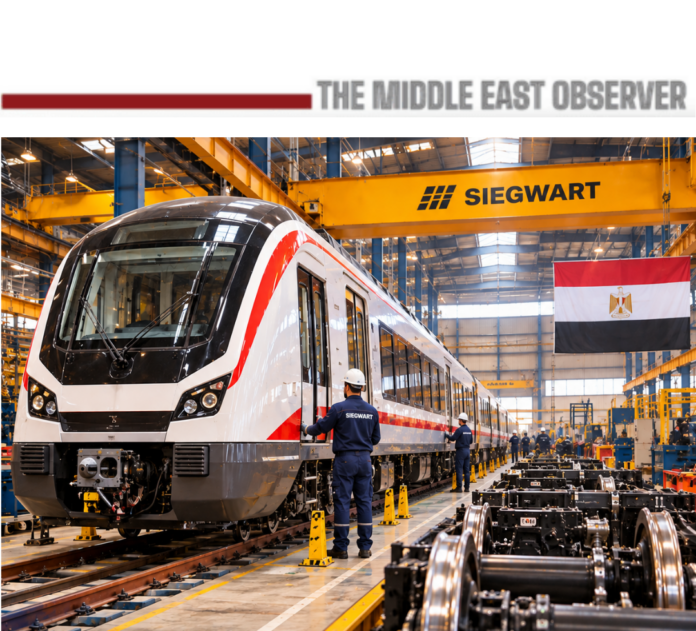
Egypt’s state-owned railway components manufacturer Siegwart reported a 2.3% decline in annual net profit to EGP 608 million, despite expanding domestic production of high-speed rail components and securing new infrastructure contracts aimed at reducing reliance on imports.
The Egyptian Company for Pipes and Cement Products recorded revenues of approximately EGP 1.396 billion for the 2025/26 financial year, while net profit fell from EGP 622.4 million a year earlier, according to company disclosures. The figures imply a net profit margin of 43.6%, although the contribution of operating earnings and exceptional items has not been separately established.
Mohamed Abdelhamid El-Kabbani, the company’s managing director, told Youm7 that Siegwart had secured a contract to manufacture 200,000 specialised guard-rail sleepers for the National Authority for Tunnels, alongside an agreement to supply approximately 72 kilometres of precast concrete fencing.
The sleeper contract, previously valued at approximately EGP 740 million by the Holding Company for Chemical Industries, covers components designed to support protective rails on Egypt’s high-speed railway network. Production received technical approval following cooperation with engineering consultancy SYSTRA, replacing specialised components previously sourced from abroad.
The expansion forms part of Egypt’s broader effort to develop domestic suppliers for major transport projects, reducing foreign-currency expenditure and exposure to international supply-chain disruptions.
Siegwart says it has achieved full localisation of manufacturing for the newly introduced railway products. However, domestic production of finished components does not necessarily mean every steel input, fitting or specialised material is locally sourced.
The distinction matters because the company is considering further investment in prestressing steel wire and anchor plates, alongside a dedicated manufacturing facility to supply its railway sleeper operations. These projects, reviewed during a visit by Deputy Prime Minister for Economic Affairs Hussein Eissa, remain under study.
The company has also restarted its concrete pipe factory, securing contracts covering 2.5 kilometres of pipes worth EGP 9.05 million, with reported profits of EGP 1.9 million. It sold a disused Deckerhoff facility for approximately EGP 26 million and reported efforts to develop export markets in Libya.
The next financial test will be substantially more demanding. Siegwart’s approved 2026/27 budget targets EGP 2.191 billion in revenue, approximately 57% above the latest reported annual figure, while projecting net profit of EGP 521.9 million, below the previous year’s outcome.
The contrast suggests that stronger sales volumes may not immediately translate into higher earnings, particularly as the company expands production, develops new product lines and invests in domestic industrial inputs.
For Egypt, the potential benefits extend beyond Siegwart’s balance sheet. A competitive domestic railway supply chain could reduce import requirements, shorten procurement cycles and retain more infrastructure spending within the national economy.
Whether those gains materialise will depend on the cost competitiveness of locally manufactured components, the conversion of contracts into profitable sales and the development of reliable domestic suppliers. Siegwart’s challenge is no longer simply to manufacture what Egypt previously imported, but to establish an industrial base capable of competing on cost, quality and delivery after the current railway construction programme matures.
Related news:
Egypt–Japan Align on Industrial Investment Opportunities
Aquaculture: Balancing the Benefits and Risks of Fish Farming
Read also:
Egypt Plans Africa Investment Platform to Expand Corporate Reach