
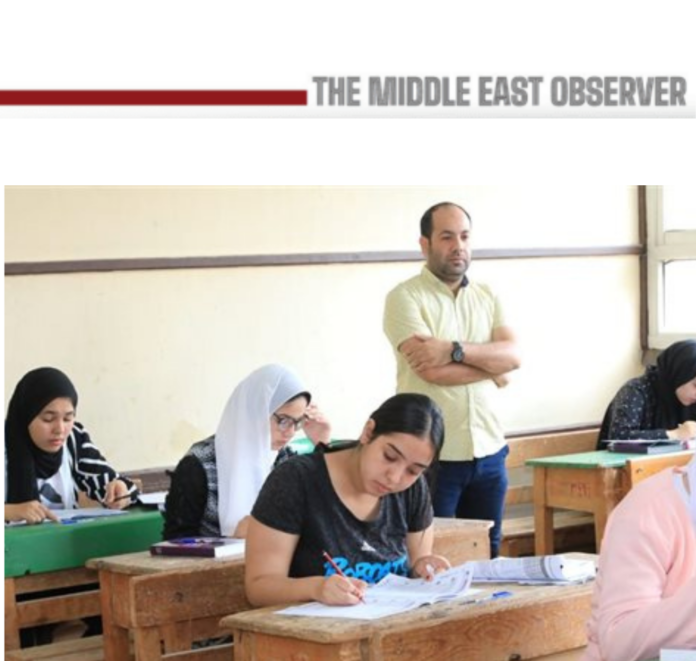
For millions of Egyptian families, the final year of secondary school is far more than an academic milestone. It is a year that reshapes daily life, dominates family conversations, and places extraordinary emotional and financial pressure on parents and students alike.
Known as Thanaweya Amma, Egypt’s national high school examination has long been viewed as the gateway to higher education and, by extension, a successful career. The result often determines which university faculty a student can enter, making it one of the most consequential examinations in the country.
For an entire year, households operate in what feels like a permanent state of emergency. Parents rearrange their schedules around study timetables, social activities are put on hold, and every family member becomes invested in the student’s performance. The examination is not simply an individual challenge; it is a collective family experience.
The Price of Ambition
The emotional burden is matched by a significant financial one.
Many Egyptian families spend between EGP 70,000 and 100,000 during the final year on textbooks, private tutoring, revision courses, and educational materials. For middle-income households, these expenses often require painful sacrifices, with parents working additional jobs or cutting back on other essential spending.
These costs reflect not only a desire to secure the best education but also a widespread belief that private lessons have become almost indispensable in an increasingly competitive system.
The investment is enormous, and so too are the expectations attached to it.
When Integrity Is Questioned
Perhaps nothing is more frustrating for hardworking students than the perception that academic dishonesty can undermine years of dedication.
Every examination season brings renewed debate about cheating, leaked exam papers, and the effectiveness of anti-cheating measures. For students who spend countless hours studying, the idea that others may achieve similar or even higher scores through dishonest means can be deeply discouraging.
Such incidents do more than affect university admissions. They weaken confidence in the education system and raise broader questions about fairness, equal opportunity, and merit.
Protecting the credibility of national examinations is therefore not merely an educational issue; it is a matter of public trust.
A Grade Does Not Define a Life
Yet despite the enormous pressure surrounding Thanaweya Amma, one important truth deserves greater attention.
An examination result, however significant, should never become the sole measure of a young person’s potential.
Many successful entrepreneurs, professionals, artists, and innovators have built remarkable careers through determination, continuous learning, and opportunities that emerged long after their school years. University admission is only one chapter in a much longer story.
For students celebrating exceptional grades, the future offers exciting possibilities. For those disappointed by the outcome, it is equally important to remember that life rarely follows a single path.
Success is shaped not only by one examination but by resilience, adaptability, and the willingness to keep moving forward. In the end, education should open doors—not convince young people that one difficult year determines the value of the rest of their lives.
Related news:
El-Sisi Advances Human Capital Strategy Through Health, Education, Research and Innovation
Read also:
Egypt’s World Cup Breakthrough Must Be the Beginning, Not the Peak
Saudi Arabia’s Jeddah Port Expansion Reinforces Red Sea Logistics Strategy