As Egypt expands renewable generation and builds links to Saudi Arabia and Europe, the economic opportunity is shifting from producing power to moving it across borders. But cables alone will not create a market — or guarantee competitive exports.
Egypt’s electricity strategy is increasingly extending beyond its national grid.
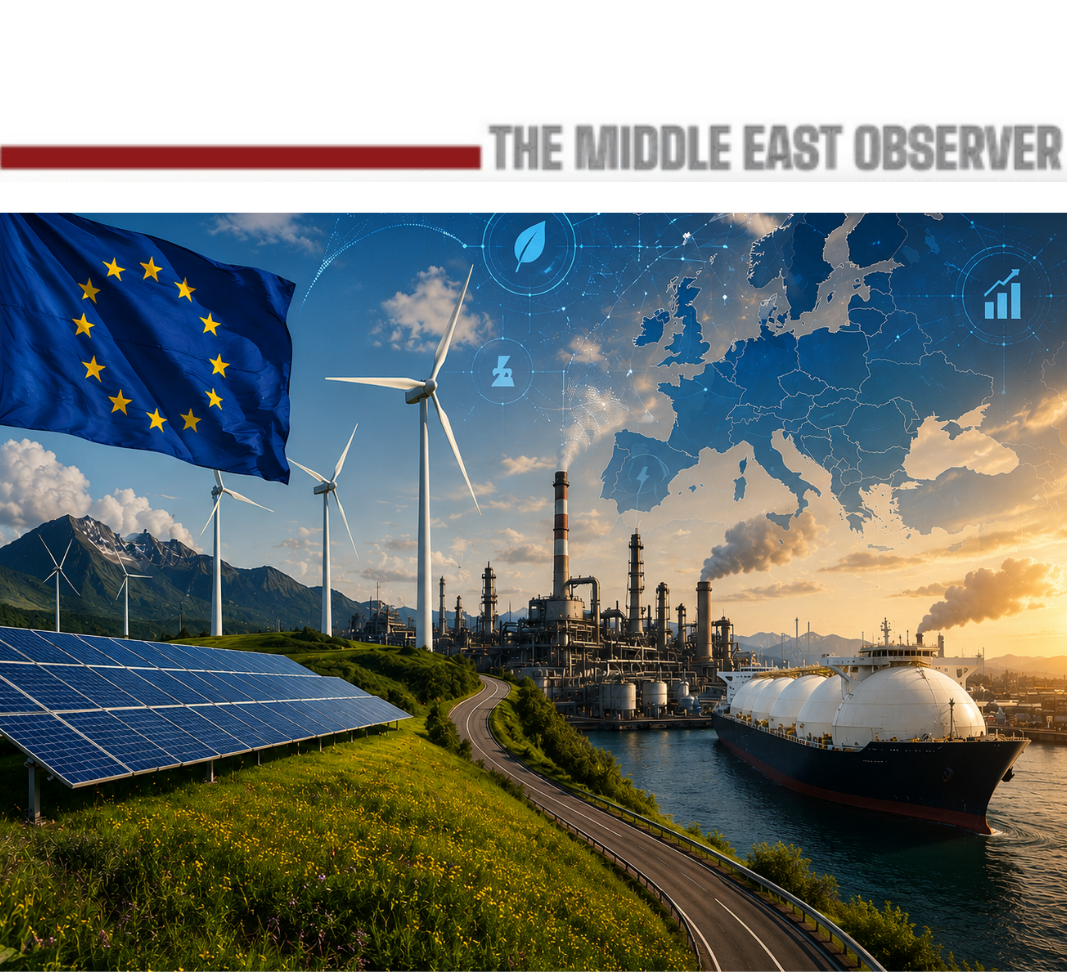
At its centre is the 3,000MW Egypt-Saudi interconnection, alongside the proposed 3,000MW GREGY link to Greece and a major programme to strengthen domestic transmission. Together, they point towards a larger ambition: positioning Egypt as a junction between Arab, African and European electricity systems.
The timing matters. Electricity demand reached peak levels of 37–39GW in July 2026, according to Electricity Minister Mahmoud Esmat, as high temperatures pushed consumption higher and disruptions to gas infrastructure reinforced concerns over energy security.
The question is no longer simply how much electricity Egypt can generate, but whether it can build the infrastructure and market architecture to move power efficiently — and profitably — between regions.
From Interconnection to Electricity Trade
The most advanced component of this strategy is the Egypt-Saudi interconnection.
The high-voltage direct-current project is designed for transfer capacity of up to 3,000MW, connecting two of the region’s largest electricity systems. Differences in demand patterns should allow power to move between them as consumption and available generation change.
But transmission capacity should not be confused with electricity exports. Actual flows will depend on generation, domestic demand, prices, transmission constraints and trading arrangements.
The potential gains become larger if bilateral exchanges develop into a wider regional market.
A 2025 study examining electricity integration across the Gulf Cooperation Council countries, Egypt, Jordan and Iraq estimated that hourly market coupling could reduce average annual generation costs by 1.6 per cent by 2030, cut renewable-energy curtailment by 35 per cent and avoid about 8mn tonnes of carbon dioxide emissions.
Interconnection can therefore create value without necessarily adding generation capacity: countries can use existing assets more efficiently.
Renewables Raise the Value of the Grid
Egypt’s installed renewable capacity reached about 9.5GW in mid-2026, comprising roughly 3GW of hydropower, 3.5GW of solar and 3GW of wind. The government expects capacity to reach about 11.2GW by the end of the year, alongside additional battery storage.
Egypt is also seeking to accelerate renewable deployment, with official targets pointing to a substantially larger contribution from renewable electricity over the remainder of the decade and towards 2040.
But additional renewable capacity does not automatically translate into usable electricity.
Solar generation rises during daylight hours and falls after sunset, while wind output fluctuates. Without adequate transmission, storage and flexible demand, electricity can be curtailed even when generating capacity is available.
Transmission is therefore becoming part of the economics of renewable generation itself. A cheap megawatt-hour has limited commercial value if it cannot reach a customer when needed.
The Grid Becomes an Investment Market
Egypt has already expanded its transmission infrastructure substantially. Its 500kV network increased from 2,364km in 2014 to about 8,250km by the end of 2024, while 500kV substation capacity rose from 9,800MVA to 48,000MVA.
In June, the European Union and European Investment Bank announced up to €690mn to modernise Egypt’s electricity network, comprising a €600mn EIB Global loan and up to €90mn in EU grants. The wider programme has an estimated cost of about €1.57bn.
That broadens the investment opportunity beyond generation into transmission lines, substations, battery storage, power electronics, control systems and grid-management technology.
Europe Creates a Second Corridor
The proposed GREGY interconnector would create a 3,000MW subsea electricity corridor between Egypt and Greece, providing a potential route for renewable power into Greece and other European markets.
GREGY has been included among the EU’s Projects of Mutual Interest. Its developer estimates that the project could displace as much as 4.5bn cubic metres of natural gas annually and avoid about 10mn tonnes of CO₂ emissions. Those remain project estimates rather than realised outcomes.
For Egypt, the larger significance is market access. A functioning European connection could give renewable developers another destination for electricity while strengthening the country’s position between North African resources, Arab power systems and European demand.
But building a cable is easier than proving the commercial case for using it.
Who Pays — And Who Makes Money?
Cross-border electricity has a landed cost.
Generators using Egypt’s transmission system face regulated network charges, while electricity delivered into another market must absorb some combination of generation costs, domestic transmission charges, interconnector costs, electrical losses and balancing expenses.
That raises the central commercial question: who captures the value created by interconnection?
Generators could benefit from access to higher-value markets. Transmission operators and interconnector owners can earn regulated or contracted returns. Storage providers can sell flexibility and balancing services, while traders may exploit differences in electricity prices and demand periods.
But infrastructure worth billions of euros also needs dependable customers.
For lenders, the question is who commits to buying the electricity — and whether long-term offtake agreements provide sufficient revenue certainty to finance the infrastructure. Power-purchase agreements, capacity contracts and other revenue arrangements could therefore prove as important to bankability as the cables themselves.
This is also what separates an exporter from a trading hub. An exporter sells domestically generated electricity abroad. A genuine hub allows multiple buyers and sellers to transact through infrastructure governed by workable rules for pricing, transmission access, balancing and settlement.
A Cable Is Not a Market
GREGY illustrates the next challenge.
Egypt has strong solar and wind resources, but low generation costs at the power plant are only the starting point. The relevant comparison is the delivered cost after transmission losses, financing, interconnector charges and balancing requirements are included.
EU Projects of Mutual Interest are eligible to apply for Connecting Europe Facility support, while institutions such as the European Investment Bank can participate in financing cross-border infrastructure. Such mechanisms can improve project economics, but they do not guarantee competitive exports.
Carbon policy adds another variable. Electricity is covered by the EU’s Carbon Border Adjustment Mechanism, whose definitive regime began in 2026. Low-carbon Egyptian electricity could have an advantage over more emissions-intensive alternatives, but its value will depend on emissions methodology, carbon prices and European wholesale electricity prices.
The commercial proposition therefore cannot be reduced to “cheap Egyptian solar plus a cable”. It depends on whether the landed megawatt-hour remains competitive — and whether enough buyers are willing to contract for it.
Physical connectivity is also insufficient. Cross-border trading requires compatible technical standards and rules covering transmission access, scheduling, balancing, pricing and congestion.
Interconnection can strengthen energy security by allowing Egypt to import when domestic generation is constrained and export when capacity is available. But deeper integration also raises requirements for cybersecurity, grid protection and co-ordinated emergency response.
From Power Producer to Trading Hub
Egypt is assembling several components of a potential regional electricity market at once: the 3GW Saudi interconnection, the proposed 3GW GREGY corridor, roughly 9.5GW of renewable capacity and a €690mn European-backed transmission programme.
Individually, these are infrastructure projects. Together, they could become something more consequential.
A power producer generates electricity. An exporter sells it abroad. A trading hub creates a market through which electricity can move between multiple buyers and sellers.
For Egypt to make that transition, three tests matter: can it produce surplus renewable electricity competitively; can it deliver that power across borders without transmission and financing costs eroding the advantage; and can governments establish market rules and commercial arrangements capable of turning physical capacity into bankable electricity trade?
If those conditions are met, the value of Egypt’s electricity system will no longer be measured solely by how many gigawatts it can generate.
It will also be measured by how many markets its grid can connect — and how much value Egypt can capture from the electricity flowing between them.
Related news:
Egypt Advances Clean Energy Push Through Solar, Storage and Grid Investments
Egypt Restarts Power Exports to Libya After Grid Collapse
Read also:
Suez Canal Recovery Gains Momentum as Q2 Revenues Climb 13%
Egypt Eyes East African Drug Exports Through Djibouti Partnership