Global energy leaders meeting in Saudi Arabia have warned that securing oil supplies increasingly depends not only on production capacity but also on protecting pipelines, shipping routes, storage facilities and the infrastructure needed to deliver fuel to consumers. With freight and insurance costs exceeding one-third of commodity value on disrupted energy flows, the economic consequences are spreading well beyond oil-producing countries.
The 25th WPC Energy Congress, taking place in Riyadh from 11 to 15 October under the theme Pathways to an Energy Future for All, opened against a backdrop of regional attacks, disrupted oil shipments and mounting pressure on global energy supply chains. The security situation affected international travel and prevented several leading oil executives from attending, although Saudi authorities maintained the conference programme.
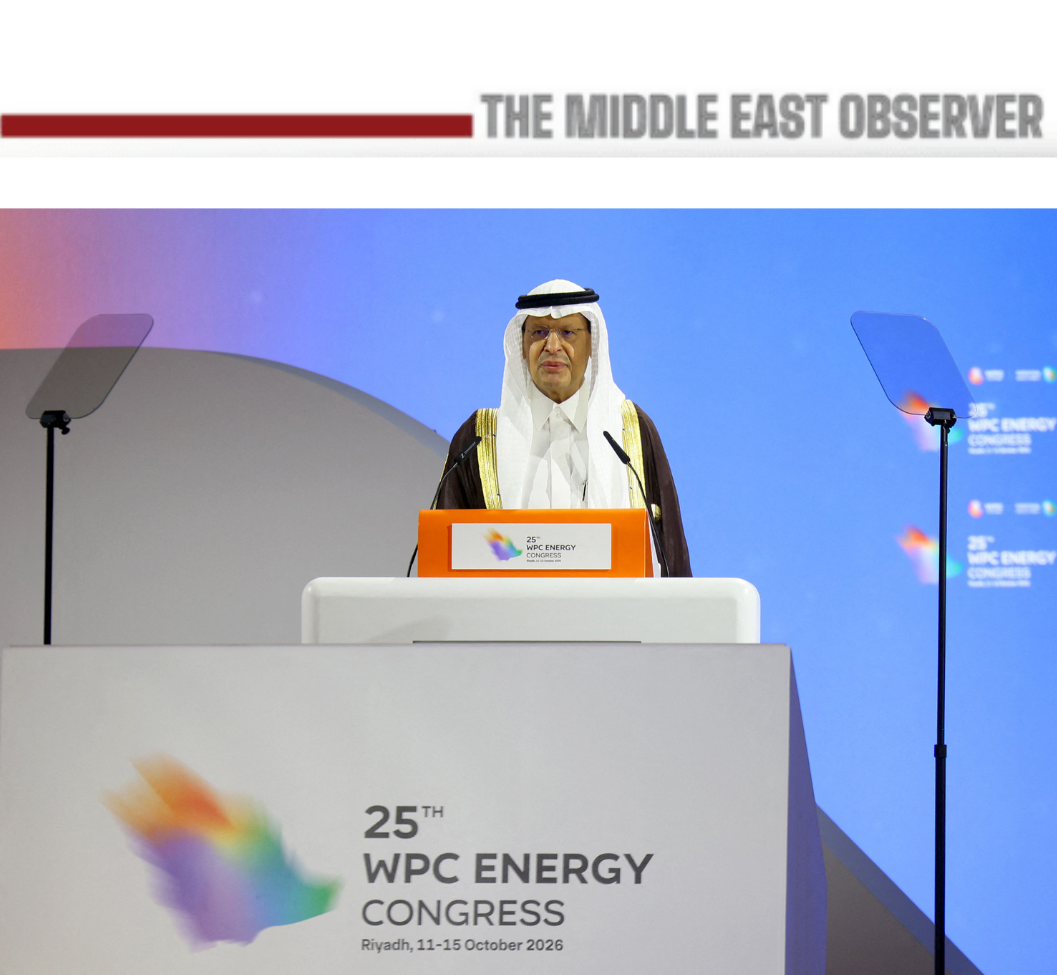
At Monday’s opening, Saudi Energy Minister Prince Abdulaziz bin Salman reaffirmed the kingdom’s commitment to maintaining reliable international energy supplies and implementing Vision 2030 regardless of the challenges confronting the region.
He argued that energy security could never be taken for granted and that resilience depended on investments made years before a crisis. Saudi Arabia’s long standing expenditure on spare production capacity, pipelines, storage, technology and domestic supply chains, he said, had helped maintain operations during recent disruptions.
The minister pointed to the recovery of the East-West oil pipeline following attacks in September as evidence of that preparedness. Flows through the route had recovered to approximately 5.8 million barrels per day by 6 October.
Saudi Arabia Plans Major Pipeline Expansion
The conference’s most consequential infrastructure announcement came as Prince Abdulaziz disclosed plans to raise Saudi Arabia’s alternative crude transportation capacity from approximately 7 million to as much as 10 million barrels per day over the next two to three years.
The programme would strengthen the 1,200-kilometre East-West pipeline connecting eastern oil fields with the Red Sea port of Yanbu, allowing exports to bypass the Strait of Hormuz.
A separate proposal involves temporarily converting an existing natural gas pipeline to transport approximately 1.2 million barrels of crude daily within seven to eight weeks. The line would return to gas service by May 2027, while longer-term investments in pumping facilities and related infrastructure could provide additional transportation capacity.
The minister also raised the possibility of international participation in pipeline ownership and financing, including Kuwait, to distribute investment costs and broaden cooperation in protecting strategic infrastructure.
These measures would improve export flexibility rather than increase crude production. Their significance lies in reducing the possibility that available oil becomes stranded by shipping disruptions.
OPEC Secretary-General Haitham Al Ghais described the East-West pipeline as an insurance policy for global energy security, illustrating why infrastructure built decades earlier can become indispensable when established transport routes are threatened.
Aramco Warns of a Prolonged Supply Recovery
The urgency of such investments was reinforced by Aramco President and Chief Executive Amin Nasser, who warned that the disruption of shipments through Hormuz and attacks on regional facilities had placed extraordinary pressure on international energy markets.
In his address on Monday, Nasser said diesel was trading at around $200 per barrel, while global commercial onshore oil inventories had fallen well below 6 billion barrels. Much of that inventory, he cautioned, was not readily available to compensate for interruptions.
He estimated that rebuilding stocks while continuing to satisfy demand could take up to two years.
Aramco is consequently studying additional crude export routes and expanding overseas storage capacity to improve its ability to serve customers during emergencies.
Nasser also emphasised that resilience depends on industrial capabilities as much as infrastructure. More than 90% of materials used in restoring Aramco operations during recent disruptions had been sourced domestically, he reported, allowing some repairs to be completed in days rather than weeks or months.
The company’s localisation programme, combined with advanced inspection technologies, digital monitoring and cybersecurity measures, forms part of a wider strategy to reduce operational downtime and dependence on international supply chains.
Nasser argued that the companies financing such safeguards bear the investment costs while consumers and businesses across the world benefit from disruptions avoided. That imbalance raises questions about how international energy-security investments should be funded.
OPEC+ Warns of Rising Freight and Insurance Costs
The commercial consequences of disrupted transport routes were addressed directly by OPEC and non-OPEC ministers meeting on Monday alongside the congress and the 17th International Energy Forum Ministerial Meeting.
According to an OPEC statement, shipping and insurance costs on disrupted energy flows had reached unprecedented levels exceeding one-third of the commodity value, hindering the movement of crude oil and petroleum products.
The ministers warned that these costs were being transmitted through the petroleum supply chain, intensifying inflation, raising expenditure for producers and consumers, and weighing on economic growth.
They called for the protection of international maritime routes and closer cooperation with governments, industry operators and international energy organisations to restore dependable shipping conditions.
The meeting reaffirmed existing OPEC+ production-policy commitments rather than announcing new quotas, reflecting a market in which transportation constraints have become as significant as the availability of crude.
For importing economies, the distinction is critical. Even when benchmark oil prices stabilise, higher freight charges, insurance premiums and delivery delays can sustain increases in the final cost of fuel.
Consumers Seek Stronger Reserves and Supply Protection
The concerns extended to major Asian energy importers. At the associated International Energy Forum discussions, Japan’s Trade Minister Ryosei Akazawa called for stronger regional petroleum reserves, more resilient infrastructure and closer cooperation between producers and consumers.
Japan’s POWERR Asia initiative seeks to improve emergency preparedness and strengthen energy supply chains, reflecting the vulnerability of Asian economies to disruptions in Middle Eastern shipments.
Such proposals suggest a growing emphasis on securing physical access to energy rather than relying exclusively on supply contracts and commercial inventories.
Energy Transition Remains an Investment Priority
While immediate discussions concentrated on supply security, conference leaders also warned against allowing short-term disruptions to undermine long-term investment.
WPC Energy President Pedro Miras argued that energy policy must balance four objectives: security, affordability, sustainability and economic development. Meeting rising global demand, he said, requires sustained investment across different energy sources rather than sacrificing one objective for another.
Saudi Arabia presented a similar approach, advocating continued oil and gas development alongside renewable electricity, carbon-management technologies and industrial diversification.
Aramco outlined plans to increase its sales-gas production capacity by approximately 80% by 2030 compared with 2021 production levels. The expansion would support the kingdom’s ambition to generate electricity in equal proportions from natural gas and renewables by 2030, potentially releasing more crude for export while strengthening domestic industrial capacity.
The company is also pursuing opportunities in hydrogen, carbon capture, artificial intelligence and advanced industrial technologies.
For Saudi Arabia, these investments link energy resilience directly to Vision 2030, supporting local manufacturing, technical employment, industrial competitiveness and the continued financing of economic diversification.
For developing economies, the broader challenge is to secure affordable energy without delaying investments in cleaner and more efficient systems.
The Rising Economic Price of Energy Security
The Riyadh discussions reveal a significant change in the economics of global energy supply. Production capacity alone no longer guarantees market stability when shipping routes can be interrupted, insurance costs escalate and inventories are insufficient to absorb prolonged disruptions.
The response emerging from the conference combines alternative pipelines, overseas storage, domestic equipment manufacturing, digital infrastructure protection and stronger international coordination.
For Egypt and other energy-importing economies, these developments underline the importance of diversified procurement, strategic storage, efficient refining and logistics systems that minimise the delivered cost of fuel. For producing countries, the priorities extend to protecting export revenues, maintaining investment and financing infrastructure that may be needed most during exceptional circumstances.
Yet the success of these measures will depend on implementation. Saudi Arabia’s proposed pipeline expansion requires capital and construction, new storage arrangements need commercial commitments, and shipping costs cannot normalise without greater security across international maritime routes.
The central lesson from Riyadh is that the cost of energy insecurity must now be treated as part of the cost of energy itself. Future market stability will depend not only on how much oil the world can produce, but on how reliably, affordably and securely it can reach consumers. Governments and energy companies must increasingly measure infrastructure investment against the economic losses it can prevent, while ensuring that the cost of protecting today’s supplies does not undermine tomorrow’s energy transition.
Related news:
Middle East Crude Nears Pre-War Levels, but Energy Crisis Shifts Downstream
The New Middle East Energy Premium: Iran War Reprices Oil, Gas and Shipping
Read also:
Tech Leaders Agree to Police Themselves — But White House AI Accord Leaves Enforcement Undefined