Exchange-rate pressures are cushioning local bullion prices while elevated gold prices and regulatory changes strengthen investor interest in Egypt’s Eastern Desert.
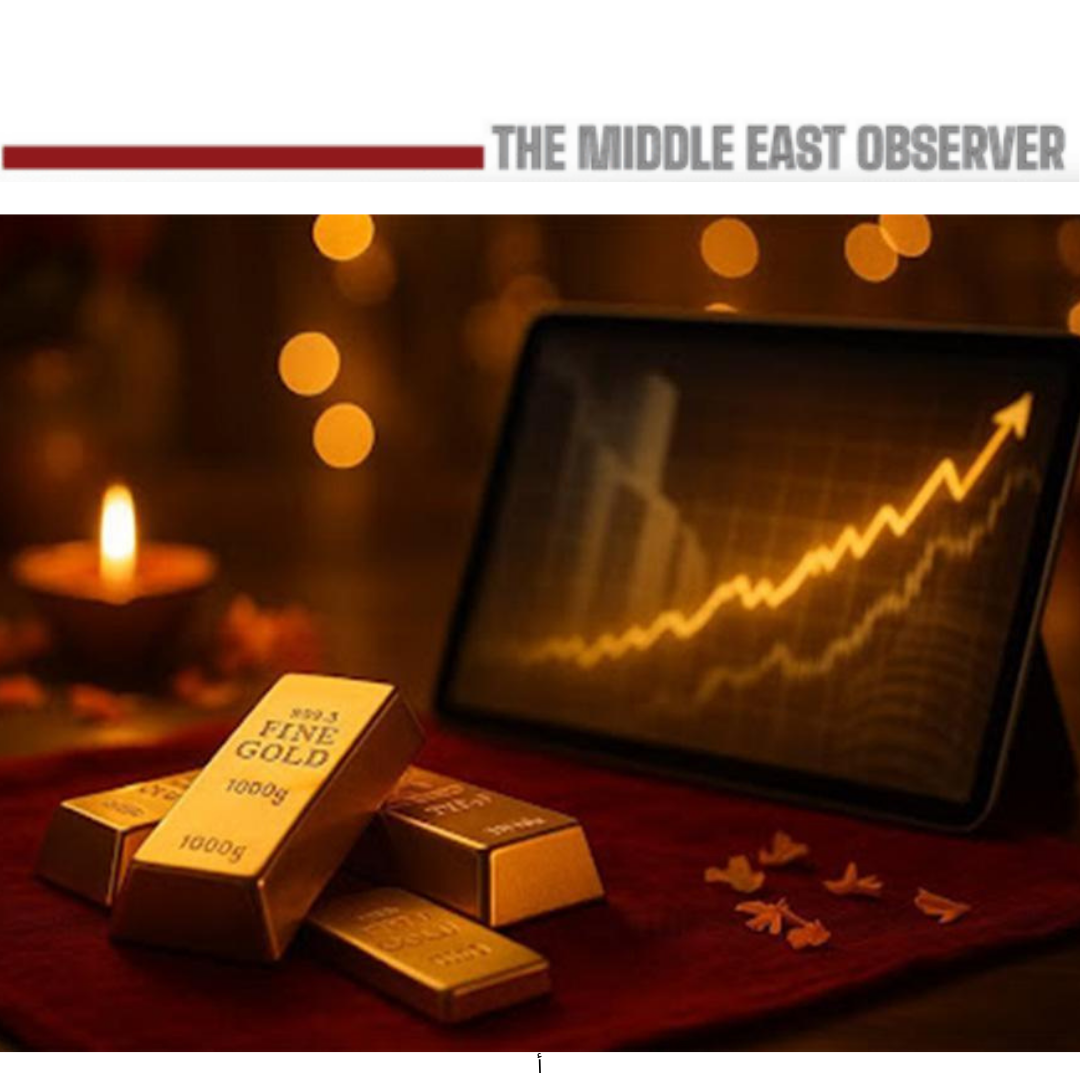
Gold prices in Egypt remained relatively firm on Wednesday, with 21-carat gold — the country’s most widely traded grade — at about EGP6,200–6,230 per gram before making charges, as exchange-rate movements partly offset volatility in international bullion.
Globally, gold recovered towards $4,350 an ounce after a sharp retreat driven by rising government-bond yields and a stronger dollar. Geopolitical uncertainty in the Middle East continues to support safe-haven demand, although higher yields increase the opportunity cost of holding non-interest-bearing bullion.
For Egyptian buyers, domestic prices reflect both the international gold price and the dollar-pound exchange rate. That relationship can keep local bullion comparatively firm even when the global ounce weakens.
Elevated bullion prices and regulatory changes are also strengthening investor interest in exploration. Saudi Gold Refinery Co. has applied for licences in Egypt’s Eastern Desert, including prospects near Barramiya, south of Marsa Alam. The company is seeking more than five areas, according to a government source cited by Asharq Bloomberg, while chairman Suliman Al-Othaim has said it aims ultimately to secure mining rights and begin production before 2030. No licences have yet been awarded.
The Saudi application comes as Egypt moves towards an open-block, royalty-and-tax regime, intended to make licensing more familiar to international miners and reduce barriers to new exploration.
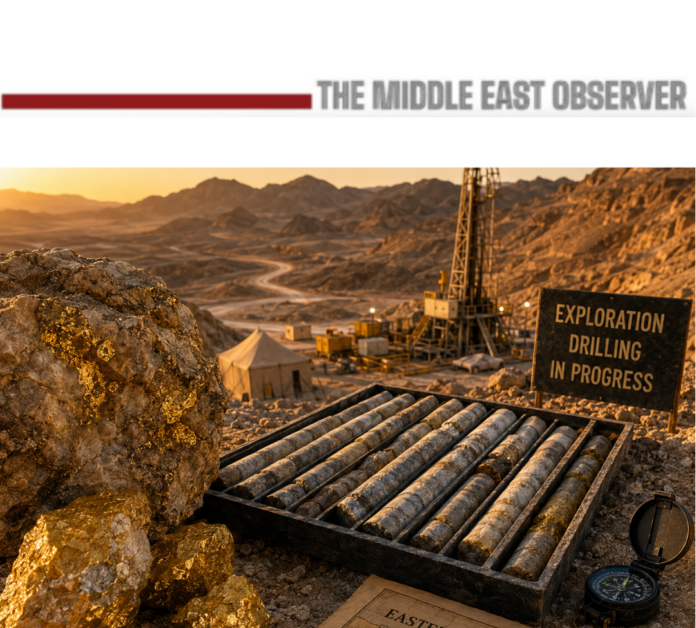
Further south, AFAQ Mining and state-backed Shalateen Mineral Resources are advancing exploration at West Gebel Elba, where the Romeit prospect has moved into an extensive drilling programme. AFAQ says it has completed nearly 40,000 metres of drilling and more than 46,000 samples, identifying gold mineralisation within a structural corridor extending for more than 30km.
Promising drilling results, however, do not establish a commercial mine. Ore grades, resource definition, recovery rates, infrastructure, capital costs and licensing certainty will determine whether exploration can be converted into economically viable production.
Egypt already has evidence that projects beyond Sukari can move towards output. Iqat, another Shalateen-linked project, has entered production, while exploration continues across several historic gold districts in the southern Eastern Desert.
Sukari remains Egypt’s dominant producer. Surface mining and processing resumed after the fatal underground accident on August 9, while underground operations remained suspended at the latest confirmed update pending safety reviews.
The test now is whether the latest exploration push can produce additional commercial mines. Saudi interest is adding regional capital to a sector where domestic and international operators are expanding drilling, but the economics will ultimately depend on the quality of discoveries and the predictability of Egypt’s mining framework.
For bullion, the near-term drivers remain US interest rates, bond yields, geopolitical risk and the Egyptian pound. For Egypt’s mining industry, the harder test is whether higher exploration spending, better-defined resources and more predictable licensing terms can produce commercially viable mines beyond Sukari.
Related news:
Egyptian Drilling Company Secures $80m Contract in Turkey
Egypt Looks to the Sea for the Next Frontier in Urban Cooling
Read also:
Gold Prices Ease in Egypt as Rising US Yields Weaken Bullion Appeal
Egypt Targets 20% Rise in Gold Deliveries as Mining Expansion Accelerates