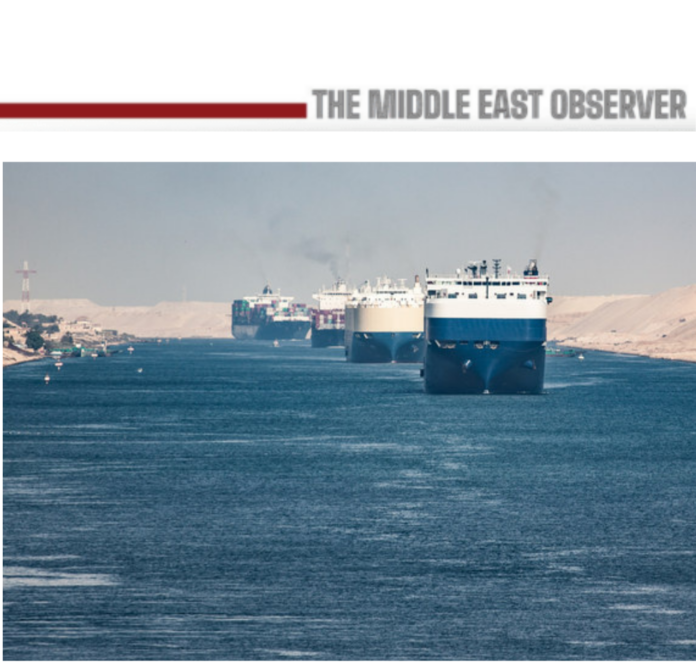
CAIRO — Egypt’s Suez Canal Authority (SCA) has raised temporary transit surcharges for most commercial vessels transiting the waterway from 15 July 2026, increasing costs for oil tankers, bulk carriers and general cargo vessels while leaving the canal’s underlying transit dues unchanged.
The revised charges, announced through a series of navigation circulars, are temporary and apply in addition to the standard canal tolls. The authority said the surcharges were introduced in response to prevailing maritime market conditions and may be revised or withdrawn should those conditions change.
Crude oil and petroleum product tankers face the largest increase, with surcharges on laden vessels rising to 37% of normal transit dues from 25%, while ballast voyages will incur a 27% surcharge, up from 15%. LPG carriers and chemical tankers will now pay 32%, compared with 20% previously, while LNG carriers will be charged 19%, up from 7%. Dry bulk carriers will pay 22%, up from 10%, and general cargo, heavy-lift, vehicle carriers and roll-on/roll-off (Ro-Ro) vessels will see surcharges increase to 26% from 14%. Container ships will continue to pay a 12% surcharge under the existing pricing structure, while passenger vessels remain exempt.
The temporary surcharges are separate from the canal’s standard transit dues, which have remained unchanged since 2024. The revisions form part of the SCA’s ongoing effort to recalibrate its commercial policies in line with changing conditions in the global shipping market while preserving the canal’s competitiveness against alternative routes, particularly the Cape of Good Hope.
The surcharge revisions also coincide with broader efforts to expand the Suez Canal economic corridor. Separately, the Suez Canal Economic Zone (SCZone) reported record revenues of EGP 15.9 billion in fiscal year 2025/2026, a 37% increase from EGP 11.6 billion a year earlier and the highest annual revenue since the authority’s establishment. According to the SCZone, the performance reflects stronger industrial, logistics and port activity across its integrated economic zones and ports, supporting Egypt’s long-term strategy of developing the corridor into a regional manufacturing, trade and logistics hub.
Although the SCA and the SCZone operate independently with distinct mandates, their latest announcements highlight Egypt’s parallel efforts to strengthen both the commercial competitiveness of the Suez Canal and the industrial capacity of its surrounding economic zone. Together, they underscore the strategic importance of the Suez corridor as one of the country’s principal sources of foreign currency earnings, with SCZone revenues reaching a record EGP 15.9 billion in FY 2025/2026 while the canal continues to adapt its pricing framework to evolving global maritime market conditions.
Related news:
Maersk and Hapag-Lloyd Signal Suez Canal Recovery as Confidence Gradually Returns
El-Sisi Accelerates Suez Canal Shipbuilding Strategy as Exports Reach Europe
Read also:
Ancient Tomb Discovery in Minya Reveals Early Evolution of Egyptian Funerary Architecture