

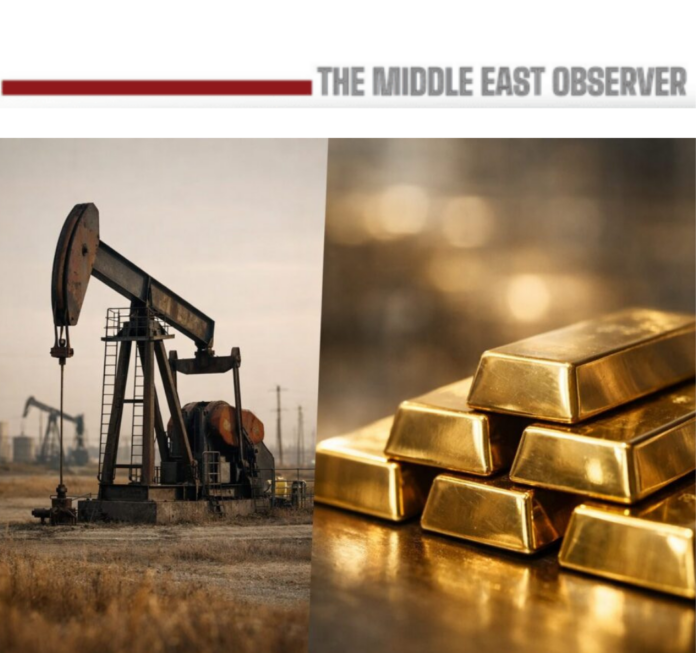
Brent crude climbed above $99 a barrel on Tuesday, September 8, as renewed attacks on Middle East energy infrastructure and disrupted shipping through the Strait of Hormuz pushed prices closer to the psychologically important $100 threshold. US West Texas Intermediate also advanced above $94 a barrel.
The move has revived more severe upside scenarios. Goldman Sachs has warned that Brent could approach $120 a barrel if attacks on vessels and disruption to Middle East exports intensify, while prices could retreat sharply if regional flows normalise. The near-term outlook therefore depends less on the $100 level itself than on how long disruption persists.
If elevated prices are sustained, the economic transmission would be immediate. Higher crude costs would raise transport, production and import bills, particularly for emerging economies that combine heavy energy dependence with weak currencies, limited fiscal space and external-account pressure.
That would risk slowing disinflation, delaying interest-rate cuts and prolonging restrictive monetary conditions, extending pressure on household demand, investment and economic activity over coming quarters.
China’s gold accumulation points to a different, longer-term adjustment.
The People’s Bank of China added 650,000 ounces of gold in August, extending purchases to 22 consecutive months. The persistence of buying despite historically elevated bullion prices suggests that Beijing is attaching greater weight to reserve diversification, asset security and reduced exposure to issuer and geopolitical risk than to short-term valuation.
The distinction lies in both timing and transmission.
Oil reflects a near-term supply shock that can feed quickly into inflation and growth. Gold reflects a multi-year reassessment of how sovereign institutions protect reserves in a more fragmented geopolitical environment.
The two developments should therefore not be treated as the same trade. Oil affects the real economy first; gold reveals how prolonged instability can gradually reshape sovereign balance sheets.
Taken together, they illustrate the broader economic cost of geopolitical risk operating on two clocks. A durable easing of regional tensions would therefore carry an economic dividend beyond lower oil prices: reducing inflationary pressure, improving visibility for investment and monetary policy, and weakening the incentive for governments to build increasingly defensive reserve positions.
Stability would not remove market risk, but it would lower the premium the global economy is increasingly paying for geopolitical uncertainty.
Related news:
Gold Climbs as Falling Oil Prices Revive Rate-Cut Expectations
Fitch Sees Brent at $70 as Hormuz Reopening Reshapes Oil Outlook
Read also:
How Khufu’s Pyramid Could Hold the Key to Buildings That Last a Millennium
Qatar’s LNG Wealth Delivered World-Class Living Standards. Now Comes the Productivity Test