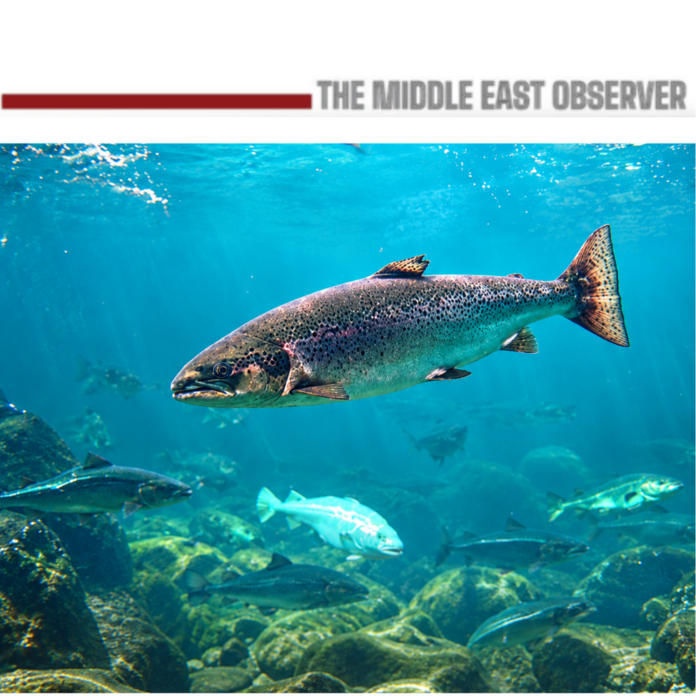
Pakistan’s trout-development programme did more than increase fish production. In parts of the north, it created higher-value rural businesses, strengthened tourism demand and gave mountain communities new ways to generate income from the same natural asset.
The shift accelerated in 2019, when Pakistan approved PKR2.355 billion — about $8.5 million at current exchange rates — for the Promotion of Trout Farming in Northern Areas programme across Khyber Pakhtunkhwa, Gilgit-Baltistan and Azad Jammu & Kashmir.
The programme financed hatcheries, fingerlings, private farms, training, cold storage and supporting infrastructure. Its larger economic impact, however, emerged at community level.
In Swat and Madyan, research covering one government hatchery and 30 private hatcheries found trout aquaculture generated roughly twice the revenue of agriculture, with combined production of about 165,600kg annually.
Earlier research had already demonstrated the household economics. Participating trout farmers reported monthly earnings of around PKR10,000–35,000 at the time, equivalent to roughly $36–$126 at today’s exchange rate, but materially more in historical purchasing-power terms.
By the late 2010s, Ghizer provided a clearer picture of structural change. Fisheries officials reported about 60 private farms established within three years, supplying tourists, hotels and households.
One farmer, Raja Iqbal Hussain, returned from a low-paid hotel job in Dubai to establish a trout farm in Ghizer — a tangible example of local enterprise becoming an alternative to seeking low-paid employment abroad.
Some community-owned farms also directed proceeds towards education, healthcare and shared village facilities.
Tourism then multiplied the value created around the streams.
Phander, Ghizer and surrounding areas increasingly combined trout fishing with guesthouses, camping, trekking, birdwatching and photography. Visitors drawn by fishing also spent on guides, accommodation, restaurants, transport and equipment.
Environmental quality became economically important as well. Trout require clean, cold and oxygen-rich water, strengthening incentives to protect rivers, lakes and wetlands. Those habitats also support migratory birds and wildlife, widening the visitor economy into bird photography and nature tourism.
The model has not succeeded everywhere. Floods, weak roads, poor cold chains, overfishing and rising water temperatures have constrained returns, while some lakes and streams lacked the infrastructure required to convert natural beauty into commercial activity.
Nor can trout farming’s contribution yet be isolated convincingly in district GDP or youth-migration statistics.
The stronger evidence lies in economic diversification.
Pakistan’s success is in converting the same natural asset into repeated revenue streams. Mountain water became productive capital — supporting fish farms, restaurants, tourism, guiding, accommodation and nature-based services across communities that previously had far fewer commercial options.
The economic gain is therefore larger than the value of the trout harvested.
It lies in increasing the income-generating capacity of the landscape itself.
Related news:
Exploring Egypt’s Hidden Gems: A Safari Adventure Awaits
Nine UNESCO Designations Broaden MENA’s Tourism Bet Beyond Monuments
Read also:
Egypt–Turkey Defence Reset Shifts from Exercises to Joint Production
Made in Lebanon: How Crisis Is Rebuilding the Productive Economy