
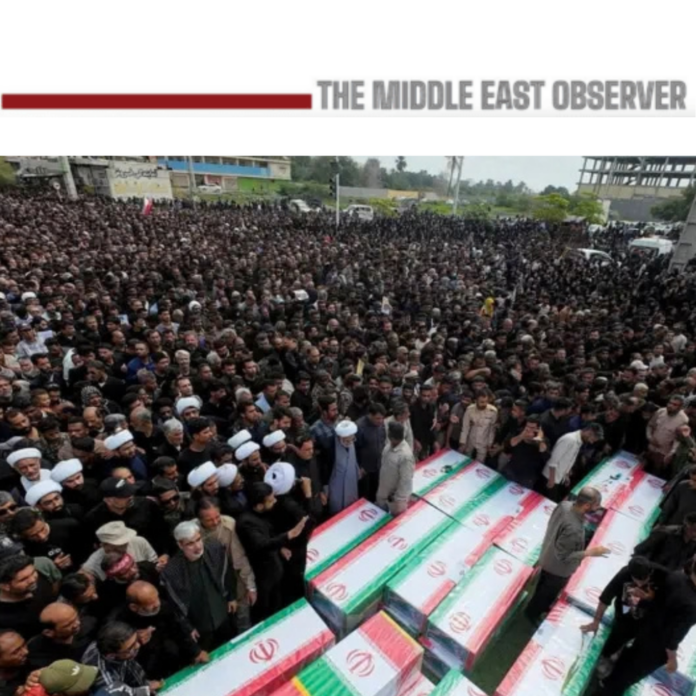
Outdated intelligence, accelerated AI-assisted targeting and weakened civilian-harm safeguards contributed to a U.S. missile strike that killed at least 123 children at an Iranian elementary school, according to officials familiar with a Pentagon investigation.
The Feb. 28 attack struck the Shajareh Tayyebeh Elementary School in Minab, southern Iran, during the opening day of the U.S. military campaign against Iran. More than 150 people were killed after two Tomahawk missiles hit the school and its grounds.
The failure began with intelligence that was already wrong. The site had remained classified in U.S. databases as linked to Iran’s Islamic Revolutionary Guard Corps despite evidence that the school had been physically separated from the military compound for years. Earlier observations questioning the site’s status were not incorporated into the authoritative targeting record.
That flawed data then entered an increasingly automated targeting process using Palantir Technologies’ Maven Smart System, an AI-enabled platform designed to process military intelligence and operational information.
Investigators found that some U.S. Central Command personnel placed excessive confidence in Maven’s ability to identify outdated information or inconsistencies in proposed targets. The system did not correct the underlying error.
Maven did not autonomously order the strike. Human intelligence officers, lawyers and commanders still reviewed and approved the target.
But AI sharply accelerated the process. Target-development work that could previously take hours was compressed into minutes as U.S. forces prepared more than 1,000 strikes during the campaign’s first 24 hours.
Civilian-protection safeguards were also weaker. CENTCOM’s civilian-harm mitigation team had reportedly fallen from roughly 10 specialists to one, and no specialist reviewed the Minab target before the strike.
Palantir has said its software did not malfunction and was not responsible for the inaccurate intelligence supplied to the system.
A UN fact-finding mission later said there were reasonable grounds to believe the strike violated international humanitarian law. Washington has disputed the UN’s conclusions.
The Minab strike exposes a deeper risk in AI-enabled warfare: military systems can now process and advance targets faster than institutions may be able to verify whether the intelligence behind them remains accurate.
In this case, the machine did not invent the mistake. It accelerated a targeting chain built on one.
Related news:
US Military Blocks Ad IDs After Commercial Data Exposes Troop Movements
AI Warfare Is Rewriting the Logic of Military Power
Read also:
Salah Hat-Trick Powers Trabzonspor to 4-0 Galatasaray Rout
Iraq Is Escaping Hormuz. Its Next Oil Constraint Could Be OPEC