Oman has authorised three duty-free markets at its borders with Saudi Arabia and the United Arab Emirates, creating an opportunity to turn cross-border retail into a wider source of commercial diversification as disrupted shipping routes force Gulf businesses to rethink how essential goods reach consumers.
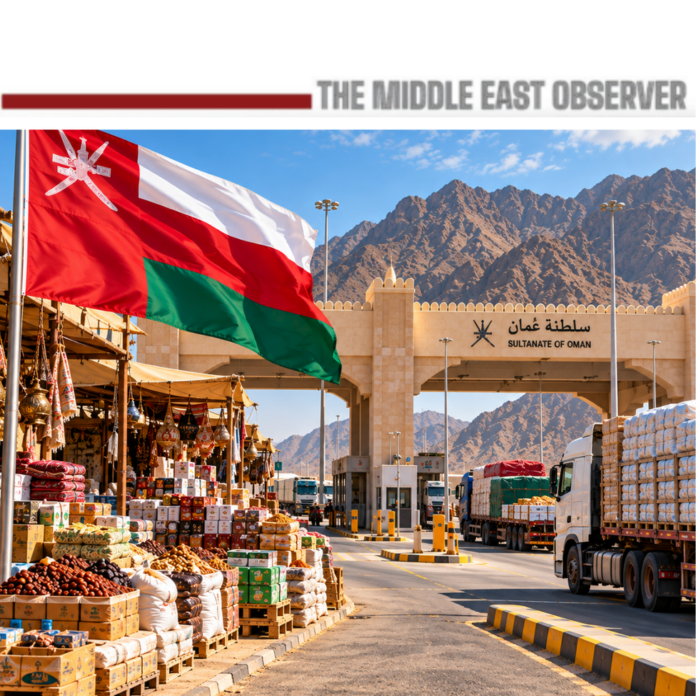
Lieutenant General Hassan bin Mohsen Al Shuraiqi, Inspector General of Police and Customs, issued Decision No. 145/2026 on Tuesday, October 13, establishing markets at Al Wajajah and Khatmat Malaha on the UAE border and Rub’ al Khali, or the Empty Quarter, crossing with Saudi Arabia.
The markets will offer eligible products exempt from customs duties and taxes under applicable regulations, according to announcements carried by Oman Observer and Muscat Daily. Their immediate objectives include stimulating commercial activity, strengthening tourism and improving services for travellers. Opening dates, investment commitments and approved product categories have not been disclosed.
The initiative comes as Gulf importers face mounting uncertainty over maritime transport. Reuters reported on October 8 that only seven commodity vessels crossed the Strait of Hormuz on October 6, the lowest daily figure since July 23, according to shipping analytics company Kpler. The decline reflects renewed attacks on commercial vessels and the resulting pressure on regional shipping arrangements.
The consequences extend beyond energy exports. Food retailers, manufacturers and distributors have been forced to reconsider suppliers, shipment schedules and inventory levels, increasing the commercial value of alternative supply channels.
Shipping Disruption Changes Consumer Market Priorities
The UAE offers a practical example. The National reported on October 9 that supermarket operator Lulu Group had begun chartering dedicated ships and aircraft to secure deliveries, while food manufacturer United Foods had increased advance purchases of raw materials to maintain production.
Lulu also reported sourcing comparable products from alternative markets to compensate for difficulties obtaining merchandise through traditional suppliers. Some maritime shipments were taking as long as 70 days, creating particular difficulties for goods with limited shelf lives.
These changes reveal three distinct vulnerabilities: delayed replenishment, increased procurement and transport costs, and reliance on a narrow selection of established suppliers. They do not necessarily indicate widespread consumer shortages, but they expose the costs of maintaining product availability during prolonged disruption.
For Oman, Saudi Arabia and the UAE, the commercial priority is consequently broader than maintaining existing imports. It includes developing alternative products, strengthening local manufacturing and identifying categories where conventional distribution networks no longer provide sufficient flexibility.
Food products and ingredients, household necessities and personal-care goods are natural starting points. Other opportunities merit assessment in packaging materials, small electrical products, energy-efficient appliances and replacement components.
Rather than assuming shortages across these categories, retailers and manufacturers would need to establish where consumers face reduced availability, longer delivery times or significant price increases.
Oman–Saudi Trade Provides an Established Commercial Foundation
The Empty Quarter crossing demonstrates the potential scale of cross-border activity.
Opened in December 2021, the direct road link between Oman and Saudi Arabia has become an important trade corridor. According to figures cited by Saudi Ambassador Ibrahim bin Saad bin Bishan and reported in September, merchandise trade passing through the crossing reached approximately OMR 1.322 billion in 2025, accounting for about 58% of bilateral trade.
That figure represents merchandise trade rather than prospective duty-free sales. Nevertheless, it demonstrates the scale of commercial movement along a corridor that can support additional passenger services, retail outlets and logistics investment.
The two UAE-facing markets offer a different opportunity. Al Wajajah and Khatmat Malaha could attract cross-border shoppers while providing additional outlets for Omani products and international brands seeking customers travelling between the neighbouring economies.
Together, the three locations could provide retailers with evidence of customer preferences, pricing differences and product categories that remain underserved.
Beyond Shopping: Developing Complementary Gulf Industries
The greater economic opportunity lies in connecting retail expansion with the manufacturing and distribution capabilities of all three countries.
Oman could combine border retail with its food-processing, logistics and packaging activities. The UAE could contribute its established international sourcing and re-export networks, while Saudi Arabia’s larger manufacturing and consumer markets could support supply of processed foods, plastics, packaging and household products.
A coordinated commercial strategy would prioritise three product groups: essential consumer goods vulnerable to delayed imports; supporting products such as food packaging, refrigeration supplies and vehicle consumables; and merchandise that regional manufacturers could competitively produce or assemble as substitutes for imported alternatives.
For investors, this suggests opportunities in procurement partnerships, private-label manufacturing, storage facilities and distribution centres, alongside the duty-free shops themselves.
However, a significant regulatory distinction remains. Duty-free markets serve eligible travellers under customs and tax rules. They are not automatically authorised wholesale distribution centres, nor do they create unrestricted access to the Saudi or Emirati domestic markets.
Larger-scale supply initiatives would therefore require separate commercial and customs arrangements, potentially involving bonded warehouses, licensed distributors and established industrial or logistics zones.
Investment Strategy Must Target Genuine Supply Gaps
The immediate task for potential operators would be to establish which products can attract additional demand without simply transferring sales from existing retailers.
This requires analysis of border passenger volumes, purchasing patterns, import costs, product availability and the competitiveness of regional manufacturers.
Transparent retail concessions could bring experienced operators into the three locations, while arrangements with Omani small and medium-sized enterprises could widen domestic participation. Joint sourcing agreements with Saudi and Emirati businesses would offer a further avenue for reducing dependence on individual overseas suppliers.
Operational priorities should include sufficient storage, predictable customs procedures, competitively priced goods and reliable replenishment. For products requiring temperature-controlled transport or specialised handling, investment in appropriate facilities would be particularly important.
Success should be measured not merely by retail turnover but by additional private investment, domestic value added, new supplier relationships and improvements in product availability.
A Wider Test of Gulf Economic Diversification
The new markets represent a modest regulatory initiative with potentially broader commercial applications. Their contribution to regional supply resilience will depend on decisions that have yet to be announced, including the selection of operators, merchandise ranges, operating conditions and supporting infrastructure.
The central challenge is to distinguish short-term retail opportunities from longer-term supply-chain investment.
With established commercial connections to Saudi Arabia and the UAE, Oman has an opportunity to use the three border markets to identify underserved consumer demand and encourage suppliers to develop competitive alternatives.
The strategic priority should be to move beyond selling imported goods more cheaply towards supplying a wider range of products more reliably. That would link Oman’s border initiative to a larger Gulf objective: reducing exposure to disrupted shipping routes through diversified sourcing, regional production and more resilient distribution networks.
The markets alone cannot achieve that transformation. They could, however, provide a useful commercial starting point if matched by targeted investment and cooperation among manufacturers, retailers and logistics operators across the three countries.
Related news:
Oman’s National Day and the Future of Bilateral Growth with Egypt
Maersk Ramps Up Sailings via Suez Canal and the Red Sea Amid Improved Regional Stability
Read also:
Navigating Opportunities and Challenges in GCC Trade
Hormuz Tensions Drive French Naval Deployment Toward Gulf Shipping Routes