UAE agribusiness Elite Agro Holding is exploring contract farming in Lebanon aimed at supplying Gulf markets, days after signing two agricultural cooperation agreements in Beirut.
Elite Agro Chief Executive Hassan Halawy joined Lebanese Agriculture Minister Nizar Hani in the Chouf to assess production and marketing opportunities following the UAE-Lebanon Business Forum. Lebanese officials said the talks focused on linking local agricultural production more directly with demand in the UAE and wider Gulf.
The initiative remains at an early development stage. No investment value, acreage, committed purchase volume or binding offtake contract has been disclosed.
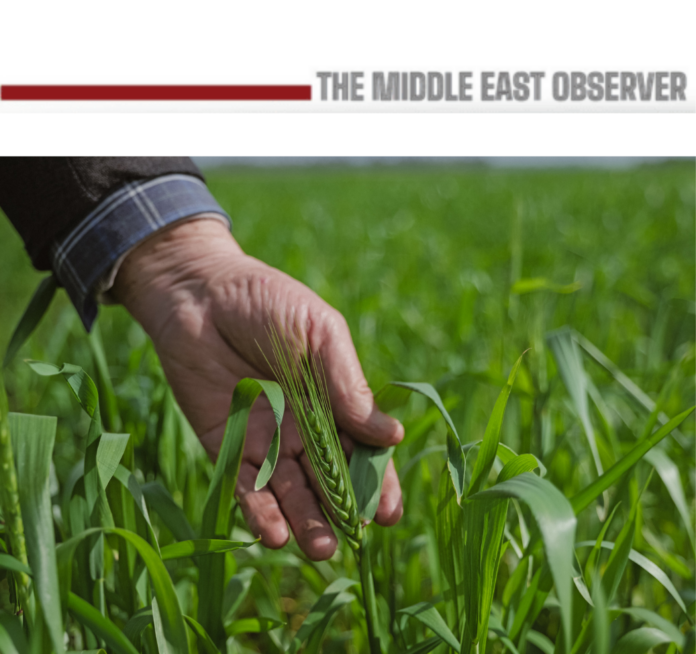
Under contract farming, buyers can agree crops, quantities and quality requirements before planting. That gives farmers greater visibility over demand while allowing importers more control over specifications and supply planning — potentially shifting Lebanese agriculture from fragmented exports towards more organised, market-led production.
The discussions follow two Elite Agro agreements in Beirut. One with the American University of Beirut covers food security, arid-agriculture research and agritech innovation. A second, with Georges Daccache & Sons, covers greenhouse design, supply, installation and development.
Elite Agro has already shown it can move from market entry to significant agricultural investment elsewhere. Its seventh Moroccan farm opened in June, a 200-hectare berry operation in Kenitra, taking disclosed investment in Morocco above AED500 million ($136 million). The group has also expanded its Gulf distribution network through Bahrain.
Those investments do not amount to a formally integrated regional food network, but they show Elite Agro building capabilities across production, agricultural technology, distribution and market access.
That model has gained greater strategic relevance as disruption around the Strait of Hormuz exposes the vulnerability of import-dependent Gulf economies. Gulf states import roughly 80–90% of their food, while more than 70% of imports have historically passed through Hormuz, according to Reuters.
The UAE had already launched a national supply-chain resilience programme calling for diversified import sources, stronger domestic production and partnerships with countries capable of providing reliable supplies. Elite Agro’s regional expansion is commercially consistent with that direction, although there is no evidence that its Lebanon initiative forms part of the government programme or was launched specifically in response to Hormuz disruption.
Lebanon could offer Gulf buyers a relatively nearby Mediterranean production base, established horticultural expertise and access to fruit and vegetable cultivation suited to regional demand. But fragmented farming, financing constraints, logistics costs and inconsistent export standards remain obstacles.
The economic logic is therefore better understood as nearshoring rather than a direct Hormuz bypass: shortening supply chains and diversifying agricultural sourcing while reducing dependence on distant suppliers and single transport corridors.
For Lebanon, the decisive test is whether Elite Agro’s agreements translate into committed capital, contracted acreage and binding purchase volumes. If they do, Lebanon could become an additional regional sourcing base for Gulf food markets increasingly focused on resilience, diversification and security of supply.
Related news:
Made in Lebanon: How Crisis Is Rebuilding the Productive Economy
Lebanon Advances ‘Golden Visa’ Plan to Attract Investment Amid Financial Recovery Push
Read also:
Egypt Leads Arab World, Ranks Second Globally in CAF Charitable Giving Index
Egypt Moves Towards $5.3bn Healthcare Investment With Two Medical Cities Plan