Egypt already possesses market scale. Its larger opportunity is to build the industrial value chains needed to turn domestic demand into internationally competitive production.
For investors assessing Egypt, the most important question is no longer simply how large the market is.
It is whether that market can support industries capable of competing beyond the country’s borders.
Large consumer markets create demand, but demand alone rarely delivers sustained industrial growth. Economies become regional production centres when they convert consumption into manufacturing capability, technological expertise and export capacity.
Egypt is attempting precisely that transformation.
The country already has several foundations that emerging economies often spend decades assembling: a large consumer base, an established pharmaceutical industry, competitive agricultural exports, a growing food-processing sector and expanding healthcare demand.
The opportunity lies in building the industrial value chains around these strengths, from pharmaceutical ingredients and diagnostics to agricultural technology, food processing, packaging, testing and export logistics.
This ambition also reflects broader macroeconomic pressures. Deeper domestic production can reduce import dependence, conserve foreign currency and strengthen exports. Localization has therefore become more than an industrial-policy objective; it is part of a wider effort to improve economic resilience.
The investment case is nevertheless conditional. High financing costs, imported-input dependence, water scarcity and regulatory uncertainty can undermine projects that appear attractive on market size alone.
Egypt’s success will depend not simply on producing more goods, but on producing them efficiently enough to compete internationally.
Pharmaceuticals: Moving Beyond Finished Medicines
Egypt’s pharmaceutical market reached EGP422bn, equivalent to approximately $8.5bn, in 2025, according to the Egyptian Drug Authority. Its value increased by 37 per cent from the previous year, placing Egypt 26th globally by market size. The authority aims to move the country into the world’s top 20 pharmaceutical markets by 2030.
For investors, however, the more important issue is how much of the underlying value is created in Egypt.
Local production covers approximately 91 per cent of pharmaceutical products sold domestically, but manufacturers continue to import significant quantities of active pharmaceutical ingredients, specialist chemicals, machinery and packaging.
A tablet manufactured locally with an imported active ingredient may reduce finished-medicine imports, but it leaves producers exposed to exchange-rate movements and disruptions in international supply.
The EDA is seeking to localize the 50 most heavily imported pharmaceutical ingredients, which account for almost 78 per cent of human-pharmaceutical API imports. Pharmaceutical exports reached approximately $1.3bn in 2025, while the authority is targeting $3bn by 2030, including $1.34bn for African markets.
These remain policy ambitions rather than assured outcomes. Reaching them will require competitive pricing, registration in destination markets, reliable distribution and internationally recognised manufacturing standards.
The resulting investment agenda extends beyond conventional generic medicines. It includes APIs, sterile manufacturing, biological products, contract production, specialist packaging, testing laboratories and temperature-controlled logistics.
EIPICO’s third manufacturing facility illustrates the move towards deeper production. The plant is designed to manufacture biological and biosimilar products from cell-line development through active-substance and finished-product production, rather than limiting activity to final formulation or packaging.
That model captures a larger share of the scientific, technical and manufacturing value behind a medicine.
Egypt has also strengthened its regulatory position. It became the first African producing country to achieve World Health Organization Maturity Level 3 for both vaccines and medicines regulation. The classification denotes a stable and well-functioning regulatory system, although it remains below the WHO’s highest maturity level.
Stronger regulation can improve international confidence in Egyptian production. It cannot, by itself, guarantee export growth.
The pharmaceutical opportunity is therefore evolving from producing finished medicines for the domestic market towards building capabilities capable of serving Africa and the wider Middle East.
Healthcare as an Industrial Demand Engine
Healthcare offers a related opportunity, driven primarily by expanding domestic demand.
By the end of April 2026, Egypt’s Universal Health Insurance system covered about 5.4mn beneficiaries across six governorates, with registration equivalent to more than 83 percent of the targeted population in those areas.
That remains a limited share of Egypt’s total population, but it demonstrates how formal healthcare coverage can create recurring demand for medicines, diagnostics, hospital services and technology.
The industrial significance extends well beyond hospital construction.
Every expansion in healthcare capacity increases demand for laboratory reagents, medical consumables, sterilisation, medical gases, equipment maintenance, software, cybersecurity, waste management and specialist logistics.
These supporting activities can offer more predictable revenues than hospital development itself. A hospital is capital intensive and dependent on patient volumes and reimbursement. A laboratory, maintenance provider or consumables manufacturer can serve several facilities and benefit from repeated demand.
The most immediately investable opportunities are likely to be products that can be manufactured at scale without the highest levels of technological complexity. These include medical disposables, laboratory consumables, basic diagnostic products and selected hospital equipment.
Advanced medical devices represent a longer-term opportunity. Their development requires engineering expertise, clinical validation, certification, intellectual-property agreements and dependable after-sales support. Assembly based primarily on imported components would capture less domestic value and preserve exposure to foreign-currency shortages.
Digital health could also become an important part of the sector. Electronic medical records, hospital-management systems, remote consultations and diagnostic software could improve efficiency, but commercial success will depend on interoperability, cybersecurity, data governance and procurement discipline.
The strategic question is therefore not simply how quickly healthcare expenditure grows. It is how much of the industrial and service demand generated by that spending Egypt can capture locally.
Agriculture: Export Strength Under Resource Pressure
Agriculture presents a different balance between potential and constraint.
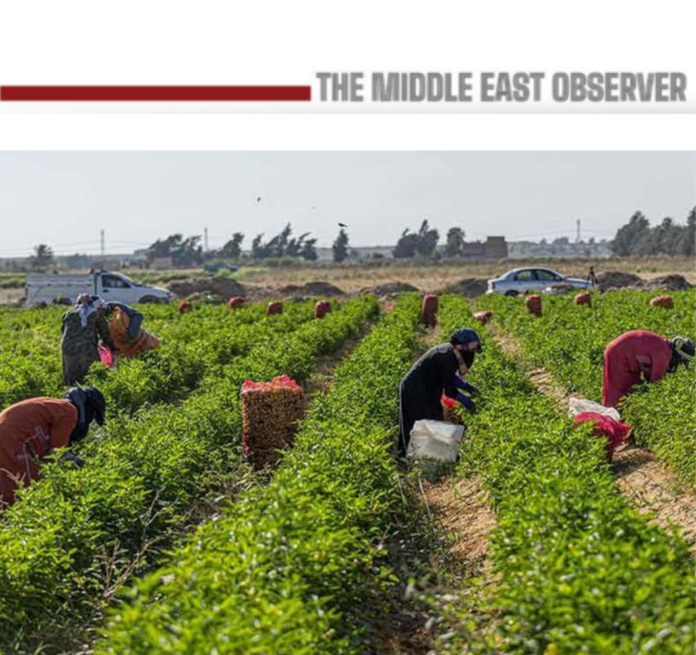
Egypt exported a record 9.5mn tonnes of agricultural products in 2025, more than 800,000 tonnes above the previous year. The combined value of fresh and processed agricultural exports reached approximately $11.5bn, accounting for about 24 per cent of total exports.
The figures measure different things: the tonnage relates to agricultural exports, while the value includes both fresh and processed products. Together, however, they demonstrate the sector’s importance as a source of foreign currency.
Egypt faces severe limitations on water and arable land. Its next phase of agricultural development must therefore be based on productivity and value rather than acreage alone.
Investment opportunities exist before production in improved seeds, irrigation equipment, mechanisation and farm-management systems. After harvest, they include grading, refrigeration, storage, packaging, traceability and export certification.
Agriculture should also be understood as an upstream supplier to manufacturing.
Food processors require dependable supplies of fruit, vegetables, grains, milk and livestock. Ingredient manufacturers use agricultural products to make oils, starches, concentrates and extracts. Biotechnology and pharmaceutical producers can also use plant-based inputs, fermentation processes and agricultural by-products.
Improving agricultural productivity can therefore create value well beyond farming.
Egypt’s cereal balance demonstrates the structural challenge. The UN Food and Agriculture Organization forecasts wheat production of about 10mn tonnes in 2026, nearly 7 per cent above average. Yet total cereal import requirements are expected to reach 29mn tonnes in the 2026-27 marketing year, around 30 per cent above average, partly because of rising maize demand for animal feed.
Egypt is unlikely to eliminate its dependence on imported grain. The more realistic investment case is to raise yields, reduce water consumption, limit post-harvest losses and improve storage and distribution.
Technology and infrastructure providers may offer more predictable returns than direct crop production because they can serve several farmers and products while reducing exposure to individual harvest cycles.
Food Processing: Capturing More Value After Harvest
The largest near-term industrial opportunity may lie between agricultural production and the final consumer.
Egypt’s food-production sector is projected to reach approximately $30.5bn in 2026. The estimate should be treated as a market forecast rather than confirmed output.
Its strategic significance lies in the value Egypt can retain after crops leave the farm.
A tonne of citrus fruit, potatoes or vegetables can be exported as a commodity. Alternatively, it can be converted into juice concentrate, frozen produce, food ingredients, prepared meals or branded consumer products.
Processing can increase margins, extend shelf life and reduce losses caused by seasonal surpluses or inadequate storage. It can also give exporters greater flexibility over destination markets.
Egyptian companies provide evidence of how domestic production can support regional expansion. Juhayna reported exports to more than 34 markets in 2024, while packaged-food producer Edita expanded export sales and manufacturing activity beyond Egypt.
These examples show how domestic capacity can become the foundation for a broader regional production network.
The wider opportunity includes freezing, dehydration, dairy processing, fruit concentrates, food ingredients, packaging, industrial refrigeration and cold-chain distribution.
Value addition, however, is not automatic.
Processors must secure reliable energy, consistent agricultural inputs, suitable packaging, food-safety certification and efficient transport. Factory utilisation is equally important: a plant designed around a highly seasonal crop may struggle to generate adequate returns unless it can process several products.
Food manufacturing should therefore be viewed as an industrial strategy, not merely an extension of consumer spending.
Where Investment Is Most Bankable
Large markets do not automatically produce attractive investments.
Investors assess margins, capital intensity, currency exposure, regulatory predictability and return on invested capital. Egypt’s challenge is to convert sector demand into commercially sustainable businesses rather than simply expand installed capacity.
The most immediately bankable opportunities are likely to be businesses with recurring demand, moderate technological requirements and the ability to serve several industries.
Packaging, cold storage, laboratory testing, pharmaceutical contract manufacturing, medical consumables, agricultural grading and food processing all meet parts of this test.
Cold-chain infrastructure is particularly relevant because the same network can serve medicines, vaccines, fresh produce and processed foods. Testing laboratories can similarly support pharmaceutical quality, food safety and agricultural exports.
Serving several markets can improve capacity utilisation and reduce dependence on a single customer base.
Medium-term opportunities include selected API production, diagnostic products, intermediate medical devices, irrigation technology, food ingredients and traceability systems. Such investments become more viable when supported by anchor customers, long-term purchasing agreements or international technology partners.
Longer-term opportunities—including biologics, complex medicines, advanced devices, genomics and sophisticated agricultural technologies—offer greater value but carry higher execution risk.
They require skilled personnel, sustained research investment, strong regulation and access to international markets. Localization mandates alone will not be sufficient.
From Localization to Regional Competitiveness
Egypt is pursuing its industrial strategy in an increasingly competitive region.
Morocco has developed internationally integrated automotive and aerospace industries, while Türkiye benefits from deeper manufacturing clusters and strong links to European supply chains. The UAE has used ports, free zones and trade infrastructure to establish itself as a regional logistics and re-export hub. Saudi Arabia is deploying substantial capital and procurement power to accelerate localization, including a target to raise food-processing localization to 85 per cent by 2030.
Egypt’s comparative advantage is not that it leads every category.
It combines a large domestic market, established manufacturing, agricultural production, labour availability and geographic access to Africa, the Gulf and Europe.
Its challenge is execution.
Foreign-exchange availability remains critical for companies importing equipment, ingredients and specialist components. High financing costs can undermine projects with long construction periods, while customs delays and regulatory inconsistency can erode the advantage offered by competitive labour costs.
Water scarcity places an additional limit on agricultural expansion, while weak competition can reduce incentives to improve productivity and quality.
Localization can reduce imports and conserve foreign currency, but it should not become the final objective.
Production that depends indefinitely on imported inputs, protected demand or preferential procurement may generate limited economic value. The more durable goal is to use Egypt’s domestic market to build industries capable of competing without permanent protection.
That requires efficient factories, recognised certification, reliable infrastructure, skilled workers and consistent economic policy. It also requires a commercial environment in which private companies can invest on predictable terms.
In May 2026, the World Bank Group approved $1bn in financing to support private-sector-led job creation, macroeconomic resilience and Egypt’s green transition. The programme includes measures intended to reduce barriers to private investment, strengthen state-owned enterprise governance and promote fairer competition.
Financing alone cannot substitute for implementation.
Investors will continue to assess whether they can obtain foreign currency, import equipment, navigate customs, enforce contracts and compete on equal terms.
These factors will determine whether Egypt becomes a regional production hub or remains principally a large market for goods assembled with substantial imported content.
A Production Platform Still Under Construction
Egypt’s strongest investment proposition lies in the connections between its largest industries.
Healthcare demand can support diagnostics, medical devices and specialist services. Pharmaceutical scale can underpin active ingredients, laboratories and biotechnology. Agricultural exports can support irrigation technology, storage and processing, while food manufacturing can create demand for refrigeration, packaging and regional distribution.
The opportunity is to make these markets deeper and more integrated, not merely larger.
Egypt’s next phase of growth will depend less on the size of its domestic market than on its ability to build internationally competitive industrial value chains around that market.
For investors, the greatest opportunities may therefore lie not in Egypt’s largest industries themselves, but in the businesses providing the inputs, logistics, quality systems and technologies that connect them.
Egypt is not merely a market waiting to be served. It is a production platform still under construction—and the companies building its industrial foundations may be best positioned to benefit from its next phase of economic development.
Related news:
Egyptian Agriculture: A Rising Force in Global Trade
MENA Market Snapshot: How Healthcare, Biotechnology and Food Security Are Reshaping Regional Growth
Read also:
Investing in Land in Egypt: A Practical Guide for First-Time Investors
Health 2035: Can Egypt Become the Middle East’s Next Healthcare and Food Production Hub?