The battle for Egypt’s next generation of financial customers is no longer being fought only inside apps.
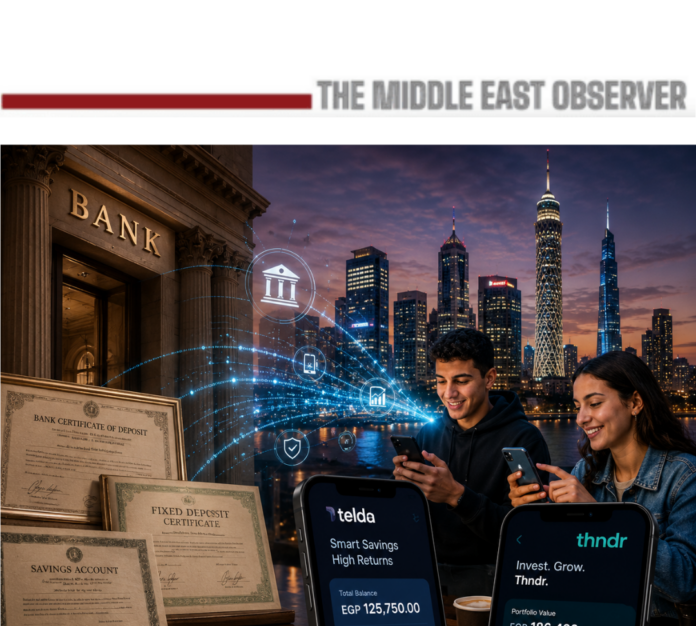
This summer, fintech platforms Telda and Thndr took their rivalry onto Cairo’s billboards. Thndr’s provocative — “Don’t Download Thndr” campaign was answered by Telda with the more direct — “Download Telda.”
The exchange was playful, but the commercial contest behind it is more consequential. Telda and Thndr are increasingly competing not simply as payment and investment apps, but for a potentially more valuable position: the digital platform through which a new generation manages its money.
For Egypt’s digital economy, that competition marks an important transition. Fintech’s first challenge was access. The next is engagement — determining where consumers spend, save and invest once they have entered the formal financial system.
A Larger Digital Financial Market
The opportunity has been created by Egypt’s rapid expansion of financial inclusion.
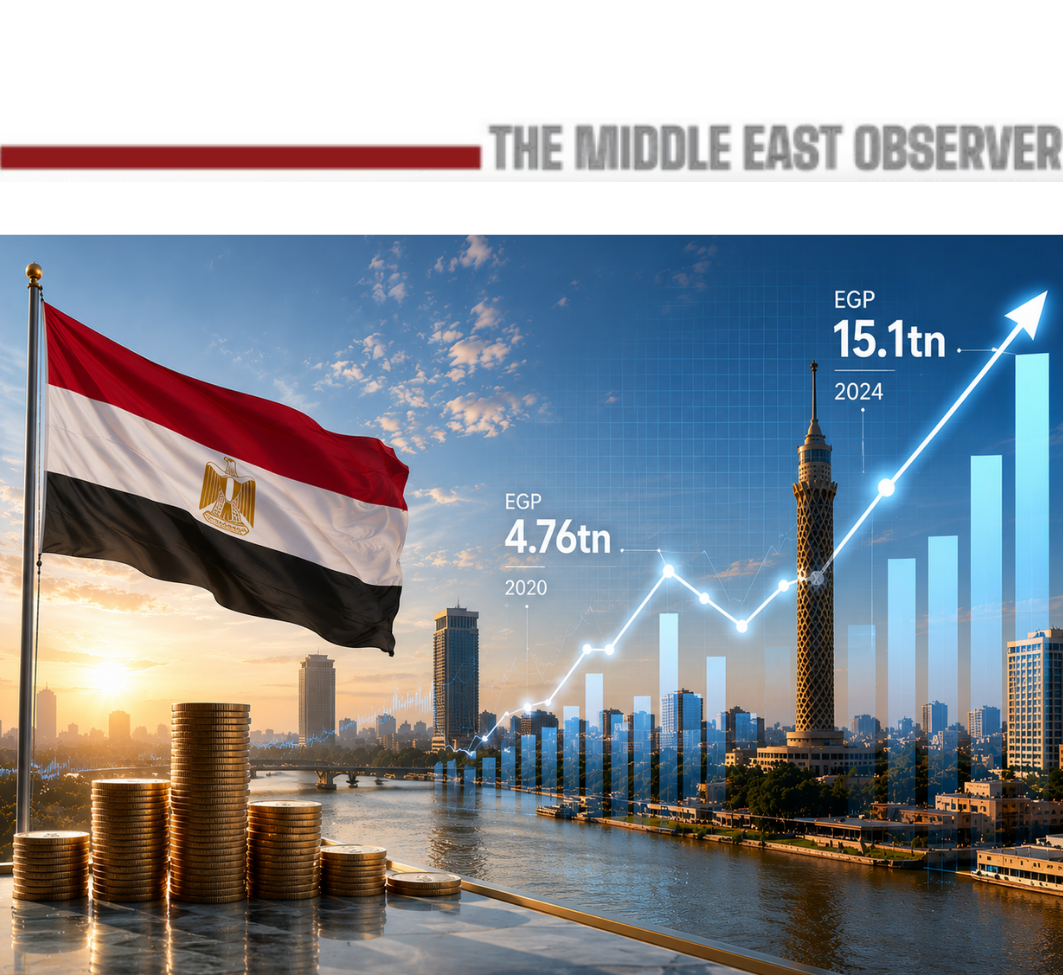
By the end of 2025, 54.7 million Egyptians aged 15 and above held active transaction-enabled accounts, equivalent to a financial inclusion rate of 77.6% among the eligible population of 70.5 million. The number of financially included citizens had increased by 219% since 2016.
The shift is particularly important among younger Egyptians. Financial inclusion among people aged 15–35 reached 56.8% in 2025, up from 36.3% in 2020. Women’s financial inclusion, meanwhile, rose from 19.1% in 2016 to 71.4% in 2025.
These numbers point to a market substantially broader than the traditional branch-based banking customer.
For fintech companies, the opportunity is therefore evolving. The challenge is no longer simply to bring consumers into formal finance, but to capture a greater share of what they do with their money once they are there.
Thndr: From Trading App to Wealth Platform
Thndr entered the market through investing, seeking to lower the barriers that had traditionally separated retail customers from capital markets.
The scale it reports suggests that proposition has moved well beyond a niche brokerage service. Thndr says it has more than 4 million users in Egypt, while 2026 figures indicate more than 200,000 trades a day and approximately 18% of the value of equity trading on the Egyptian Exchange. More than 40% of its users are outside Cairo and Alexandria, according to the company.
That geographic reach is significant. It suggests that app-based investing can extend capital-market participation beyond Egypt’s traditional financial centres.
More important, however, is how Thndr’s proposition is changing.
The platform is no longer centred solely on individual stock trading. By late 2025, more than 431,000 Egyptians were investing in mutual funds through Thndr. Assets in funds available through the platform reached EGP 8 billion by November 19, 2025, compared with EGP 575 million in January 2024.
Its fund marketplace expanded from 12 to 30 products, spanning gold, fixed-income and equity strategies. The AZG gold fund attracted more than 110,000 investors, while its Savings Clouds fixed-income product reached EGP 2.46 billion.
The strategic direction is clear: Thndr is attempting to move customers from trading towards broader wealth accumulation.
That distinction matters commercially. Trading can generate transactions; diversified savings and investment products can deepen and lengthen the customer relationship.
Telda: From Spending Towards Investing
Telda approached the same market from the opposite direction.
Its relationship with customers was built around everyday financial activity — cards, payments and money management — giving it something investment platforms naturally have less of: transaction frequency.
Consumers may invest periodically, but they spend and transfer money far more frequently. Each interaction provides another opportunity for a financial platform to become embedded in a customer’s routine.
Telda’s expansion towards investment products therefore represents more than product diversification. It brings the company closer to territory traditionally occupied by banks, brokers and asset managers.
The underlying logic is straightforward: payments create frequency; investments can create depth.
Bringing the two together potentially allows a platform to increase both engagement and the amount of a customer’s financial activity that remains within its ecosystem.
It also brings Telda closer to Thndr — even though the two companies entered financial services through very different doors.
When Payments, Savings and Investing Converge
This convergence is becoming one of the defining features of Egypt’s fintech market.
The first generation of fintech businesses generally attacked individual friction points: making payments easier, transferring money faster or opening investment markets to new customers.
The emerging model is broader.
An Egyptian consumer can receive a salary through a bank, transfer funds digitally, spend through a fintech card and allocate savings to stocks, gold, fixed-income products or investment funds.
The competitive question is increasingly how many of those activities a single platform can capture.
For Thndr, that ecosystem already extends across equities, mutual funds, gold and fixed-income products. Telda’s starting point remains payments and everyday money management, but its direction increasingly points towards a wider financial-services relationship.
The two companies therefore do not need identical products to compete.
They are competing for the same financial routine.
Egypt’s Investment Gap Is the Opportunity
Despite rapid financial digitisation, participation in investment markets remains far smaller than the population now connected to formal financial services.
That gap may represent one of the industry’s largest opportunities.
Financial inclusion gives tens of millions of Egyptians access to formal accounts and transaction infrastructure. But an account does not automatically translate into diversified savings, securities ownership or participation in capital markets.
The next addressable market for fintech is therefore not limited to existing investors. It includes millions of financially connected Egyptians who have yet to become investors at all.
For platforms able to convert digital financial access into savings and investment behaviour, the potential runway remains considerable.
Yet that opportunity also raises a broader test for the industry: whether fintech can deepen financial participation rather than merely shift transactions from one digital interface to another.
Banks Still Control the Financial Foundation
The rise of fintech does not mean banks are disappearing.
Banks remain central to salaries, deposits, lending, settlement infrastructure and much of the regulated financial architecture on which consumers and fintech companies themselves depend.
What is changing is who owns the customer interface.
An Egyptian consumer might receive a salary through a bank, transfer money using InstaPay, spend through Telda and invest through Thndr. The bank may continue to hold the core account, while increasingly important parts of the customer’s financial life occur elsewhere.
That interface has strategic value.
A platform that becomes the place where customers routinely spend, transfer, save or invest gains more opportunities to introduce additional products and potentially capture a greater share of their financial activity.
The emerging contest is therefore less about fintech replacing banking than about which institution controls the most valuable points of interaction around the bank account.
From Downloads to Financial Habits
That is why the Telda-Thndr billboard exchange matters beyond advertising.
The first contest was for downloads.
The more important contest is for usage and retention.
Ultimately, the prize is becoming one of the consumer’s primary financial platforms.
The winner may not necessarily be the company with the largest headline user count. More important measures could increasingly include active users, assets held on-platform, transaction frequency, customer retention and the number of financial products used by each customer.
Egypt has already built much of the infrastructure needed for that contest. With financial inclusion at 77.6%, 54.7 million active account holders and a rapidly expanding digitally connected generation, access is becoming less of a constraint.
The next question is what consumers do with that access.
Will Egyptians continue dividing their financial lives among banks, payment applications and investment platforms? Or will a smaller group of fintech businesses succeed in bringing spending, saving and investing into increasingly integrated ecosystems?
For decades, the savings certificate and bank deposit represented the familiar architecture of household finance for many Egyptians. The emerging generation has considerably more choices — accessible from a smartphone and increasingly competing for the same pool of savings.
The billboard war may have lasted only a few weeks.
The contest behind it — for who owns Egypt’s next financial relationship — could shape the next phase of the country’s digital economy.
Related news:
Generation Gap: Are Authentic Social Values Declining Across Generations?
The City According to Its Digital Footprint
Read also:
Egypt Retains Emerging-Market Status as EGX Rally Becomes More Selective
Egypt’s Liquidity Boom Tests Financial Infrastructure Capacity