
Egypt has built one of the world’s most significant long-term clinical records on type 3 Gaucher disease while sustaining a treatment-access model that has operated for more than a quarter of a century.
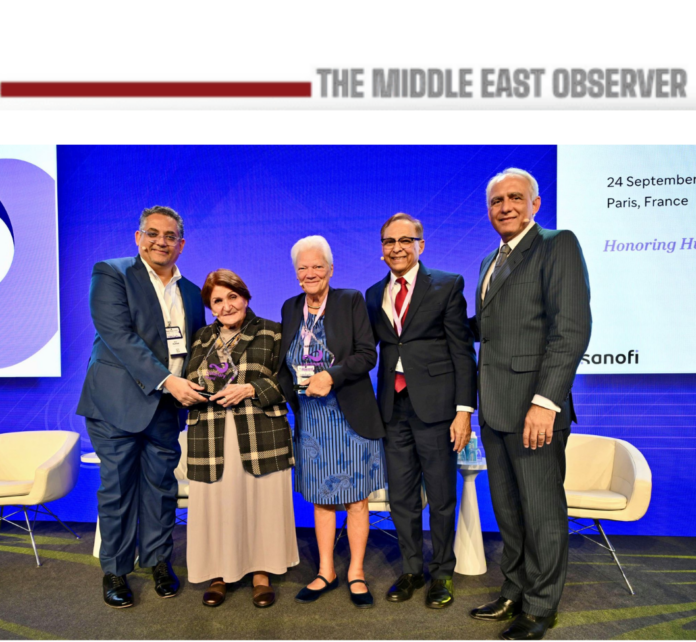
The achievement has returned to focus after Prof. Amal El-Beshlawy, Professor of Paediatric Haematology at Cairo University, received Sanofi’s 2026 Rare Luminary Award in Paris for her contribution to rare-disease research, treatment and advocacy.
Cairo University has treated Gaucher patients since 1998, generating unusually long follow-up data on type 3, the chronic neuronopathic form that is far more prominent in Egypt than in most Western patient populations.
A landmark Egyptian study led by El-Beshlawy followed 85 children with type 3 Gaucher disease over roughly two decades of enzyme-replacement therapy, documenting major improvements in anaemia, liver and spleen enlargement and growth, while producing valuable long-term survival evidence.
That clinical base has been reinforced by the Gaucher Initiative, launched in 1999 to widen access to costly enzyme-replacement therapy, including for patients unable to fund treatment privately.
For Egypt, the significance extends beyond a rare-disease award. A quarter-century of patient follow-up, treatment delivery and specialist expertise constitutes a strategic health-research asset, strengthening the country’s potential role in rare-disease registries, clinical research, genomic medicine and pharmaceutical partnerships.
The next policy opportunity is to convert that accumulated expertise into a stronger national rare-disease framework, supported by comprehensive registries, earlier genetic diagnosis and wider research collaboration.
Related news:
Egypt, Saudi Arabia and UAE Take 82% of Regional Healthcare Founders Ranking
Artificial Intelligence Is Reshaping Healthcare Across Egypt and the Middle East
Read also: