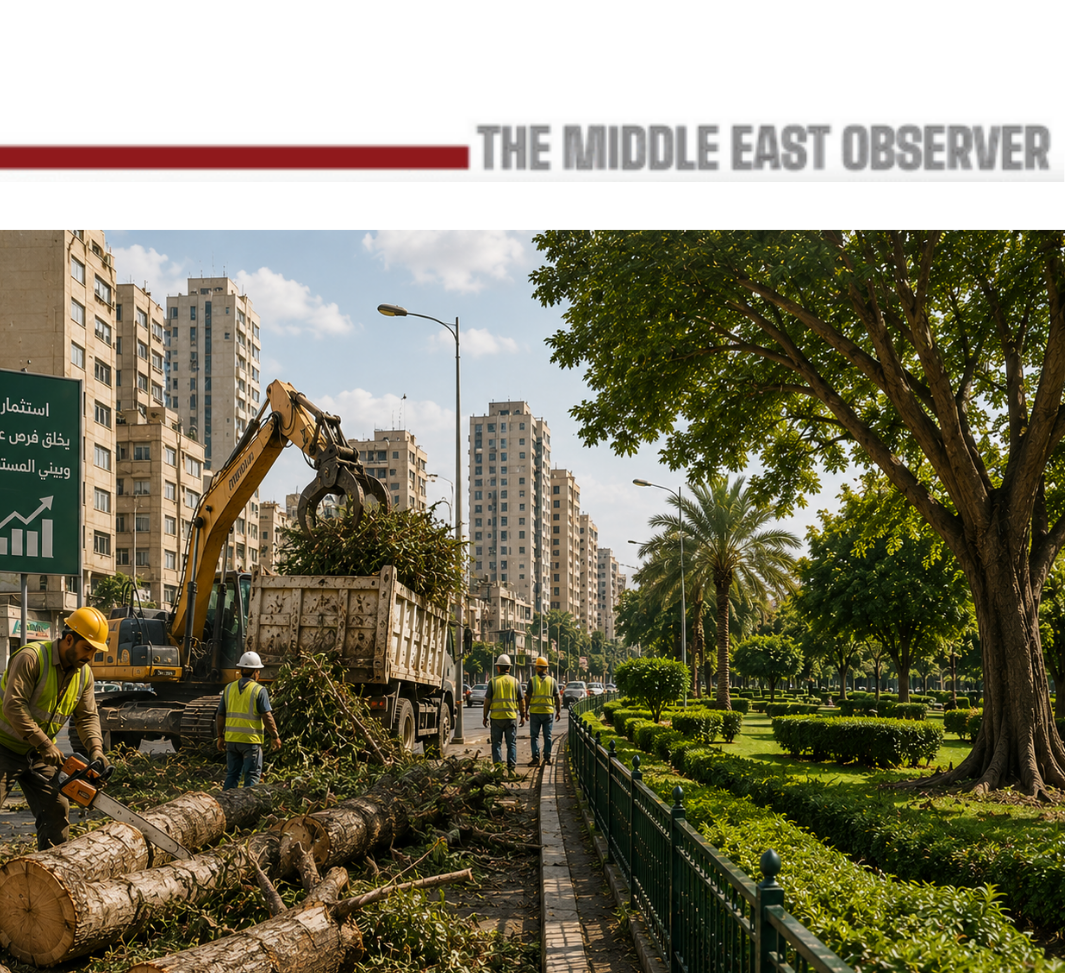
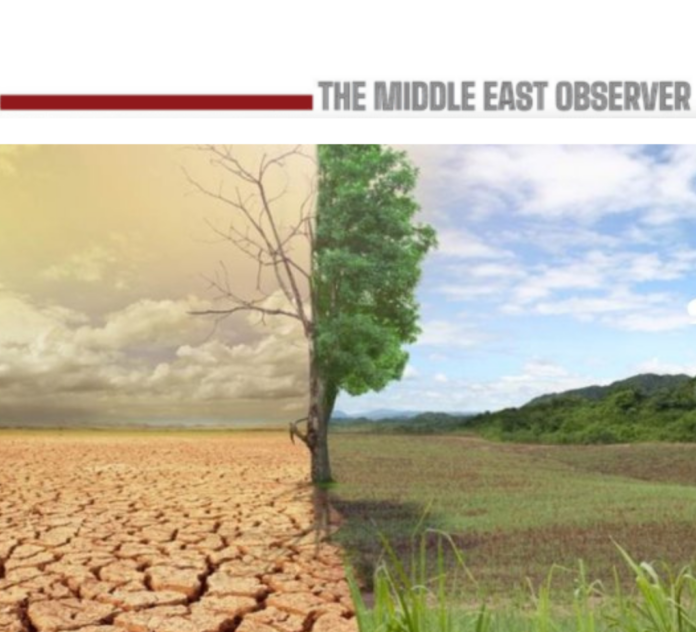
Climate change is rapidly reshaping food security across the Middle East and North Africa (MENA), transforming what was once viewed primarily as an environmental challenge into a strategic economic priority. Although the region contributes less than 5% of global greenhouse gas emissions, it is among the world’s most climate-vulnerable, facing rising temperatures, prolonged droughts, chronic water scarcity, desertification, and increasingly frequent extreme weather events. These pressures threaten agricultural productivity, raise food prices, increase import dependence, and strain economic resilience.
The challenge is compounded by MENA’s heavy reliance on imported food. As the world’s largest net food-importing region, many countries depend on international markets for more than half of their food needs, exposing them to supply-chain disruptions, commodity price volatility, and geopolitical shocks.
According to the World Meteorological Organization’s State of the Global Climate 2023 report, 2023 was the warmest year on record, with global temperatures averaging 1.45°C above the pre-industrial baseline. Climate-related shocks, combined with conflict and economic instability, contributed to the number of people experiencing acute food insecurity worldwide rising from 149 million before the COVID-19 pandemic to 333 million in 2023.
Agriculture Under Increasing Pressure
Agriculture remains vital to many MENA economies but is increasingly constrained by declining rainfall, groundwater depletion, soil degradation, and desertification. Water scarcity is the region’s defining challenge, with agriculture accounting for approximately 80–85% of freshwater withdrawals in many countries. Population growth and climate change are intensifying competition for limited water resources, making efficient irrigation and sustainable water management essential.
Governments are increasingly investing in drip irrigation, treated wastewater reuse, desalination, and precision agriculture to improve water productivity while protecting food production.
Egypt illustrates both the opportunities and vulnerabilities facing regional agriculture. The sector contributes around 12% of GDP, yet the Nile Delta faces growing risks from sea-level rise, saltwater intrusion, and soil salinity. Rising temperatures also increase irrigation demand, while urban expansion and groundwater pressures further reduce agricultural productivity. In response, Egypt has expanded investment in modern irrigation, climate-resilient crops, greenhouse farming, and large-scale land reclamation projects, including the Future of Egypt initiative, which aims to improve domestic food production and increase wheat self-sufficiency.
Elsewhere, Algeria faces declining productivity from more frequent droughts and floods despite significant agricultural potential, while Jordan, one of the world’s most water-scarce countries, has become a regional leader in wastewater reuse, drip irrigation, and precision farming, demonstrating how innovation can strengthen resilience despite severe resource constraints.
Innovation Driving Resilience
Across MENA, governments are accelerating investment in climate-smart agriculture, artificial intelligence, satellite monitoring, biotechnology, hydroponics, vertical farming, and controlled-environment agriculture.
Saudi Arabia’s Vision 2030 promotes smart farming and agricultural financing to strengthen domestic food production, while the United Arab Emirates has become a regional leader in vertical farming through companies such as Pure Harvest Smart Farms. Research institutions, including Qatar’s Qatar Environment and Energy Research Institute (QEERI), are developing technologies tailored to arid climates, while agricultural technology startups across North Africa are helping farmers improve productivity through digital tools and data-driven farming.
Food Security Is Economic Security
Climate change increasingly affects far more than agricultural output. Lower domestic production raises food import bills, contributes to inflation, widens trade deficits, and increases fiscal pressure on governments that subsidize essential food commodities. Strengthening food systems has therefore become central to economic resilience and national security across the region.
Greater regional cooperation in agricultural research, water management, climate forecasting, and resilient supply chains will also be essential to reducing future climate and geopolitical risks.
Conclusion
Climate change is fundamentally reshaping agriculture across the Middle East and North Africa. Building resilient food systems will require sustained investment in climate-smart agriculture, efficient water management, scientific innovation, and regional cooperation.
Countries that successfully integrate these strategies will be better positioned to protect food security, strengthen economic resilience, and reduce dependence on volatile global markets. As climate risks continue to intensify, investing in resilient agriculture is no longer simply an environmental necessity—it is a strategic economic imperative for the region’s long-term development.
Related news:
Will the Laser Weapons Race Be Won by Factories or Integrated Technologies?
The Middle East’s Agricultural Transformation Creates New Investment Frontiers
Read also:
Aquaculture: Balancing the Benefits and Risks of Fish Farming