As vulnerable choke points reshape global energy trade, US oil and gas are becoming more important. But America’s ability to cushion the next supply shock depends on inventories, shale economics, refining and export infrastructure as much as record production.
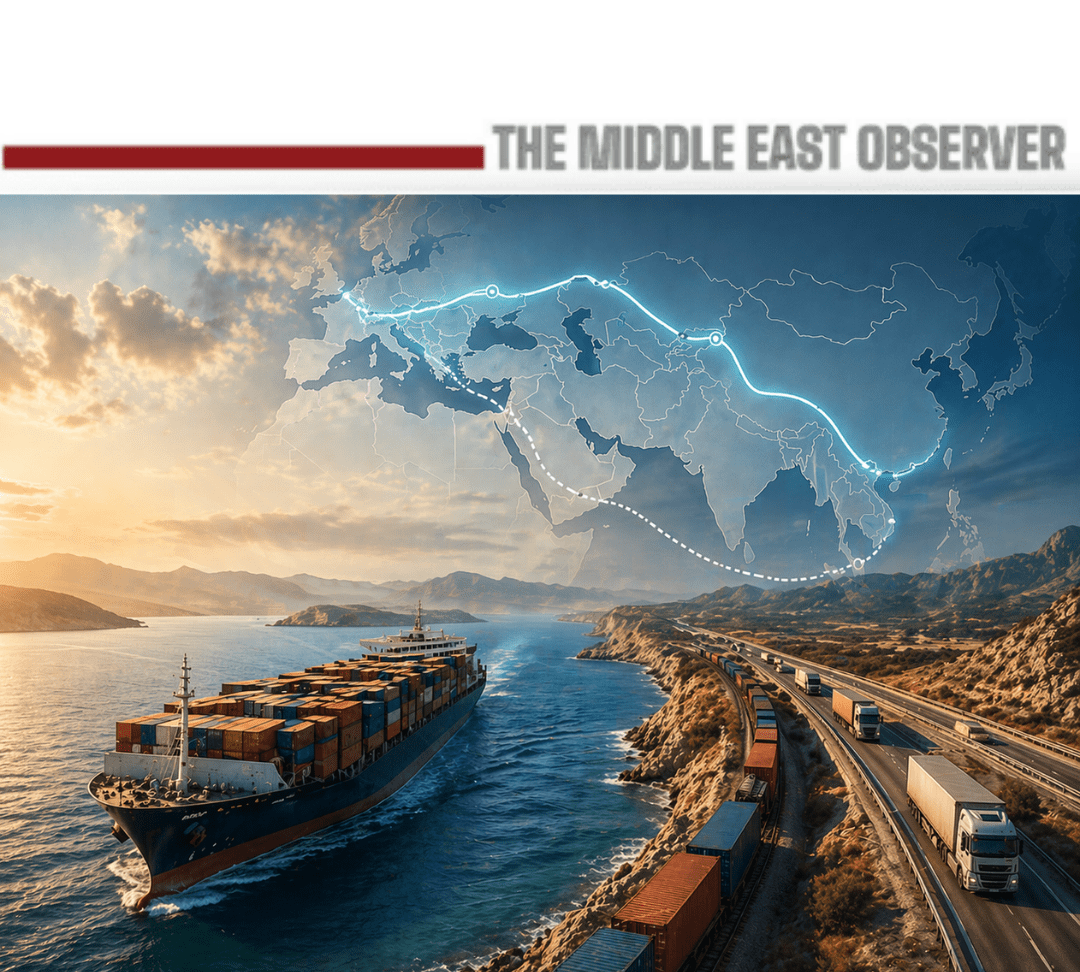
The global energy map is increasingly being shaped by a simple question: what happens when the routes carrying the world’s oil and gas can no longer be taken for granted?
The Strait of Hormuz provides the starkest example. About 20.9mn barrels a day of crude oil, condensate and petroleum products passed through it in the first half of 2025, roughly a quarter of global maritime oil trade. More than a fifth of global liquefied natural gas trade also used the route.
There are few substitutes. Saudi Arabia’s East-West pipeline and the UAE’s Abu Dhabi crude pipeline can bypass Hormuz, but their combined alternative capacity covers only a fraction of normal flows.
That vulnerability is increasing the strategic importance of US energy. But America’s advantage is not simply how much it produces. In a crisis, what matters is how much additional supply it can deliver — and how quickly.
America Can Supply More — But Not Overnight
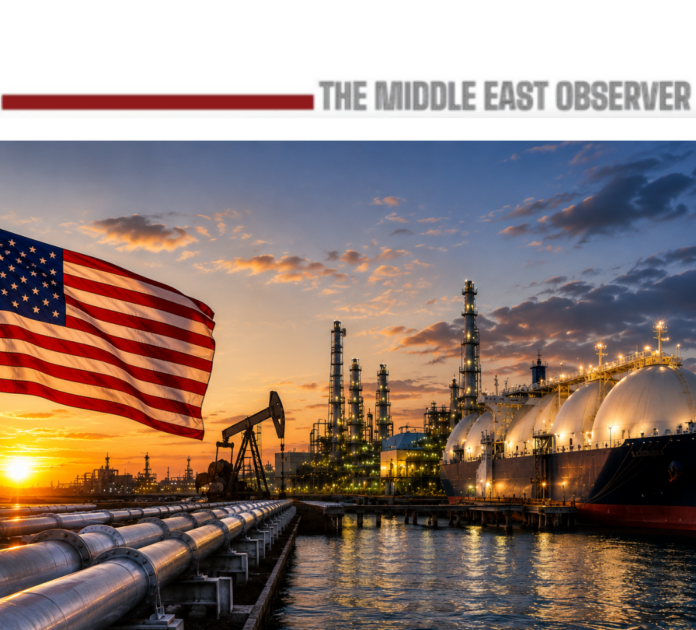
The US remained the world’s largest crude producer in 2025, averaging a record 13.6mn barrels a day. It is also the largest LNG exporter, with the US Energy Information Administration forecasting gross exports of about 17bn cubic feet a day in 2026, up from 15bn last year.
US exports of crude and petroleum products reached a record 13.6mn b/d in April, according to the EIA, including 5.6mn b/d of crude.
Yet export capacity is not the same as spare production.
Inventories can provide an immediate buffer during a disruption. Sustaining additional supply is harder.
One of shale’s advantages has been its relatively short response time, particularly through completing wells already drilled. But that buffer has diminished. The US inventory of drilled-but-uncompleted wells, or DUCs, fell to a record low in April, according to EIA data cited by Reuters.
America therefore retains a responsive oil industry, but little immediately available spare production.
America Is Not the New Saudi Arabia
Saudi Arabia’s traditional role as a swing producer rests partly on deliberately maintained spare capacity that can be mobilised relatively quickly. America operates differently: private producers respond to prices, costs and expected returns.
The distinction is important. Riyadh can release deliberately withheld barrels. US producers must decide whether additional drilling makes economic sense.
The Dallas Fed’s first-quarter 2026 energy survey found that producers required an average West Texas Intermediate price of about $66 a barrel to profitably drill a new well, with regional averages ranging from $62 to $70.
The question is therefore not whether America has more oil. It is whether additional barrels can reach the market quickly and economically enough when they are needed.
The Refining Constraint
Another limitation lies downstream.
The shale revolution has increased US production of relatively light, sweet crude, while much of the Gulf Coast refining system was designed to process heavier grades. The result is a seeming paradox: the world’s largest crude producer exports large volumes of domestic oil while continuing to import grades better suited to parts of its refining system.
This is not evidence of weakness. It shows why production alone is an incomplete measure of energy security.
The same problem applies to alternative routes. Saudi Arabia can send crude towards Yanbu on the Red Sea, while the UAE can move barrels to Fujairah outside Hormuz. Neither can replace the strait’s normal volumes.
For LNG, the constraint is greater. About 11.4bn cubic feet a day passed through Hormuz in the first half of 2025, primarily from Qatar, with no alternative export corridor capable of replacing those flows at comparable scale.
Energy security therefore increasingly depends on redundancy across suppliers, pipelines, terminals, shipping routes and inventories.
The Energy-Dominance Test
For Washington, this creates both an opportunity and a political tension.
The Trump administration has made expanding US energy exports part of its economic and foreign policy. In March, Energy Secretary Chris Wright authorised a 13 per cent increase in permitted exports from Venture Global’s Plaquemines LNG terminal in Louisiana.
Greater exports can strengthen US geopolitical influence by giving Europe and Asia alternatives when other supplies are disrupted. But they also connect domestic markets more closely to international demand.
That creates a tension at the heart of “energy dominance”: Washington wants American producers to capture global demand while promising affordable and reliable energy at home.
The next phase of US energy power will therefore depend not just on production but on the system that turns resources into deliverable supply — from drilling economics and inventories to refineries and export terminals.
A Global Energy Backstop
The US could become an increasingly important backstop, supplying crude, LNG and refined products when other producers or routes are disrupted. But shale economics and infrastructure constrain how rapidly it can respond.
America is unlikely to replace Saudi Arabia as the oil market’s traditional swing producer. Its advantages are different: enormous production, diversified producing basins, extensive refining capacity, growing LNG infrastructure and access to both Atlantic and Pacific markets.
That makes the US less a conventional swing producer than a diversified global energy backstop.
In the next energy crisis, resilience may not belong to the country that produces the most.
It may belong to the country with the most options when the usual routes stop working.
Related news:
Between a Rock and a Hard Place: The U.S.–Israeli Predicament in the Strait of Hormuz
How Gulf Energy Logistics Could Evolve After the Hormuz Crisis
Read also:
Energy Security Drives China’s Response to Gulf Oil Crisis
Iran War Redraws Global Energy Trade Around Strategic Choke Points